Audifort Ingredients: What Is Actually in This Hearing Supplement?
Disclaimer: Informational only, not medical advice. Hearing issues should be discussed with a doctor. Also contains affiliate links.
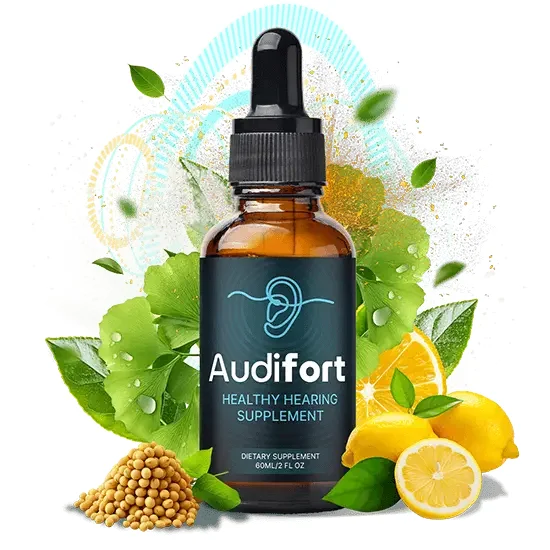
Label transparency note (verified, 2026): Audifort lists over 20 ingredients but uses proprietary blends — individual ingredient doses are not disclosed. You know what is in it, but not how much of each. See our full Audifort review for the complete overview.
What Are the Ingredients in Audifort?
Audifort contains over 20 plant-based ingredients organized into four proprietary blends: Hearing Defense Matrix, Gut-Brain-Ear Axis Complex, Auditory Performance Boosters, and a broad-spectrum antioxidant shield. The main ingredients include Maca Root, Grape Seed Extract, Green Tea Extract (decaffeinated), Capsicum Annuum, Gymnema Sylvestre, GABA, Lycopene, Alpha-Lipoic Acid, Rutin, Vitamins A, C, E, B vitamins, Zinc, Copper, and Selenium. The formula is manufactured in the USA in an FDA-registered, GMP-certified facility. It is non-GMO, plant-based, and free of stimulants. In this guide, we break down each ingredient, what the research actually shows, and what Reddit and tinnitus forum users say about them — honestly, without the sales-page spin.
Ingredient 1: Grape Seed Extract (Hearing Defense Matrix)
Grape Seed Extract is the primary ingredient in Audifort’s Hearing Defense blend. It is rich in proanthocyanidins — powerful antioxidants that protect cells from oxidative stress. The NIH notes that oxidative stress is a well-documented contributor to age-related hearing decline. Some preclinical research suggests Grape Seed Extract can reduce oxidative damage in cochlear structures and protect auditory nerve pathways.
However, the dose matters. Most clinical studies use specific doses (100–200 mg of grape seed extract), and Audifort does not disclose how much is in its proprietary blend. If the dose is too low, the theoretical benefit may not translate to real-world results.
Ingredient 2: Green Tea Extract (Auditory Performance Boosters)
Green Tea contains EGCG catechins with demonstrated neuroprotective effects on spiral ganglion neurons in the inner ear. The NIDCD has published research on how antioxidants protect inner ear hair cells from noise damage. Audifort uses a decaffeinated extract, which is appropriate for a hearing supplement — you will not get a stimulant effect or caffeine jitters.
On Reddit, some users in r/tinnitus discuss green tea’s antioxidant properties for hearing health. The consensus is cautious optimism — antioxidants may help protect existing hearing but will not reverse damage already done.
Ingredient 3: GABA (Gut-Brain-Ear Axis Complex)
GABA is a calming neurotransmitter that reduces neural overactivity. Some researchers believe tinnitus involves hyperactive auditory neurons, and GABA may help calm that overactivity. This is the most interesting ingredient in Audifort’s formula from a mechanism standpoint.
However, oral GABA has a known limitation: it does not easily cross the blood-brain barrier. The research on whether oral GABA supplements actually reach the brain in meaningful amounts is mixed. Audifort does not disclose the GABA dose, so you cannot verify if it is high enough to matter.

Ingredient 4: Maca Root (Auditory Performance Boosters)
Maca Root contains bioactive compounds (crocin and crocetin) that have shown neuroprotective effects in preliminary research. It also supports energy metabolism and nerve function. On the sales page, Audifort emphasizes Maca Root’s energy-boosting properties, which is more of a general wellness claim than a hearing-specific one.
Ingredient 5: Capsicum Annuum (Hearing Defense Matrix)
Capsicum Annuum (cayenne pepper) contains capsaicin, which has been studied for its role in supporting healthy inflammatory responses and improving microcirculation. Better blood flow to the inner ear means better nutrient and oxygen delivery to auditory cells.
Safety note: Capsicum can interact with blood thinners and may affect circulation. If you take blood-thinning medication, talk to your doctor before using Audifort. See our Audifort review for the full safety breakdown.
Ingredient 6: Gymnema Sylvestre (Gut-Brain-Ear Axis Complex)
Known as the “sugar destroyer” in Ayurvedic medicine, Gymnema Sylvestre supports healthy glucose metabolism. A 2007 study in the Journal of Clinical Biochemistry and Nutrition highlighted its role in blood sugar management. Since elevated blood sugar has been linked to hearing decline, this ingredient serves a dual purpose — metabolic support that may indirectly benefit hearing health.
Ingredient 7: Alpha-Lipoic Acid (Gut-Brain-Ear Axis Complex)
Alpha-Lipoic Acid is a universal antioxidant that has been studied for neuroprotective effects. It helps reduce oxidative stress throughout the body, including nerve tissue. Some research suggests it may help protect auditory nerves from damage, though studies specific to hearing are limited.
Ingredient 8: Lycopene (Auditory Performance Boosters)
Lycopene is a carotenoid antioxidant found in tomatoes. It protects cochlear tissues from oxidative damage caused by reactive oxygen species. This is a complementary antioxidant that works alongside Grape Seed Extract and Green Tea to provide broad-spectrum protection for inner ear cells.
Ingredient 9: Rutin (Gut-Brain-Ear Axis Complex)
Rutin is a flavonoid that supports vascular health and circulation. Better circulation means better nutrient delivery to the inner ear. It works synergistically with Capsicum and Grape Seed Extract in Audifort’s formula.
Remaining Ingredients: Vitamins and Minerals
Audifort also contains Vitamins A, C, E, B vitamins, Zinc, Copper, Selenium, and Chromium. The NIH notes that Zinc deficiency has been linked to hearing loss, and some studies have explored Zinc supplementation for tinnitus with mixed results. Vitamins C and E are broad antioxidants. B vitamins support nerve health. Copper and Selenium support cellular health and immune function.
What Reddit & Quora Users Say About These Ingredients
“Does GABA actually reach the brain?”
On r/Nootropics and r/Supplements, users repeatedly question whether oral GABA crosses the blood-brain barrier. One user wrote: “GABA supplements mostly do not cross the BBB in meaningful amounts. If they did, you would feel it.” This is a legitimate scientific concern — the research is genuinely mixed on whether oral GABA reaches the brain. Audifort does not address this on their sales page.
“Are antioxidants enough for hearing?”
On r/tinnitus, users discuss antioxidant supplements for hearing health. The consensus: antioxidants may help protect against further damage but will not repair existing damage. One user noted: “I take Grape Seed Extract for general health, but my tinnitus is the same. Maybe it stops it from getting worse, but it has not fixed it.” This is the most honest assessment.
“Why so many ingredients in one formula?”
On Quora, several users question whether 20+ ingredients in a single supplement can all be effective at the doses provided. The concern is valid: in a 60 mL bottle, if 20 ingredients share the volume, individual doses may be too low to match clinical research doses. This is the proprietary blend problem — without knowing individual amounts, you cannot verify effectiveness.
The Proprietary Blend Problem
Audifort uses proprietary blends, which means the label tells you what ingredients are in the formula but not how much of each. This is standard in the supplement industry, but it creates a real transparency problem:
- You cannot verify doses: Is there enough GABA to matter? Is the Grape Seed Extract dose clinically relevant? You do not know.
- You cannot compare to research: Studies on these ingredients use specific doses. Without knowing Audifort’s doses, you cannot compare.
- You cannot check for interactions: If you are on medication, knowing the exact amount of Capsicum or GABA matters for safety.
- You are trusting the manufacturer: With a proprietary blend, you are trusting that the company got the ratios right, with no way to verify.
FAQ: Audifort Ingredients
What are the main ingredients in Audifort?
Audifort contains over 20 ingredients in four proprietary blends: Grape Seed Extract, Green Tea Extract, GABA, Maca Root, Capsicum Annuum, Gymnema Sylvestre, Alpha-Lipoic Acid, Lycopene, Rutin, plus Vitamins A, C, E, B vitamins, Zinc, Copper, Selenium, and Chromium. Individual doses are not disclosed.
Does Audifort contain any stimulants?
No, Audifort is stimulant-free. The Green Tea Extract used is decaffeinated. The formula contains no caffeine, no synthetic stimulants, and no harsh chemicals.
Is Audifort safe to take with other medications?
Some ingredients in Audifort may interact with medications. Capsicum Annuum and Grape Seed Extract can affect circulation and may interact with blood thinners. GABA may interact with anxiety or sleep medications. Always consult your doctor before combining any supplement with prescription medications.
Are Audifort ingredients backed by clinical studies?
Some individual ingredients (Grape Seed Extract, GABA, Zinc) have been studied for hearing health, but no clinical trial has been published on the finished Audifort formula itself. The studies referenced on the sales page are about hearing science generally, not about Audifort specifically.
What does GABA do for hearing?
GABA is a calming neurotransmitter that reduces neural overactivity. Some researchers believe tinnitus involves hyperactive auditory neurons, and GABA may help calm that overactivity. However, oral GABA does not easily cross the blood-brain barrier, and Audifort does not disclose the dose used.
Why does Audifort hide individual ingredient doses?
Audifort uses proprietary blends, which is standard in the supplement industry. This means the label lists ingredients but not individual amounts. This makes it impossible to verify whether the doses match those used in clinical research.
What do Reddit users say about Audifort ingredients?
Reddit users on r/tinnitus and r/Supplements are skeptical about the proprietary blend. The main concerns are: GABA may not cross the blood-brain barrier, antioxidants help protect but do not reverse existing damage, and 20+ ingredients in one formula may mean individual doses are too low to be effective.
Bottom Line: Honest Ingredients Verdict
Audifort’s ingredient list is genuinely comprehensive — 20+ plant-based compounds targeting circulation, oxidative stress, inflammation, and neural calming. The selection shows real thought: Grape Seed Extract and Green Tea for antioxidant protection, GABA for neural calming, Capsicum for circulation, and Maca Root for nerve support. These are all relevant to hearing health.
But the proprietary blend is a genuine problem. Without disclosed doses, you cannot verify if the ingredients are present at clinically meaningful amounts. GABA’s blood-brain barrier issue is real. And no clinical trial exists on the finished formula. For a deeper look at the full product, see our complete Audifort review. For scam/legit concerns, see our is it legit guide. For whether it actually helps tinnitus, see our does it work guide.
5 Comments