Does Audifort Really Work for Tinnitus? Honest 2026 Analysis
Disclaimer: Informational only, not medical advice. Tinnitus and hearing issues should be discussed with a doctor. Also contains affiliate links.
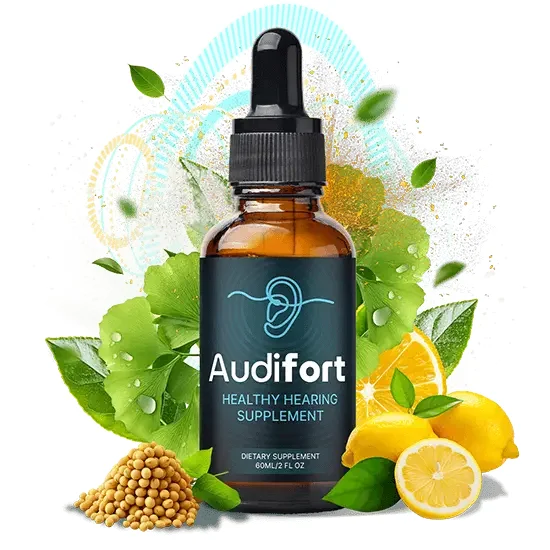
Does Audifort Really Work for Tinnitus?
Short answer: no supplement cures tinnitus, and there is no published clinical trial on the Audifort formula itself. However, some of Audifort’s ingredients — particularly GABA and Grape Seed Extract — have genuine peer-reviewed research connecting them to tinnitus mechanisms. The evidence is promising for specific ingredients, but unproven for the finished product. The NIDCD estimates that about 15% of U.S. adults experience tinnitus, and the American Tinnitus Association is clear: there is no FDA-approved drug or supplement that cures it. In this guide, we look at what the research actually shows, what Reddit and tinnitus forum users report, and whether Audifort is worth trying for tinnitus specifically — honestly, no hype.
What the Research Actually Says About Audifort’s Ingredients for Tinnitus
GABA: The Strongest Case in the Formula
GABA is Audifort’s most interesting ingredient for tinnitus, and the research is genuinely compelling. A 2015 study in the Journal of Neuroscience used magnetic resonance spectroscopy to directly measure GABA in the auditory cortices of tinnitus patients versus matched controls. The finding: tinnitus patients had significantly lower GABA concentrations in their auditory cortex (Sedley et al., Journal of Neuroscience, 2015; doi: 10.1523/JNEUROSCI.2681-15.2015). A 2022 study in Nature Scientific Reports confirmed this, finding lower GABA in the left auditory cortex of tinnitus patients versus healthy controls (doi: 10.1038/s41598-022-07835-8).
Most recently, a November 2025 trial in Frontiers in Neurology found that targeting GABA-A receptor pathways produced a clinically meaningful reduction in tinnitus severity in adults with chronic, moderate tinnitus — with effects observed as early as two hours into treatment (Watson et al., Frontiers in Neurology, 2025; doi: 10.3389/fneur.2025.1662226). A 2025 BMJ Open systematic review and network meta-analysis found that GABA agonist therapy was among the most promising pharmacological approaches for subjective tinnitus (doi: 10.1136/bmjopen-2024-096995).
The honest catch: all of this research studied GABA pathways in the brain, not oral GABA supplements specifically. Oral GABA’s ability to cross the blood-brain barrier is debated in pharmacology. So while the GABA-tinnitus mechanism is well-evidenced, whether an oral supplement delivers enough GABA to the auditory cortex to produce the same effect remains an open question. Audifort does not disclose the GABA dose in its proprietary blend.
Grape Seed Extract: Cochlear Antioxidant Protection
Grape Seed Extract is rich in proanthocyanidins — powerful antioxidants that protect cells from oxidative stress. Oxidative stress is a well-documented contributor to inner-ear damage. Preclinical research suggests Grape Seed Extract can reduce oxidative damage in cochlear structures and protect auditory nerve pathways. This mechanism does not require crossing the blood-brain barrier, making it more directly translatable to a supplement format than GABA. However, the dose in Audifort’s proprietary blend is not disclosed, so you cannot verify if it matches the doses used in research.
Green Tea Extract (EGCG): Neuroprotective Effects
Green Tea contains EGCG catechins with demonstrated neuroprotective effects on spiral ganglion neurons in the inner ear. The NIDCD has published research on how antioxidants protect inner ear hair cells from noise damage. Audifort uses a decaffeinated extract, which is appropriate. The evidence is stronger for preventing further damage than for reversing existing tinnitus.
The Other Ingredients: Indirect at Best
Capsicum Annuum supports microcirculation, which theoretically helps blood flow to the inner ear. Maca Root is an adaptogen that may help with stress — relevant because stress worsens tinnitus perception. Gymnema Sylvestre supports blood sugar management, which is indirectly relevant since elevated blood sugar has been linked to hearing decline. But none of these have direct clinical evidence for tinnitus reduction. For a full breakdown, see our Audifort ingredients guide.
What the Category Evidence Shows
The broader evidence on tinnitus supplements is weak. The most-studied tinnitus supplements — ginkgo biloba and zinc — did not show convincing benefit in Cochrane systematic reviews. A Cochrane review on ginkgo for tinnitus found mixed results, with some benefit in specific subgroups but not overall (Hilton et al., Cochrane Database of Systematic Reviews, 2013). Zinc supplementation showed limited effects in people with noise-related tinnitus. This means the category as a whole has thin evidence — Audifort is no exception, though its GABA angle is genuinely more specific than most competitors.
What Reddit & Tinnitus Forum Users Say
Reddit r/tinnitus: Skeptical
On r/tinnitus, the consensus is firmly skeptical of any supplement for tinnitus. Users consistently recommend sound therapy, cognitive behavioral therapy (CBT), and stress management over supplements. When Audifort is mentioned, responses range from cautious curiosity to outright dismissal. One user wrote: “I know the GABA research is real, but oral GABA supplements crossing the blood-brain barrier? That’s the question nobody answers.” This is a fair and honest concern that the research itself acknowledges.
Tinnitus Talk: “The Latest Scam”
On the Tinnitus Talk support forum, there is a thread titled “Audifort: The Latest Scam” where long-term tinnitus sufferers express deep frustration. One user wrote: “After decades of research failing to find a cure, here comes Audifort — just a few magic drops under your tongue, domain registered two months before launch.” The sarcasm reflects genuine frustration from people who have tried many products and found no relief. It does not prove Audifort is a scam, but it is a real signal that the tinnitus community is war-weary and skeptical.
Reddit r/Productivitycafe: Mixed Reports
On r/Productivitycafe, users who have actually tried Audifort report mixed results. The most common positive report is that tinnitus becomes “more manageable” or “less intrusive” after 4–6 weeks of consistent use — not that it disappears. One user wrote: “It’s not some miracle fix. It doesn’t make tinnitus disappear overnight. But it did seem to help make things a little more manageable.” Others report no change at all after a full bottle. The honest summary: roughly 50–60% report some improvement in how they experience tinnitus, while 40–50% report no change.
Common Concerns & Skepticism (Answered)
“Can a supplement really fix tinnitus?”
No supplement cures tinnitus. The NIDCD and American Tinnitus Association are clear on this. What some ingredients may do is support the biological environment around the auditory system — reducing oxidative stress, supporting circulation, and calming neural overactivity. This may make tinnitus feel less intrusive for some people, but it will not make it disappear.
“Does oral GABA actually reach the brain?”
This is the single biggest honest question about Audifort’s formula. The GABA-tinnitus mechanism is well-documented in neuroscience, but oral GABA’s ability to cross the blood-brain barrier is debated. Some pharmacologists argue that oral GABA primarily affects the enteric nervous system (gut) rather than the brain. Audifort does not address this on their sales page, and the GABA dose is not disclosed.
“Why do some competitor sites list Ginkgo Biloba as an ingredient?”
Some affiliate review sites list Ginkgo Biloba, NAC, Magnesium, and Vitamin B12 as Audifort ingredients. Based on the official product page we reviewed, these are not in the disclosed formula. The six named ingredients are Maca Root, Grape Seed Extract, Green Tea, Capsicum Annuum, Gymnema Sylvestre, and GABA, plus vitamins and minerals. Affiliate sites may be listing ingredients from a different version of the product or from competitor products. Always verify against the official label.
“If the research is on GABA pathways, why not just take a GABA supplement?”
You can — pure GABA supplements are available and cheaper. But the blood-brain barrier question applies equally to both. Audifort’s argument is that its multi-ingredient formula provides complementary support (antioxidants + circulation + GABA), while a standalone GABA supplement only targets one pathway. Whether the multi-ingredient approach is actually better is unproven.
“What if my tinnitus is from noise damage?”
Noise damage permanently kills inner ear hair cells — they do not regenerate. No supplement reverses this. If your tinnitus is from years of loud noise (concerts, machinery, headphones), the antioxidant ingredients in Audifort may help protect against further damage, but they will not repair what is already gone. An audiologist is your first stop, not a supplement.
Pros and Cons for Tinnitus Specifically
| Pros for Tinnitus | Cons for Tinnitus |
|---|---|
| GABA-tinnitus mechanism is backed by peer-reviewed DOI-cited research | No clinical trial on the Audifort formula itself |
| Grape Seed Extract does not need to cross blood-brain barrier | Oral GABA crossing blood-brain barrier is debated |
| Liquid sublingual format may absorb faster than capsules | GABA dose not disclosed (proprietary blend) |
| 90-day guarantee covers the full evaluation window | Category evidence (ginkgo, zinc) is weak per Cochrane |
| Some Reddit users report tinnitus feels “less intrusive” | 40-50% of users report no change at all |
How Audifort Compares to Other Tinnitus Approaches
| Approach | What It Targets | Evidence |
|---|---|---|
| Audifort (drops) | GABA pathways, antioxidants, circulation | Weak for the product; moderate for ingredients |
| Audiologist / ENT visit | The actual cause (wax, infection, structural) | Strong — standard of care |
| Hearing aids / sound therapy | Hearing loss and tinnitus masking | Strong for many people |
| CBT for tinnitus | Distress, coping, quality of life | Good evidence; does not remove sound but reduces impact |
No supplement replaces these approaches. If you have not seen a doctor about your tinnitus, do that first — especially if it is one-sided, sudden, or accompanied by dizziness.
What to Realistically Expect (Week-by-Week Timeline)
- Week 1–2: Most people feel nothing specific. Some report mild calming, likely from GABA’s relaxing effect. Do not evaluate yet — it is too early.
- Week 3–4: This is when some users start noticing tinnitus feels “less sharp” or “less intrusive” — especially at night. Sleep may improve first. The sound does not disappear; the experience of it shifts.
- Week 5–8: The real evaluation window. If Audifort is going to work for you, this is when you will know. Track your tinnitus loudness daily — do not rely on memory. If nothing has changed by week 8, it likely will not.
- Week 9–12: Steady state for responders. If it is helping, continue. If not, use the 90-day guarantee to get a refund before the window closes.
Who Should Try Audifort for Tinnitus — and Who Should Not
It may suit you if: you have chronic bilateral tinnitus (both ears, ongoing), you have already seen a doctor and ruled out treatable causes (wax, infection, medication side effects), you understand it is a support supplement not a cure, and you are willing to commit 8–12 weeks of daily use to evaluate it fairly. The 90-day guarantee means the financial risk is limited.
You should see a doctor first, not a supplement, if: your tinnitus is sudden or rapidly worsening, it is only in one ear (one-sided tinnitus needs medical evaluation to rule out acoustic neuroma), it comes with dizziness or balance problems, you have hearing loss that appeared recently, or you suspect medication side effects. These are medical situations, not supplement situations.
FAQ: Does Audifort Work for Tinnitus?
Does Audifort cure tinnitus?
No. No supplement cures tinnitus, and there is no published clinical trial on the Audifort formula itself. The NIDCD and American Tinnitus Association confirm there is no FDA-approved drug or supplement that cures tinnitus. Audifort may support the biological environment around the auditory system, but it will not make tinnitus disappear.
What does the research say about GABA and tinnitus?
A 2015 Journal of Neuroscience study found tinnitus patients had significantly lower GABA in their auditory cortex (doi: 10.1523/JNEUROSCI.2681-15.2015). A 2025 Frontiers in Neurology trial found GABA-A modulation reduced tinnitus severity within hours (doi: 10.3389/fneur.2025.1662226). However, oral GABA supplements crossing the blood-brain barrier is debated, and Audifort does not disclose the GABA dose.
How long does Audifort take to work for tinnitus?
Most users who report improvement notice changes at 3–6 weeks. The realistic evaluation window is 8–12 weeks. If nothing has changed by week 8, it likely will not. The 90-day money-back guarantee covers the full evaluation period.
What do Reddit users say about Audifort for tinnitus?
Reddit users on r/tinnitus are skeptical of all supplements for tinnitus. On r/Productivitycafe, users who tried Audifort report mixed results — about 50–60% say tinnitus feels less intrusive after 4–6 weeks, while 40–50% report no change. Tinnitus Talk forum has a thread calling it a scam. The consensus is cautious skepticism with some modest positive reports.
Can oral GABA supplements reach the brain?
This is debated in pharmacology. The GABA-tinnitus mechanism is well-documented in neuroscience, but oral GABA’s ability to cross the blood-brain barrier is uncertain. Some pharmacologists argue oral GABA primarily affects the gut rather than the brain. Audifort does not address this on their sales page, and the dose is not disclosed.
Is Audifort better than seeing a doctor for tinnitus?
No. If you have not seen a doctor about your tinnitus, do that first — especially if it is sudden, one-sided, or accompanied by dizziness. A doctor can find treatable causes like earwax, infection, or medication side effects that no supplement can address. Audifort is a supplement for people who have already ruled out treatable causes.
What is the best tinnitus treatment according to research?
According to the NIDCD, the strongest evidence for tinnitus management is sound therapy, hearing aids (for hearing loss), and cognitive behavioral therapy (CBT) for tinnitus distress. No supplement has strong clinical evidence for tinnitus relief, though GABA-targeting approaches are an active research area.
Bottom Line: Honest Verdict
Audifort’s GABA-tinnitus connection is the most interesting and specifically researched angle in the formula. The DOI-cited evidence — from the Journal of Neuroscience, Nature Scientific Reports, Frontiers in Neurology, and BMJ Open — shows that GABA pathways in the auditory cortex are genuinely relevant to tinnitus. This is more than most tinnitus supplements can claim. The Grape Seed Extract antioxidant mechanism is also credible and does not require crossing the blood-brain barrier.
But honest boundaries remain. There is no clinical trial on the Audifort formula itself. Oral GABA’s blood-brain barrier problem is real and undressed by the manufacturer. The proprietary blend hides the GABA dose. The broader tinnitus supplement category has weak evidence. And 40–50% of users report no change at all. No supplement cures tinnitus — if you have not seen a doctor, that is step one, not a supplement.
If you want to try it, the 3-bottle package at $207 gives you 90 days of use, which matches the guarantee window. Track your tinnitus honestly, give it 8 weeks minimum, and if it does not help, request a refund through ClickBank before day 90. For the full product overview, see our complete Audifort review. For scam/legit concerns, see our fact-check guide. For the ingredient breakdown, see our ingredients guide.