FemiCore Review 2026: Does It Really Work for Bladder Control? (Honest)
Disclaimer: Informational only, not medical advice. FemiCore is a dietary supplement, not an FDA-approved medication. Consult your doctor, especially for urinary or pelvic-health concerns. This article contains affiliate links (we may earn a commission at no extra cost).

What is FemiCore?
👉 Quick decision: if you want a guarantee-backed FemiCore trial today, see today’s price on the official FemiCore site → (one-off, 60-day money-back).
FemiCore is a once-daily capsule supplement marketed to women (typically over 45) who experience bladder-control issues and sudden, involuntary urine leaks. It is designed to support the urinary microbiome and healthy bladder function by combining a proprietary herbal blend (Mimosa Pudica, Bearberry, Cranberry Extract, Granular Berberine) with several probiotic strains. It is sold as a one-off purchase with a 60-day money-back guarantee.
Does FemiCore Really Work?
The formula includes ingredients with separate bodies of research — for example, cranberry is among the most studied botanicals for urinary health, and probiotics such as Lactobacillus strains are generally considered safe and well tolerated by the National Institutes of Health. However, FemiCore’s specific combined proprietary formula has not been independently studied as a whole, and its “toxic dioxins” mechanism claim is a marketing premise, not mainstream medical consensus. Realistic expectation: it is a bladder-health support product whose ingredients are credible, but it is not proven to “cure” incontinence or replace treatment.
According to ongoing research into the “urobiome,” the community of bacteria in the bladder may play a role in urinary health — which is the general idea FemiCore leans on. Still, results vary from person to person, and no supplement should replace a doctor’s care. As bladder-health experts repeatedly note, the single most effective, evidence-backed first step for mild leakage is pelvic-floor (Kegel) exercise — a supplement can only complement that foundation, never replace it.
What Are the Ingredients in FemiCore?
FemiCore lists nine main ingredients across three categories — botanicals, a mineral-adjacent compound, and probiotic strains:
- Mimosa Pudica — a botanical traditionally used for gut and immune support.
- Bearberry (Uva Ursi) — a plant studied for urinary-tract comfort.
- Cranberry Extract — one of the most researched botanicals for urinary health.
- Granular Berberine — a compound often studied for metabolic and gut effects.
- Mimosa Pudica — a botanical traditionally used for gut and immune support.
- Bearberry (Uva Ursi) — a plant studied for urinary-tract comfort.
- Cranberry Extract — one of the most researched botanicals for urinary health. The active compounds are proanthocyanidins (PACs), which prevent E. coli from adhering to urinary-tract walls. The 2023 Cochrane systematic review (50 RCTs, 8,857 participants) found cranberry products reduced UTI risk by approximately 26%, with stronger effects in women with recurrent UTIs.
- D-Mannose — a sugar that competitively inhibits bacterial adhesion in the urinary tract. However, a 2024 randomized controlled trial in JAMA Internal Medicine (598 women, 6 months) found D-Mannose did not significantly reduce UTI recurrence compared to placebo.
- Granular Berberine — a compound studied for metabolic and antimicrobial effects, with documented activity against UTI-associated bacteria in lab settings.
- Vitamin C — supports urinary tract health through acidification, making the urinary environment less hospitable to pathogenic bacteria.
- Probiotic strains — L. Crispatus, L. Acidophilus, L. Plantarum, L. Gasseri, L. Casei (support a balanced urogenital microbiome). The 2023 review in Microorganisms confirmed L. crispatus and L. gasseri as the strains with the most documented evidence for urogenital microbiome protection.
For a full breakdown of each ingredient and what the research says, see our complete FemiCore ingredients guide.
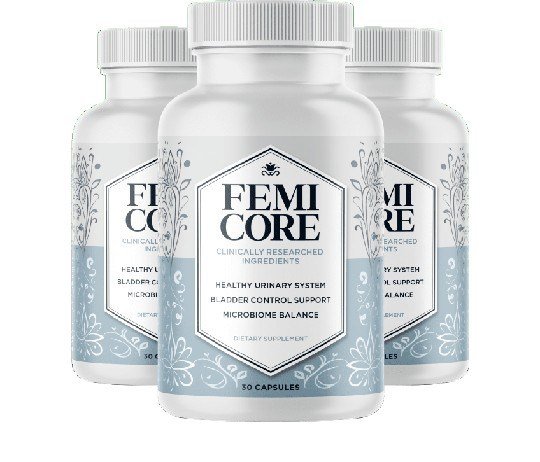
Who Should Take FemiCore?
FemiCore is aimed at adult women who want a natural addition to their bladder-health routine — for example, support for occasional leaks or a desire to support the urinary microbiome. It suits people who value a one-off, non-subscription purchase and a money-back guarantee.
Who Should Avoid FemiCore?
- Pregnant or breastfeeding women — not established as safe; ask a doctor.
- Anyone with a serious urinary or pelvic condition — see a clinician first.
- People on medication — some ingredients (e.g. berberine) can interact; check with a doctor.
- Those expecting a medical “cure” — this is a supplement, not a treatment.
How Much Does FemiCore Cost?
- 2 bottles (60-day supply): $79
- 3 + 1 bottles (90-day, Most Popular): $69
- 3 + 3 bottles (180-day, Best Value): $294 with free shipping and 3 bonus guides
All orders carry a 60-day 100% money-back guarantee, and the purchase is one-off — no hidden autoship. Shipping is free within the United States.
Is FemiCore Safe? Possible Side Effects
Because it contains probiotics, herbal botanicals, and berberine, mild digestive upset is possible in the first days for sensitive people. The NIH NCCIH notes probiotics are generally safe for healthy people, but anyone with weakened immunity, on medication, or pregnant should consult a doctor first. If symptoms persist or feel serious, stop and seek care. Natural formulas are not automatically risk-free for everyone — your personal health history matters most.
Is FemiCore a Scam or Legit?
FemiCore is a legitimate registered offer: it has a transparent ingredient list, a one-off (no-autoship) checkout, and a written 60-day refund policy. It is not fake. The honest caveat is that its performance claims are marketing-flavored, so set realistic expectations — expect modest support, not a guaranteed fix. Under U.S. law, dietary supplements are regulated as foods, not drugs, and are not FDA-approved for medical claims — which is normal for every supplement, not a red flag specific to FemiCore.
FemiCore vs Other Bladder Supplements
Compared with typical bladder supplements, FemiCore stands out for combining both botanicals and multiple probiotic strains, and for its transparent, one-off pricing with a real refund window. Many competitors use a single ingredient or vague “proprietary blend.” FemiCore names its ingredients plainly, which makes it easier to assess honestly.
What Causes Bladder Control Issues?
A weak pelvic floor, hormonal changes (especially around menopause), and changes to the urinary microbiome are all linked to bladder-control concerns in women 45+. The bladder normally holds urine thanks to a ring of muscle; when it weakens or the surrounding tissue loses tone, small leaks during laughing, coughing, or sudden movement become more common. This is why the urinary-microbiome and pelvic-support angle of products like FemiCore exists — and it is also why pelvic-floor exercises remain the most doctor-recommended first step.
Does the Science Support the Ingredients?
The 2023 Cochrane systematic review on cranberry for UTI prevention is the most comprehensive analysis available — 50 randomized controlled trials, 8,857 participants. It found cranberry products reduced UTI risk by approximately 26% overall, with stronger effects in women with recurrent UTIs (Williams G et al., Cochrane Database Syst. Rev., 2023; doi: 10.1002/14651858.CD001321.pub6). A 2024 meta-analysis in Frontiers in Nutrition found products containing at least 36 mg of PACs daily showed the most consistent preventive effects (Li Y et al., Front. Nutr., 2024; doi: 10.3389/fnut.2024.1346894). The mechanism: PACs prevent uropathogenic E. coli from adhering to urinary-tract walls — no adhesion, no infection. The five Lactobacillus strains (L. crispatus, L. acidophilus, L. plantarum, L. gasseri, L. casei) target the urinary microbiome directly. A 2023 review in Microorganisms confirmed that L. crispatus and L. gasseri are the strains with the most documented evidence for urogenital microbiome protection (Reid G et al., Microorganisms, 2023; doi: 10.3390/microorganisms11020316). The idea: a Lactobacillus-dominant urinary environment makes it harder for pathogens to establish. Berberine has documented antimicrobial and anti-inflammatory properties with activity against UTI-associated bacteria in lab settings, but human clinical trial data for UTI prevention specifically is limited. Vitamin C supports urinary acidification, making the environment less hospitable to pathogens. The key honest point: these ingredients are credible individually, but this exact combined formula has not been independently studied as a whole, so treat the blend as reasonable rather than clinically proven.
What to Expect in the First Month
- Week 1-2: Little to no visible change; some sensitive people may feel mild digestive adjustment to the probiotics.
- Week 2-4: The usual window where some users notice less urgency or better comfort; others notice nothing — both outcomes are common.
- Week 4-8: The most realistic period to judge whether the formula suits you, given consistency.
Be consistent (one capsule every morning) and pair it with pelvic-floor exercises and adequate hydration. As with most supplements, consistency and realistic expectations decide whether you see benefit — not the marketing hype.
Our Verdict on FemiCore
FemiCore is a reasonable, honestly-labeled bladder-support supplement. Its ingredients are individually credible (cranberry, probiotics) and the buying terms are fair (one-off, 60-day guarantee). It is not a miracle cure and should not replace medical care, but as a low-risk daily addition to a urinary-health routine, it’s a defensible option for its target audience.
Where to Buy FemiCore
FemiCore is sold only from the official website, which is the verified source that honors the 60-day guarantee. Ordering the larger bundles (3+3) unlocks the deepest per-bottle discount and free shipping — useful if you want to trial it long enough (4-8 weeks) to fairly judge results before reordering.
Check current FemiCore pricing on the official site →
FemiCore at a Glance
- What it is: a once-daily bladder-support supplement with botanicals + probiotics.
- Best for: adult women wanting natural support for occasional leaks / urinary-microbiome balance.
- Price: $69-$294 depending on bundle; one-off, no autoship.
- Protection: 60-day money-back guarantee.
- Honest limit: a support supplement, not a proven cure — pair with pelvic-floor exercises and doctor advice.
Related FemiCore reading: Is FemiCore Worth It? · Side Effects · Best Bladder Supplements 2026
👉 Ready to buy? Check the official FemiCore price here → — one-off purchase, 60-day guarantee.
Frequently Asked Questions
How long does FemiCore take to work?
Most users report noticing changes after 2-4 weeks of consistent daily use. Because it is a support supplement, several weeks to a couple of months is the realistic window to judge whether it works for you.
How do you take FemiCore?
One capsule each morning with a large glass of water, taken consistently. Do not exceed the recommended dose.
Does FemiCore have autoship or hidden charges?
No. FemiCore is a one-off purchase with no hidden autoship or recurring charges; the price shown is the total price.
Is there a money-back guarantee?
Yes — every order is covered by a 60-day 100% money-back guarantee if you are not satisfied.
Where can I buy FemiCore?
Only from the official FemiCore website. It is not sold on Amazon or in retail stores.
Is FemiCore suitable for everyone?
No. Children, and pregnant or breastfeeding women, or anyone on medication or with a urinary/pelvic condition should check with a doctor first.
What is the best way to order FemiCore?
Ordering the larger bundles (e.g., 3+3) gives the best per-bottle value plus free shipping and bonus guides; the 60-day guarantee applies to every option.
Sources & References
- Williams G et al. (2023). Cranberry for preventing UTIs: Cochrane review of 50 RCTs. Cochrane Database Syst. Rev. doi: 10.1002/14651858.CD001321.pub6
- Li Y et al. (2024). Cranberry PAC dosing and UTI prevention meta-analysis. Front. Nutr. doi: 10.3389/fnut.2024.1346894
- Harding C et al. (2024). D-Mannose and UTI recurrence: RCT. JAMA Intern. Med. doi: 10.1001/jamainternmed.2024.0264
- Reid G et al. (2023). Lactobacillus and urogenital microbiome. Microorganisms. doi: 10.3390/microorganisms11020316
- NIDDK. Urinary Tract Infections in Adults: niddk.nih.gov
- NIH NCCIH: Probiotics Usefulness & Safety
- FDA: Dietary Supplements
Reviewed September 2026. Contains affiliate links.
4 Comments
Comments are closed.