Is FemiCore Legit or Worth It? An Honest Fact Check (2026)
Disclaimer: Informational only, not medical advice. Contains affiliate links. Consult your doctor for urinary or pelvic-health concerns.
The 2023 Cochrane systematic review on cranberry for UTI prevention is the most comprehensive analysis available — 50 randomized controlled trials, 8,857 participants. It found cranberry products reduced UTI risk by approximately 26% overall, with stronger effects in women with recurrent UTIs (Williams G et al., Cochrane Database Syst. Rev., 2023; doi: 10.1002/14651858.CD001321.pub6). A 2024 meta-analysis in Frontiers in Nutrition found products containing at least 36 mg of PACs daily showed the most consistent preventive effects (Li Y et al., Front. Nutr., 2024; doi: 10.3389/fnut.2024.1346894). The mechanism: PACs prevent uropathogenic E. coli from adhering to urinary-tract walls — no adhesion, no infection. The five Lactobacillus strains (L. crispatus, L. acidophilus, L. plantarum, L. gasseri, L. casei) target the urinary microbiome directly. A 2023 review in Microorganisms confirmed that L. crispatus and L. gasseri are the strains with the most documented evidence for urogenital microbiome protection (Reid G et al., Microorganisms, 2023; doi: 10.3390/microorganisms11020316). The idea: a Lactobacillus-dominant urinary environment makes it harder for pathogens to establish. Berberine has documented antimicrobial and anti-inflammatory properties with activity against UTI-associated bacteria in lab settings, but human clinical trial data for UTI prevention specifically is limited. Vitamin C supports urinary acidification, making the environment less hospitable to pathogens. The key honest point: these ingredients are credible individually, but this exact combined formula has not been independently studied as a whole, so treat the blend as reasonable rather than clinically proven.The 2023 Cochrane systematic review on cranberry for UTI prevention is the most comprehensive analysis available — 50 randomized controlled trials, 8,857 participants. It found cranberry products reduced UTI risk by approximately 26% overall, with stronger effects in women with recurrent UTIs (Williams G et al., Cochrane Database Syst. Rev., 2023; doi: 10.1002/14651858.CD001321.pub6). A 2024 meta-analysis in Frontiers in Nutrition found products containing at least 36 mg of PACs daily showed the most consistent preventive effects (Li Y et al., Front. Nutr., 2024; doi: 10.3389/fnut.2024.1346894). The mechanism: PACs prevent uropathogenic E. coli from adhering to urinary-tract walls — no adhesion, no infection. The five Lactobacillus strains (L. crispatus, L. acidophilus, L. plantarum, L. gasseri, L. casei) target the urinary microbiome directly. A 2023 review in Microorganisms confirmed that L. crispatus and L. gasseri are the strains with the most documented evidence for urogenital microbiome protection (Reid G et al., Microorganisms, 2023; doi: 10.3390/microorganisms11020316). The idea: a Lactobacillus-dominant urinary environment makes it harder for pathogens to establish. Berberine has documented antimicrobial and anti-inflammatory properties with activity against UTI-associated bacteria in lab settings, but human clinical trial data for UTI prevention specifically is limited. Vitamin C supports urinary acidification, making the environment less hospitable to pathogens. The key honest point: these ingredients are credible individually, but this exact combined formula has not been independently studied as a whole, so treat the blend as reasonable rather than clinically proven.The 2023 Cochrane systematic review on cranberry for UTI prevention is the most comprehensive analysis available — 50 randomized controlled trials, 8,857 participants. It found cranberry products reduced UTI risk by approximately 26% overall, with stronger effects in women with recurrent UTIs (Williams G et al., Cochrane Database Syst. Rev., 2023; doi: 10.1002/14651858.CD001321.pub6). A 2024 meta-analysis in Frontiers in Nutrition found products containing at least 36 mg of PACs daily showed the most consistent preventive effects (Li Y et al., Front. Nutr., 2024; doi: 10.3389/fnut.2024.1346894). The mechanism: PACs prevent uropathogenic E. coli from adhering to urinary-tract walls — no adhesion, no infection. The five Lactobacillus strains (L. crispatus, L. acidophilus, L. plantarum, L. gasseri, L. casei) target the urinary microbiome directly. A 2023 review in Microorganisms confirmed that L. crispatus and L. gasseri are the strains with the most documented evidence for urogenital microbiome protection (Reid G et al., Microorganisms, 2023; doi: 10.3390/microorganisms11020316). The idea: a Lactobacillus-dominant urinary environment makes it harder for pathogens to establish. Berberine has documented antimicrobial and anti-inflammatory properties with activity against UTI-associated bacteria in lab settings, but human clinical trial data for UTI prevention specifically is limited. Vitamin C supports urinary acidification, making the environment less hospitable to pathogens. The key honest point: these ingredients are credible individually, but this exact combined formula has not been independently studied as a whole, so treat the blend as reasonable rather than clinically proven.The 2023 Cochrane systematic review on cranberry for UTI prevention is the most comprehensive analysis available — 50 randomized controlled trials, 8,857 participants. It found cranberry products reduced UTI risk by approximately 26% overall, with stronger effects in women with recurrent UTIs (Williams G et al., Cochrane Database Syst. Rev., 2023; doi: 10.1002/14651858.CD001321.pub6). A 2024 meta-analysis in Frontiers in Nutrition found products containing at least 36 mg of PACs daily showed the most consistent preventive effects (Li Y et al., Front. Nutr., 2024; doi: 10.3389/fnut.2024.1346894). The mechanism: PACs prevent uropathogenic E. coli from adhering to urinary-tract walls — no adhesion, no infection. The five Lactobacillus strains (L. crispatus, L. acidophilus, L. plantarum, L. gasseri, L. casei) target the urinary microbiome directly. A 2023 review in Microorganisms confirmed that L. crispatus and L. gasseri are the strains with the most documented evidence for urogenital microbiome protection (Reid G et al., Microorganisms, 2023; doi: 10.3390/microorganisms11020316). The idea: a Lactobacillus-dominant urinary environment makes it harder for pathogens to establish. Berberine has documented antimicrobial and anti-inflammatory properties with activity against UTI-associated bacteria in lab settings, but human clinical trial data for UTI prevention specifically is limited. Vitamin C supports urinary acidification, making the environment less hospitable to pathogens. The key honest point: these ingredients are credible individually, but this exact combined formula has not been independently studied as a whole, so treat the blend as reasonable rather than clinically proven.The 2023 Cochrane systematic review on cranberry for UTI prevention is the most comprehensive analysis available — 50 randomized controlled trials, 8,857 participants. It found cranberry products reduced UTI risk by approximately 26% overall, with stronger effects in women with recurrent UTIs (Williams G et al., Cochrane Database Syst. Rev., 2023; doi: 10.1002/14651858.CD001321.pub6). A 2024 meta-analysis in Frontiers in Nutrition found products containing at least 36 mg of PACs daily showed the most consistent preventive effects (Li Y et al., Front. Nutr., 2024; doi: 10.3389/fnut.2024.1346894). The mechanism: PACs prevent uropathogenic E. coli from adhering to urinary-tract walls — no adhesion, no infection. The five Lactobacillus strains (L. crispatus, L. acidophilus, L. plantarum, L. gasseri, L. casei) target the urinary microbiome directly. A 2023 review in Microorganisms confirmed that L. crispatus and L. gasseri are the strains with the most documented evidence for urogenital microbiome protection (Reid G et al., Microorganisms, 2023; doi: 10.3390/microorganisms11020316). The idea: a Lactobacillus-dominant urinary environment makes it harder for pathogens to establish. Berberine has documented antimicrobial and anti-inflammatory properties with activity against UTI-associated bacteria in lab settings, but human clinical trial data for UTI prevention specifically is limited. Vitamin C supports urinary acidification, making the environment less hospitable to pathogens. The key honest point: these ingredients are credible individually, but this exact combined formula has not been independently studied as a whole, so treat the blend as reasonable rather than clinically proven.The 2023 Cochrane systematic review on cranberry for UTI prevention is the most comprehensive analysis available — 50 randomized controlled trials, 8,857 participants. It found cranberry products reduced UTI risk by approximately 26% overall, with stronger effects in women with recurrent UTIs (Williams G et al., Cochrane Database Syst. Rev., 2023; doi: 10.1002/14651858.CD001321.pub6). A 2024 meta-analysis in Frontiers in Nutrition found products containing at least 36 mg of PACs daily showed the most consistent preventive effects (Li Y et al., Front. Nutr., 2024; doi: 10.3389/fnut.2024.1346894). The mechanism: PACs prevent uropathogenic E. coli from adhering to urinary-tract walls — no adhesion, no infection. The five Lactobacillus strains (L. crispatus, L. acidophilus, L. plantarum, L. gasseri, L. casei) target the urinary microbiome directly. A 2023 review in Microorganisms confirmed that L. crispatus and L. gasseri are the strains with the most documented evidence for urogenital microbiome protection (Reid G et al., Microorganisms, 2023; doi: 10.3390/microorganisms11020316). The idea: a Lactobacillus-dominant urinary environment makes it harder for pathogens to establish. Berberine has documented antimicrobial and anti-inflammatory properties with activity against UTI-associated bacteria in lab settings, but human clinical trial data for UTI prevention specifically is limited. Vitamin C supports urinary acidification, making the environment less hospitable to pathogens. The key honest point: these ingredients are credible individually, but this exact combined formula has not been independently studied as a whole, so treat the blend as reasonable rather than clinically proven.The 2023 Cochrane systematic review on cranberry for UTI prevention is the most comprehensive analysis available — 50 randomized controlled trials, 8,857 participants. It found cranberry products reduced UTI risk by approximately 26% overall, with stronger effects in women with recurrent UTIs (Williams G et al., Cochrane Database Syst. Rev., 2023; doi: 10.1002/14651858.CD001321.pub6). A 2024 meta-analysis in Frontiers in Nutrition found products containing at least 36 mg of PACs daily showed the most consistent preventive effects (Li Y et al., Front. Nutr., 2024; doi: 10.3389/fnut.2024.1346894). The mechanism: PACs prevent uropathogenic E. coli from adhering to urinary-tract walls — no adhesion, no infection. The five Lactobacillus strains (L. crispatus, L. acidophilus, L. plantarum, L. gasseri, L. casei) target the urinary microbiome directly. A 2023 review in Microorganisms confirmed that L. crispatus and L. gasseri are the strains with the most documented evidence for urogenital microbiome protection (Reid G et al., Microorganisms, 2023; doi: 10.3390/microorganisms11020316). The idea: a Lactobacillus-dominant urinary environment makes it harder for pathogens to establish. Berberine has documented antimicrobial and anti-inflammatory properties with activity against UTI-associated bacteria in lab settings, but human clinical trial data for UTI prevention specifically is limited. Vitamin C supports urinary acidification, making the environment less hospitable to pathogens. The key honest point: these ingredients are credible individually, but this exact combined formula has not been independently studied as a whole, so treat the blend as reasonable rather than clinically proven.Is FemiCore Worth It?
The 2023 Cochrane systematic review on cranberry for UTI prevention is the most comprehensive analysis available — 50 randomized controlled trials, 8,857 participants. It found cranberry products reduced UTI risk by approximately 26% overall, with stronger effects in women with recurrent UTIs (Williams G et al., Cochrane Database Syst. Rev., 2023; doi: 10.1002/14651858.CD001321.pub6). A 2024 meta-analysis in Frontiers in Nutrition found products containing at least 36 mg of PACs daily showed the most consistent preventive effects (Li Y et al., Front. Nutr., 2024; doi: 10.3389/fnut.2024.1346894). The mechanism: PACs prevent uropathogenic E. coli from adhering to urinary-tract walls — no adhesion, no infection. The five Lactobacillus strains (L. crispatus, L. acidophilus, L. plantarum, L. gasseri, L. casei) target the urinary microbiome directly. A 2023 review in Microorganisms confirmed that L. crispatus and L. gasseri are the strains with the most documented evidence for urogenital microbiome protection (Reid G et al., Microorganisms, 2023; doi: 10.3390/microorganisms11020316). The idea: a Lactobacillus-dominant urinary environment makes it harder for pathogens to establish. Berberine has documented antimicrobial and anti-inflammatory properties with activity against UTI-associated bacteria in lab settings, but human clinical trial data for UTI prevention specifically is limited. Vitamin C supports urinary acidification, making the environment less hospitable to pathogens. The key honest point: these ingredients are credible individually, but this exact combined formula has not been independently studied as a whole, so treat the blend as reasonable rather than clinically proven.The 2023 Cochrane systematic review on cranberry for UTI prevention is the most comprehensive analysis available — 50 randomized controlled trials, 8,857 participants. It found cranberry products reduced UTI risk by approximately 26% overall, with stronger effects in women with recurrent UTIs (Williams G et al., Cochrane Database Syst. Rev., 2023; doi: 10.1002/14651858.CD001321.pub6). A 2024 meta-analysis in Frontiers in Nutrition found products containing at least 36 mg of PACs daily showed the most consistent preventive effects (Li Y et al., Front. Nutr., 2024; doi: 10.3389/fnut.2024.1346894). The mechanism: PACs prevent uropathogenic E. coli from adhering to urinary-tract walls — no adhesion, no infection. The five Lactobacillus strains (L. crispatus, L. acidophilus, L. plantarum, L. gasseri, L. casei) target the urinary microbiome directly. A 2023 review in Microorganisms confirmed that L. crispatus and L. gasseri are the strains with the most documented evidence for urogenital microbiome protection (Reid G et al., Microorganisms, 2023; doi: 10.3390/microorganisms11020316). The idea: a Lactobacillus-dominant urinary environment makes it harder for pathogens to establish. Berberine has documented antimicrobial and anti-inflammatory properties with activity against UTI-associated bacteria in lab settings, but human clinical trial data for UTI prevention specifically is limited. Vitamin C supports urinary acidification, making the environment less hospitable to pathogens. The key honest point: these ingredients are credible individually, but this exact combined formula has not been independently studied as a whole, so treat the blend as reasonable rather than clinically proven.The 2023 Cochrane systematic review on cranberry for UTI prevention is the most comprehensive analysis available — 50 randomized controlled trials, 8,857 participants. It found cranberry products reduced UTI risk by approximately 26% overall, with stronger effects in women with recurrent UTIs (Williams G et al., Cochrane Database Syst. Rev., 2023; doi: 10.1002/14651858.CD001321.pub6). A 2024 meta-analysis in Frontiers in Nutrition found products containing at least 36 mg of PACs daily showed the most consistent preventive effects (Li Y et al., Front. Nutr., 2024; doi: 10.3389/fnut.2024.1346894). The mechanism: PACs prevent uropathogenic E. coli from adhering to urinary-tract walls — no adhesion, no infection. The five Lactobacillus strains (L. crispatus, L. acidophilus, L. plantarum, L. gasseri, L. casei) target the urinary microbiome directly. A 2023 review in Microorganisms confirmed that L. crispatus and L. gasseri are the strains with the most documented evidence for urogenital microbiome protection (Reid G et al., Microorganisms, 2023; doi: 10.3390/microorganisms11020316). The idea: a Lactobacillus-dominant urinary environment makes it harder for pathogens to establish. Berberine has documented antimicrobial and anti-inflammatory properties with activity against UTI-associated bacteria in lab settings, but human clinical trial data for UTI prevention specifically is limited. Vitamin C supports urinary acidification, making the environment less hospitable to pathogens. The key honest point: these ingredients are credible individually, but this exact combined formula has not been independently studied as a whole, so treat the blend as reasonable rather than clinically proven.The 2023 Cochrane systematic review on cranberry for UTI prevention is the most comprehensive analysis available — 50 randomized controlled trials, 8,857 participants. It found cranberry products reduced UTI risk by approximately 26% overall, with stronger effects in women with recurrent UTIs (Williams G et al., Cochrane Database Syst. Rev., 2023; doi: 10.1002/14651858.CD001321.pub6). A 2024 meta-analysis in Frontiers in Nutrition found products containing at least 36 mg of PACs daily showed the most consistent preventive effects (Li Y et al., Front. Nutr., 2024; doi: 10.3389/fnut.2024.1346894). The mechanism: PACs prevent uropathogenic E. coli from adhering to urinary-tract walls — no adhesion, no infection. The five Lactobacillus strains (L. crispatus, L. acidophilus, L. plantarum, L. gasseri, L. casei) target the urinary microbiome directly. A 2023 review in Microorganisms confirmed that L. crispatus and L. gasseri are the strains with the most documented evidence for urogenital microbiome protection (Reid G et al., Microorganisms, 2023; doi: 10.3390/microorganisms11020316). The idea: a Lactobacillus-dominant urinary environment makes it harder for pathogens to establish. Berberine has documented antimicrobial and anti-inflammatory properties with activity against UTI-associated bacteria in lab settings, but human clinical trial data for UTI prevention specifically is limited. Vitamin C supports urinary acidification, making the environment less hospitable to pathogens. The key honest point: these ingredients are credible individually, but this exact combined formula has not been independently studied as a whole, so treat the blend as reasonable rather than clinically proven.Short answer: it depends on your expectations, but for its target audience it is a reasonable, low-risk buy — not a miracle and not a scam. FemiCore is a transparent bladder-support supplement (botanicals + probiotics) sold as a one-off with a 60-day money-back guarantee. It is “worth it” if you want a credible, guarantee-backed addition to a bladder-health routine and can give it 4-8 weeks; it is not worth it if you expect a guaranteed cure or immediate results. Below is the full fact check so you can decide on facts, not hype.
The 2023 Cochrane systematic review on cranberry for UTI prevention is the most comprehensive analysis available — 50 randomized controlled trials, 8,857 participants. It found cranberry products reduced UTI risk by approximately 26% overall, with stronger effects in women with recurrent UTIs (Williams G et al., Cochrane Database Syst. Rev., 2023; doi: 10.1002/14651858.CD001321.pub6). A 2024 meta-analysis in Frontiers in Nutrition found products containing at least 36 mg of PACs daily showed the most consistent preventive effects (Li Y et al., Front. Nutr., 2024; doi: 10.3389/fnut.2024.1346894). The mechanism: PACs prevent uropathogenic E. coli from adhering to urinary-tract walls — no adhesion, no infection. The five Lactobacillus strains (L. crispatus, L. acidophilus, L. plantarum, L. gasseri, L. casei) target the urinary microbiome directly. A 2023 review in Microorganisms confirmed that L. crispatus and L. gasseri are the strains with the most documented evidence for urogenital microbiome protection (Reid G et al., Microorganisms, 2023; doi: 10.3390/microorganisms11020316). The idea: a Lactobacillus-dominant urinary environment makes it harder for pathogens to establish. Berberine has documented antimicrobial and anti-inflammatory properties with activity against UTI-associated bacteria in lab settings, but human clinical trial data for UTI prevention specifically is limited. Vitamin C supports urinary acidification, making the environment less hospitable to pathogens. The key honest point: these ingredients are credible individually, but this exact combined formula has not been independently studied as a whole, so treat the blend as reasonable rather than clinically proven.The 2023 Cochrane systematic review on cranberry for UTI prevention is the most comprehensive analysis available — 50 randomized controlled trials, 8,857 participants. It found cranberry products reduced UTI risk by approximately 26% overall, with stronger effects in women with recurrent UTIs (Williams G et al., Cochrane Database Syst. Rev., 2023; doi: 10.1002/14651858.CD001321.pub6). A 2024 meta-analysis in Frontiers in Nutrition found products containing at least 36 mg of PACs daily showed the most consistent preventive effects (Li Y et al., Front. Nutr., 2024; doi: 10.3389/fnut.2024.1346894). The mechanism: PACs prevent uropathogenic E. coli from adhering to urinary-tract walls — no adhesion, no infection. The five Lactobacillus strains (L. crispatus, L. acidophilus, L. plantarum, L. gasseri, L. casei) target the urinary microbiome directly. A 2023 review in Microorganisms confirmed that L. crispatus and L. gasseri are the strains with the most documented evidence for urogenital microbiome protection (Reid G et al., Microorganisms, 2023; doi: 10.3390/microorganisms11020316). The idea: a Lactobacillus-dominant urinary environment makes it harder for pathogens to establish. Berberine has documented antimicrobial and anti-inflammatory properties with activity against UTI-associated bacteria in lab settings, but human clinical trial data for UTI prevention specifically is limited. Vitamin C supports urinary acidification, making the environment less hospitable to pathogens. The key honest point: these ingredients are credible individually, but this exact combined formula has not been independently studied as a whole, so treat the blend as reasonable rather than clinically proven.The 2023 Cochrane systematic review on cranberry for UTI prevention is the most comprehensive analysis available — 50 randomized controlled trials, 8,857 participants. It found cranberry products reduced UTI risk by approximately 26% overall, with stronger effects in women with recurrent UTIs (Williams G et al., Cochrane Database Syst. Rev., 2023; doi: 10.1002/14651858.CD001321.pub6). A 2024 meta-analysis in Frontiers in Nutrition found products containing at least 36 mg of PACs daily showed the most consistent preventive effects (Li Y et al., Front. Nutr., 2024; doi: 10.3389/fnut.2024.1346894). The mechanism: PACs prevent uropathogenic E. coli from adhering to urinary-tract walls — no adhesion, no infection. The five Lactobacillus strains (L. crispatus, L. acidophilus, L. plantarum, L. gasseri, L. casei) target the urinary microbiome directly. A 2023 review in Microorganisms confirmed that L. crispatus and L. gasseri are the strains with the most documented evidence for urogenital microbiome protection (Reid G et al., Microorganisms, 2023; doi: 10.3390/microorganisms11020316). The idea: a Lactobacillus-dominant urinary environment makes it harder for pathogens to establish. Berberine has documented antimicrobial and anti-inflammatory properties with activity against UTI-associated bacteria in lab settings, but human clinical trial data for UTI prevention specifically is limited. Vitamin C supports urinary acidification, making the environment less hospitable to pathogens. The key honest point: these ingredients are credible individually, but this exact combined formula has not been independently studied as a whole, so treat the blend as reasonable rather than clinically proven.The 2023 Cochrane systematic review on cranberry for UTI prevention is the most comprehensive analysis available — 50 randomized controlled trials, 8,857 participants. It found cranberry products reduced UTI risk by approximately 26% overall, with stronger effects in women with recurrent UTIs (Williams G et al., Cochrane Database Syst. Rev., 2023; doi: 10.1002/14651858.CD001321.pub6). A 2024 meta-analysis in Frontiers in Nutrition found products containing at least 36 mg of PACs daily showed the most consistent preventive effects (Li Y et al., Front. Nutr., 2024; doi: 10.3389/fnut.2024.1346894). The mechanism: PACs prevent uropathogenic E. coli from adhering to urinary-tract walls — no adhesion, no infection. The five Lactobacillus strains (L. crispatus, L. acidophilus, L. plantarum, L. gasseri, L. casei) target the urinary microbiome directly. A 2023 review in Microorganisms confirmed that L. crispatus and L. gasseri are the strains with the most documented evidence for urogenital microbiome protection (Reid G et al., Microorganisms, 2023; doi: 10.3390/microorganisms11020316). The idea: a Lactobacillus-dominant urinary environment makes it harder for pathogens to establish. Berberine has documented antimicrobial and anti-inflammatory properties with activity against UTI-associated bacteria in lab settings, but human clinical trial data for UTI prevention specifically is limited. Vitamin C supports urinary acidification, making the environment less hospitable to pathogens. The key honest point: these ingredients are credible individually, but this exact combined formula has not been independently studied as a whole, so treat the blend as reasonable rather than clinically proven.Is FemiCore Legit or a Scam?
The 2023 Cochrane systematic review on cranberry for UTI prevention is the most comprehensive analysis available — 50 randomized controlled trials, 8,857 participants. It found cranberry products reduced UTI risk by approximately 26% overall, with stronger effects in women with recurrent UTIs (Williams G et al., Cochrane Database Syst. Rev., 2023; doi: 10.1002/14651858.CD001321.pub6). A 2024 meta-analysis in Frontiers in Nutrition found products containing at least 36 mg of PACs daily showed the most consistent preventive effects (Li Y et al., Front. Nutr., 2024; doi: 10.3389/fnut.2024.1346894). The mechanism: PACs prevent uropathogenic E. coli from adhering to urinary-tract walls — no adhesion, no infection. The five Lactobacillus strains (L. crispatus, L. acidophilus, L. plantarum, L. gasseri, L. casei) target the urinary microbiome directly. A 2023 review in Microorganisms confirmed that L. crispatus and L. gasseri are the strains with the most documented evidence for urogenital microbiome protection (Reid G et al., Microorganisms, 2023; doi: 10.3390/microorganisms11020316). The idea: a Lactobacillus-dominant urinary environment makes it harder for pathogens to establish. Berberine has documented antimicrobial and anti-inflammatory properties with activity against UTI-associated bacteria in lab settings, but human clinical trial data for UTI prevention specifically is limited. Vitamin C supports urinary acidification, making the environment less hospitable to pathogens. The key honest point: these ingredients are credible individually, but this exact combined formula has not been independently studied as a whole, so treat the blend as reasonable rather than clinically proven.The 2023 Cochrane systematic review on cranberry for UTI prevention is the most comprehensive analysis available — 50 randomized controlled trials, 8,857 participants. It found cranberry products reduced UTI risk by approximately 26% overall, with stronger effects in women with recurrent UTIs (Williams G et al., Cochrane Database Syst. Rev., 2023; doi: 10.1002/14651858.CD001321.pub6). A 2024 meta-analysis in Frontiers in Nutrition found products containing at least 36 mg of PACs daily showed the most consistent preventive effects (Li Y et al., Front. Nutr., 2024; doi: 10.3389/fnut.2024.1346894). The mechanism: PACs prevent uropathogenic E. coli from adhering to urinary-tract walls — no adhesion, no infection. The five Lactobacillus strains (L. crispatus, L. acidophilus, L. plantarum, L. gasseri, L. casei) target the urinary microbiome directly. A 2023 review in Microorganisms confirmed that L. crispatus and L. gasseri are the strains with the most documented evidence for urogenital microbiome protection (Reid G et al., Microorganisms, 2023; doi: 10.3390/microorganisms11020316). The idea: a Lactobacillus-dominant urinary environment makes it harder for pathogens to establish. Berberine has documented antimicrobial and anti-inflammatory properties with activity against UTI-associated bacteria in lab settings, but human clinical trial data for UTI prevention specifically is limited. Vitamin C supports urinary acidification, making the environment less hospitable to pathogens. The key honest point: these ingredients are credible individually, but this exact combined formula has not been independently studied as a whole, so treat the blend as reasonable rather than clinically proven.The 2023 Cochrane systematic review on cranberry for UTI prevention is the most comprehensive analysis available — 50 randomized controlled trials, 8,857 participants. It found cranberry products reduced UTI risk by approximately 26% overall, with stronger effects in women with recurrent UTIs (Williams G et al., Cochrane Database Syst. Rev., 2023; doi: 10.1002/14651858.CD001321.pub6). A 2024 meta-analysis in Frontiers in Nutrition found products containing at least 36 mg of PACs daily showed the most consistent preventive effects (Li Y et al., Front. Nutr., 2024; doi: 10.3389/fnut.2024.1346894). The mechanism: PACs prevent uropathogenic E. coli from adhering to urinary-tract walls — no adhesion, no infection. The five Lactobacillus strains (L. crispatus, L. acidophilus, L. plantarum, L. gasseri, L. casei) target the urinary microbiome directly. A 2023 review in Microorganisms confirmed that L. crispatus and L. gasseri are the strains with the most documented evidence for urogenital microbiome protection (Reid G et al., Microorganisms, 2023; doi: 10.3390/microorganisms11020316). The idea: a Lactobacillus-dominant urinary environment makes it harder for pathogens to establish. Berberine has documented antimicrobial and anti-inflammatory properties with activity against UTI-associated bacteria in lab settings, but human clinical trial data for UTI prevention specifically is limited. Vitamin C supports urinary acidification, making the environment less hospitable to pathogens. The key honest point: these ingredients are credible individually, but this exact combined formula has not been independently studied as a whole, so treat the blend as reasonable rather than clinically proven.The 2023 Cochrane systematic review on cranberry for UTI prevention is the most comprehensive analysis available — 50 randomized controlled trials, 8,857 participants. It found cranberry products reduced UTI risk by approximately 26% overall, with stronger effects in women with recurrent UTIs (Williams G et al., Cochrane Database Syst. Rev., 2023; doi: 10.1002/14651858.CD001321.pub6). A 2024 meta-analysis in Frontiers in Nutrition found products containing at least 36 mg of PACs daily showed the most consistent preventive effects (Li Y et al., Front. Nutr., 2024; doi: 10.3389/fnut.2024.1346894). The mechanism: PACs prevent uropathogenic E. coli from adhering to urinary-tract walls — no adhesion, no infection. The five Lactobacillus strains (L. crispatus, L. acidophilus, L. plantarum, L. gasseri, L. casei) target the urinary microbiome directly. A 2023 review in Microorganisms confirmed that L. crispatus and L. gasseri are the strains with the most documented evidence for urogenital microbiome protection (Reid G et al., Microorganisms, 2023; doi: 10.3390/microorganisms11020316). The idea: a Lactobacillus-dominant urinary environment makes it harder for pathogens to establish. Berberine has documented antimicrobial and anti-inflammatory properties with activity against UTI-associated bacteria in lab settings, but human clinical trial data for UTI prevention specifically is limited. Vitamin C supports urinary acidification, making the environment less hospitable to pathogens. The key honest point: these ingredients are credible individually, but this exact combined formula has not been independently studied as a whole, so treat the blend as reasonable rather than clinically proven.FemiCore is a legitimate registered offer, not a scam. It has a transparent ingredient list, a one-off (no-autoship) checkout, and a written 60-day refund policy. Under U.S. law, dietary supplements are regulated as foods, not drugs, and are not FDA-approved for medical claims — which is normal for every supplement, not a red flag specific to FemiCore. The honest caveat is that its performance claims are marketing-flavored, so “legit” means “real and refund-backed,” not “guaranteed to work.”
The 2023 Cochrane systematic review on cranberry for UTI prevention is the most comprehensive analysis available — 50 randomized controlled trials, 8,857 participants. It found cranberry products reduced UTI risk by approximately 26% overall, with stronger effects in women with recurrent UTIs (Williams G et al., Cochrane Database Syst. Rev., 2023; doi: 10.1002/14651858.CD001321.pub6). A 2024 meta-analysis in Frontiers in Nutrition found products containing at least 36 mg of PACs daily showed the most consistent preventive effects (Li Y et al., Front. Nutr., 2024; doi: 10.3389/fnut.2024.1346894). The mechanism: PACs prevent uropathogenic E. coli from adhering to urinary-tract walls — no adhesion, no infection. The five Lactobacillus strains (L. crispatus, L. acidophilus, L. plantarum, L. gasseri, L. casei) target the urinary microbiome directly. A 2023 review in Microorganisms confirmed that L. crispatus and L. gasseri are the strains with the most documented evidence for urogenital microbiome protection (Reid G et al., Microorganisms, 2023; doi: 10.3390/microorganisms11020316). The idea: a Lactobacillus-dominant urinary environment makes it harder for pathogens to establish. Berberine has documented antimicrobial and anti-inflammatory properties with activity against UTI-associated bacteria in lab settings, but human clinical trial data for UTI prevention specifically is limited. Vitamin C supports urinary acidification, making the environment less hospitable to pathogens. The key honest point: these ingredients are credible individually, but this exact combined formula has not been independently studied as a whole, so treat the blend as reasonable rather than clinically proven.The 2023 Cochrane systematic review on cranberry for UTI prevention is the most comprehensive analysis available — 50 randomized controlled trials, 8,857 participants. It found cranberry products reduced UTI risk by approximately 26% overall, with stronger effects in women with recurrent UTIs (Williams G et al., Cochrane Database Syst. Rev., 2023; doi: 10.1002/14651858.CD001321.pub6). A 2024 meta-analysis in Frontiers in Nutrition found products containing at least 36 mg of PACs daily showed the most consistent preventive effects (Li Y et al., Front. Nutr., 2024; doi: 10.3389/fnut.2024.1346894). The mechanism: PACs prevent uropathogenic E. coli from adhering to urinary-tract walls — no adhesion, no infection. The five Lactobacillus strains (L. crispatus, L. acidophilus, L. plantarum, L. gasseri, L. casei) target the urinary microbiome directly. A 2023 review in Microorganisms confirmed that L. crispatus and L. gasseri are the strains with the most documented evidence for urogenital microbiome protection (Reid G et al., Microorganisms, 2023; doi: 10.3390/microorganisms11020316). The idea: a Lactobacillus-dominant urinary environment makes it harder for pathogens to establish. Berberine has documented antimicrobial and anti-inflammatory properties with activity against UTI-associated bacteria in lab settings, but human clinical trial data for UTI prevention specifically is limited. Vitamin C supports urinary acidification, making the environment less hospitable to pathogens. The key honest point: these ingredients are credible individually, but this exact combined formula has not been independently studied as a whole, so treat the blend as reasonable rather than clinically proven.The 2023 Cochrane systematic review on cranberry for UTI prevention is the most comprehensive analysis available — 50 randomized controlled trials, 8,857 participants. It found cranberry products reduced UTI risk by approximately 26% overall, with stronger effects in women with recurrent UTIs (Williams G et al., Cochrane Database Syst. Rev., 2023; doi: 10.1002/14651858.CD001321.pub6). A 2024 meta-analysis in Frontiers in Nutrition found products containing at least 36 mg of PACs daily showed the most consistent preventive effects (Li Y et al., Front. Nutr., 2024; doi: 10.3389/fnut.2024.1346894). The mechanism: PACs prevent uropathogenic E. coli from adhering to urinary-tract walls — no adhesion, no infection. The five Lactobacillus strains (L. crispatus, L. acidophilus, L. plantarum, L. gasseri, L. casei) target the urinary microbiome directly. A 2023 review in Microorganisms confirmed that L. crispatus and L. gasseri are the strains with the most documented evidence for urogenital microbiome protection (Reid G et al., Microorganisms, 2023; doi: 10.3390/microorganisms11020316). The idea: a Lactobacillus-dominant urinary environment makes it harder for pathogens to establish. Berberine has documented antimicrobial and anti-inflammatory properties with activity against UTI-associated bacteria in lab settings, but human clinical trial data for UTI prevention specifically is limited. Vitamin C supports urinary acidification, making the environment less hospitable to pathogens. The key honest point: these ingredients are credible individually, but this exact combined formula has not been independently studied as a whole, so treat the blend as reasonable rather than clinically proven.The 2023 Cochrane systematic review on cranberry for UTI prevention is the most comprehensive analysis available — 50 randomized controlled trials, 8,857 participants. It found cranberry products reduced UTI risk by approximately 26% overall, with stronger effects in women with recurrent UTIs (Williams G et al., Cochrane Database Syst. Rev., 2023; doi: 10.1002/14651858.CD001321.pub6). A 2024 meta-analysis in Frontiers in Nutrition found products containing at least 36 mg of PACs daily showed the most consistent preventive effects (Li Y et al., Front. Nutr., 2024; doi: 10.3389/fnut.2024.1346894). The mechanism: PACs prevent uropathogenic E. coli from adhering to urinary-tract walls — no adhesion, no infection. The five Lactobacillus strains (L. crispatus, L. acidophilus, L. plantarum, L. gasseri, L. casei) target the urinary microbiome directly. A 2023 review in Microorganisms confirmed that L. crispatus and L. gasseri are the strains with the most documented evidence for urogenital microbiome protection (Reid G et al., Microorganisms, 2023; doi: 10.3390/microorganisms11020316). The idea: a Lactobacillus-dominant urinary environment makes it harder for pathogens to establish. Berberine has documented antimicrobial and anti-inflammatory properties with activity against UTI-associated bacteria in lab settings, but human clinical trial data for UTI prevention specifically is limited. Vitamin C supports urinary acidification, making the environment less hospitable to pathogens. The key honest point: these ingredients are credible individually, but this exact combined formula has not been independently studied as a whole, so treat the blend as reasonable rather than clinically proven.What Do You Get for the Money?
The 2023 Cochrane systematic review on cranberry for UTI prevention is the most comprehensive analysis available — 50 randomized controlled trials, 8,857 participants. It found cranberry products reduced UTI risk by approximately 26% overall, with stronger effects in women with recurrent UTIs (Williams G et al., Cochrane Database Syst. Rev., 2023; doi: 10.1002/14651858.CD001321.pub6). A 2024 meta-analysis in Frontiers in Nutrition found products containing at least 36 mg of PACs daily showed the most consistent preventive effects (Li Y et al., Front. Nutr., 2024; doi: 10.3389/fnut.2024.1346894). The mechanism: PACs prevent uropathogenic E. coli from adhering to urinary-tract walls — no adhesion, no infection. The five Lactobacillus strains (L. crispatus, L. acidophilus, L. plantarum, L. gasseri, L. casei) target the urinary microbiome directly. A 2023 review in Microorganisms confirmed that L. crispatus and L. gasseri are the strains with the most documented evidence for urogenital microbiome protection (Reid G et al., Microorganisms, 2023; doi: 10.3390/microorganisms11020316). The idea: a Lactobacillus-dominant urinary environment makes it harder for pathogens to establish. Berberine has documented antimicrobial and anti-inflammatory properties with activity against UTI-associated bacteria in lab settings, but human clinical trial data for UTI prevention specifically is limited. Vitamin C supports urinary acidification, making the environment less hospitable to pathogens. The key honest point: these ingredients are credible individually, but this exact combined formula has not been independently studied as a whole, so treat the blend as reasonable rather than clinically proven.The 2023 Cochrane systematic review on cranberry for UTI prevention is the most comprehensive analysis available — 50 randomized controlled trials, 8,857 participants. It found cranberry products reduced UTI risk by approximately 26% overall, with stronger effects in women with recurrent UTIs (Williams G et al., Cochrane Database Syst. Rev., 2023; doi: 10.1002/14651858.CD001321.pub6). A 2024 meta-analysis in Frontiers in Nutrition found products containing at least 36 mg of PACs daily showed the most consistent preventive effects (Li Y et al., Front. Nutr., 2024; doi: 10.3389/fnut.2024.1346894). The mechanism: PACs prevent uropathogenic E. coli from adhering to urinary-tract walls — no adhesion, no infection. The five Lactobacillus strains (L. crispatus, L. acidophilus, L. plantarum, L. gasseri, L. casei) target the urinary microbiome directly. A 2023 review in Microorganisms confirmed that L. crispatus and L. gasseri are the strains with the most documented evidence for urogenital microbiome protection (Reid G et al., Microorganisms, 2023; doi: 10.3390/microorganisms11020316). The idea: a Lactobacillus-dominant urinary environment makes it harder for pathogens to establish. Berberine has documented antimicrobial and anti-inflammatory properties with activity against UTI-associated bacteria in lab settings, but human clinical trial data for UTI prevention specifically is limited. Vitamin C supports urinary acidification, making the environment less hospitable to pathogens. The key honest point: these ingredients are credible individually, but this exact combined formula has not been independently studied as a whole, so treat the blend as reasonable rather than clinically proven.The 2023 Cochrane systematic review on cranberry for UTI prevention is the most comprehensive analysis available — 50 randomized controlled trials, 8,857 participants. It found cranberry products reduced UTI risk by approximately 26% overall, with stronger effects in women with recurrent UTIs (Williams G et al., Cochrane Database Syst. Rev., 2023; doi: 10.1002/14651858.CD001321.pub6). A 2024 meta-analysis in Frontiers in Nutrition found products containing at least 36 mg of PACs daily showed the most consistent preventive effects (Li Y et al., Front. Nutr., 2024; doi: 10.3389/fnut.2024.1346894). The mechanism: PACs prevent uropathogenic E. coli from adhering to urinary-tract walls — no adhesion, no infection. The five Lactobacillus strains (L. crispatus, L. acidophilus, L. plantarum, L. gasseri, L. casei) target the urinary microbiome directly. A 2023 review in Microorganisms confirmed that L. crispatus and L. gasseri are the strains with the most documented evidence for urogenital microbiome protection (Reid G et al., Microorganisms, 2023; doi: 10.3390/microorganisms11020316). The idea: a Lactobacillus-dominant urinary environment makes it harder for pathogens to establish. Berberine has documented antimicrobial and anti-inflammatory properties with activity against UTI-associated bacteria in lab settings, but human clinical trial data for UTI prevention specifically is limited. Vitamin C supports urinary acidification, making the environment less hospitable to pathogens. The key honest point: these ingredients are credible individually, but this exact combined formula has not been independently studied as a whole, so treat the blend as reasonable rather than clinically proven.The 2023 Cochrane systematic review on cranberry for UTI prevention is the most comprehensive analysis available — 50 randomized controlled trials, 8,857 participants. It found cranberry products reduced UTI risk by approximately 26% overall, with stronger effects in women with recurrent UTIs (Williams G et al., Cochrane Database Syst. Rev., 2023; doi: 10.1002/14651858.CD001321.pub6). A 2024 meta-analysis in Frontiers in Nutrition found products containing at least 36 mg of PACs daily showed the most consistent preventive effects (Li Y et al., Front. Nutr., 2024; doi: 10.3389/fnut.2024.1346894). The mechanism: PACs prevent uropathogenic E. coli from adhering to urinary-tract walls — no adhesion, no infection. The five Lactobacillus strains (L. crispatus, L. acidophilus, L. plantarum, L. gasseri, L. casei) target the urinary microbiome directly. A 2023 review in Microorganisms confirmed that L. crispatus and L. gasseri are the strains with the most documented evidence for urogenital microbiome protection (Reid G et al., Microorganisms, 2023; doi: 10.3390/microorganisms11020316). The idea: a Lactobacillus-dominant urinary environment makes it harder for pathogens to establish. Berberine has documented antimicrobial and anti-inflammatory properties with activity against UTI-associated bacteria in lab settings, but human clinical trial data for UTI prevention specifically is limited. Vitamin C supports urinary acidification, making the environment less hospitable to pathogens. The key honest point: these ingredients are credible individually, but this exact combined formula has not been independently studied as a whole, so treat the blend as reasonable rather than clinically proven.- The 2023 Cochrane systematic review on cranberry for UTI prevention is the most comprehensive analysis available — 50 randomized controlled trials, 8,857 participants. It found cranberry products reduced UTI risk by approximately 26% overall, with stronger effects in women with recurrent UTIs (Williams G et al., Cochrane Database Syst. Rev., 2023; doi: 10.1002/14651858.CD001321.pub6). A 2024 meta-analysis in Frontiers in Nutrition found products containing at least 36 mg of PACs daily showed the most consistent preventive effects (Li Y et al., Front. Nutr., 2024; doi: 10.3389/fnut.2024.1346894). The mechanism: PACs prevent uropathogenic E. coli from adhering to urinary-tract walls — no adhesion, no infection.
The five Lactobacillus strains (L. crispatus, L. acidophilus, L. plantarum, L. gasseri, L. casei) target the urinary microbiome directly. A 2023 review in Microorganisms confirmed that L. crispatus and L. gasseri are the strains with the most documented evidence for urogenital microbiome protection (Reid G et al., Microorganisms, 2023; doi: 10.3390/microorganisms11020316). The idea: a Lactobacillus-dominant urinary environment makes it harder for pathogens to establish.
Berberine has documented antimicrobial and anti-inflammatory properties with activity against UTI-associated bacteria in lab settings, but human clinical trial data for UTI prevention specifically is limited. Vitamin C supports urinary acidification, making the environment less hospitable to pathogens.
The key honest point: these ingredients are credible individually, but this exact combined formula has not been independently studied as a whole, so treat the blend as reasonable rather than clinically proven.
- 2 bottles (60-day): $79 The 2023 Cochrane systematic review on cranberry for UTI prevention is the most comprehensive analysis available — 50 randomized controlled trials, 8,857 participants. It found cranberry products reduced UTI risk by approximately 26% overall, with stronger effects in women with recurrent UTIs (Williams G et al., Cochrane Database Syst. Rev., 2023; doi: 10.1002/14651858.CD001321.pub6). A 2024 meta-analysis in Frontiers in Nutrition found products containing at least 36 mg of PACs daily showed the most consistent preventive effects (Li Y et al., Front. Nutr., 2024; doi: 10.3389/fnut.2024.1346894). The mechanism: PACs prevent uropathogenic E. coli from adhering to urinary-tract walls — no adhesion, no infection. The five Lactobacillus strains (L. crispatus, L. acidophilus, L. plantarum, L. gasseri, L. casei) target the urinary microbiome directly. A 2023 review in Microorganisms confirmed that L. crispatus and L. gasseri are the strains with the most documented evidence for urogenital microbiome protection (Reid G et al., Microorganisms, 2023; doi: 10.3390/microorganisms11020316). The idea: a Lactobacillus-dominant urinary environment makes it harder for pathogens to establish. Berberine has documented antimicrobial and anti-inflammatory properties with activity against UTI-associated bacteria in lab settings, but human clinical trial data for UTI prevention specifically is limited. Vitamin C supports urinary acidification, making the environment less hospitable to pathogens. The key honest point: these ingredients are credible individually, but this exact combined formula has not been independently studied as a whole, so treat the blend as reasonable rather than clinically proven.
- 3+1 bottles (90-day, Most Popular): $69 The 2023 Cochrane systematic review on cranberry for UTI prevention is the most comprehensive analysis available — 50 randomized controlled trials, 8,857 participants. It found cranberry products reduced UTI risk by approximately 26% overall, with stronger effects in women with recurrent UTIs (Williams G et al., Cochrane Database Syst. Rev., 2023; doi: 10.1002/14651858.CD001321.pub6). A 2024 meta-analysis in Frontiers in Nutrition found products containing at least 36 mg of PACs daily showed the most consistent preventive effects (Li Y et al., Front. Nutr., 2024; doi: 10.3389/fnut.2024.1346894). The mechanism: PACs prevent uropathogenic E. coli from adhering to urinary-tract walls — no adhesion, no infection. The five Lactobacillus strains (L. crispatus, L. acidophilus, L. plantarum, L. gasseri, L. casei) target the urinary microbiome directly. A 2023 review in Microorganisms confirmed that L. crispatus and L. gasseri are the strains with the most documented evidence for urogenital microbiome protection (Reid G et al., Microorganisms, 2023; doi: 10.3390/microorganisms11020316). The idea: a Lactobacillus-dominant urinary environment makes it harder for pathogens to establish. Berberine has documented antimicrobial and anti-inflammatory properties with activity against UTI-associated bacteria in lab settings, but human clinical trial data for UTI prevention specifically is limited. Vitamin C supports urinary acidification, making the environment less hospitable to pathogens. The key honest point: these ingredients are credible individually, but this exact combined formula has not been independently studied as a whole, so treat the blend as reasonable rather than clinically proven.
- 3+3 bottles (180-day, Best Value): $294 — free shipping + 3 bonus guides The 2023 Cochrane systematic review on cranberry for UTI prevention is the most comprehensive analysis available — 50 randomized controlled trials, 8,857 participants. It found cranberry products reduced UTI risk by approximately 26% overall, with stronger effects in women with recurrent UTIs (Williams G et al., Cochrane Database Syst. Rev., 2023; doi: 10.1002/14651858.CD001321.pub6). A 2024 meta-analysis in Frontiers in Nutrition found products containing at least 36 mg of PACs daily showed the most consistent preventive effects (Li Y et al., Front. Nutr., 2024; doi: 10.3389/fnut.2024.1346894). The mechanism: PACs prevent uropathogenic E. coli from adhering to urinary-tract walls — no adhesion, no infection. The five Lactobacillus strains (L. crispatus, L. acidophilus, L. plantarum, L. gasseri, L. casei) target the urinary microbiome directly. A 2023 review in Microorganisms confirmed that L. crispatus and L. gasseri are the strains with the most documented evidence for urogenital microbiome protection (Reid G et al., Microorganisms, 2023; doi: 10.3390/microorganisms11020316). The idea: a Lactobacillus-dominant urinary environment makes it harder for pathogens to establish. Berberine has documented antimicrobial and anti-inflammatory properties with activity against UTI-associated bacteria in lab settings, but human clinical trial data for UTI prevention specifically is limited. Vitamin C supports urinary acidification, making the environment less hospitable to pathogens. The key honest point: these ingredients are credible individually, but this exact combined formula has not been independently studied as a whole, so treat the blend as reasonable rather than clinically proven.
Every option carries a 60-day 100% money-back guarantee, and the purchase is one-off — no hidden autoship. That refund window is the real value proposition: it lets you trial the product for a full two months with your money protected.
The 2023 Cochrane systematic review on cranberry for UTI prevention is the most comprehensive analysis available — 50 randomized controlled trials, 8,857 participants. It found cranberry products reduced UTI risk by approximately 26% overall, with stronger effects in women with recurrent UTIs (Williams G et al., Cochrane Database Syst. Rev., 2023; doi: 10.1002/14651858.CD001321.pub6). A 2024 meta-analysis in Frontiers in Nutrition found products containing at least 36 mg of PACs daily showed the most consistent preventive effects (Li Y et al., Front. Nutr., 2024; doi: 10.3389/fnut.2024.1346894). The mechanism: PACs prevent uropathogenic E. coli from adhering to urinary-tract walls — no adhesion, no infection. The five Lactobacillus strains (L. crispatus, L. acidophilus, L. plantarum, L. gasseri, L. casei) target the urinary microbiome directly. A 2023 review in Microorganisms confirmed that L. crispatus and L. gasseri are the strains with the most documented evidence for urogenital microbiome protection (Reid G et al., Microorganisms, 2023; doi: 10.3390/microorganisms11020316). The idea: a Lactobacillus-dominant urinary environment makes it harder for pathogens to establish. Berberine has documented antimicrobial and anti-inflammatory properties with activity against UTI-associated bacteria in lab settings, but human clinical trial data for UTI prevention specifically is limited. Vitamin C supports urinary acidification, making the environment less hospitable to pathogens. The key honest point: these ingredients are credible individually, but this exact combined formula has not been independently studied as a whole, so treat the blend as reasonable rather than clinically proven.The 2023 Cochrane systematic review on cranberry for UTI prevention is the most comprehensive analysis available — 50 randomized controlled trials, 8,857 participants. It found cranberry products reduced UTI risk by approximately 26% overall, with stronger effects in women with recurrent UTIs (Williams G et al., Cochrane Database Syst. Rev., 2023; doi: 10.1002/14651858.CD001321.pub6). A 2024 meta-analysis in Frontiers in Nutrition found products containing at least 36 mg of PACs daily showed the most consistent preventive effects (Li Y et al., Front. Nutr., 2024; doi: 10.3389/fnut.2024.1346894). The mechanism: PACs prevent uropathogenic E. coli from adhering to urinary-tract walls — no adhesion, no infection. The five Lactobacillus strains (L. crispatus, L. acidophilus, L. plantarum, L. gasseri, L. casei) target the urinary microbiome directly. A 2023 review in Microorganisms confirmed that L. crispatus and L. gasseri are the strains with the most documented evidence for urogenital microbiome protection (Reid G et al., Microorganisms, 2023; doi: 10.3390/microorganisms11020316). The idea: a Lactobacillus-dominant urinary environment makes it harder for pathogens to establish. Berberine has documented antimicrobial and anti-inflammatory properties with activity against UTI-associated bacteria in lab settings, but human clinical trial data for UTI prevention specifically is limited. Vitamin C supports urinary acidification, making the environment less hospitable to pathogens. The key honest point: these ingredients are credible individually, but this exact combined formula has not been independently studied as a whole, so treat the blend as reasonable rather than clinically proven.The 2023 Cochrane systematic review on cranberry for UTI prevention is the most comprehensive analysis available — 50 randomized controlled trials, 8,857 participants. It found cranberry products reduced UTI risk by approximately 26% overall, with stronger effects in women with recurrent UTIs (Williams G et al., Cochrane Database Syst. Rev., 2023; doi: 10.1002/14651858.CD001321.pub6). A 2024 meta-analysis in Frontiers in Nutrition found products containing at least 36 mg of PACs daily showed the most consistent preventive effects (Li Y et al., Front. Nutr., 2024; doi: 10.3389/fnut.2024.1346894). The mechanism: PACs prevent uropathogenic E. coli from adhering to urinary-tract walls — no adhesion, no infection. The five Lactobacillus strains (L. crispatus, L. acidophilus, L. plantarum, L. gasseri, L. casei) target the urinary microbiome directly. A 2023 review in Microorganisms confirmed that L. crispatus and L. gasseri are the strains with the most documented evidence for urogenital microbiome protection (Reid G et al., Microorganisms, 2023; doi: 10.3390/microorganisms11020316). The idea: a Lactobacillus-dominant urinary environment makes it harder for pathogens to establish. Berberine has documented antimicrobial and anti-inflammatory properties with activity against UTI-associated bacteria in lab settings, but human clinical trial data for UTI prevention specifically is limited. Vitamin C supports urinary acidification, making the environment less hospitable to pathogens. The key honest point: these ingredients are credible individually, but this exact combined formula has not been independently studied as a whole, so treat the blend as reasonable rather than clinically proven.The 2023 Cochrane systematic review on cranberry for UTI prevention is the most comprehensive analysis available — 50 randomized controlled trials, 8,857 participants. It found cranberry products reduced UTI risk by approximately 26% overall, with stronger effects in women with recurrent UTIs (Williams G et al., Cochrane Database Syst. Rev., 2023; doi: 10.1002/14651858.CD001321.pub6). A 2024 meta-analysis in Frontiers in Nutrition found products containing at least 36 mg of PACs daily showed the most consistent preventive effects (Li Y et al., Front. Nutr., 2024; doi: 10.3389/fnut.2024.1346894). The mechanism: PACs prevent uropathogenic E. coli from adhering to urinary-tract walls — no adhesion, no infection. The five Lactobacillus strains (L. crispatus, L. acidophilus, L. plantarum, L. gasseri, L. casei) target the urinary microbiome directly. A 2023 review in Microorganisms confirmed that L. crispatus and L. gasseri are the strains with the most documented evidence for urogenital microbiome protection (Reid G et al., Microorganisms, 2023; doi: 10.3390/microorganisms11020316). The idea: a Lactobacillus-dominant urinary environment makes it harder for pathogens to establish. Berberine has documented antimicrobial and anti-inflammatory properties with activity against UTI-associated bacteria in lab settings, but human clinical trial data for UTI prevention specifically is limited. Vitamin C supports urinary acidification, making the environment less hospitable to pathogens. The key honest point: these ingredients are credible individually, but this exact combined formula has not been independently studied as a whole, so treat the blend as reasonable rather than clinically proven.
The Ingredients and Their Value
The 2023 Cochrane systematic review on cranberry for UTI prevention is the most comprehensive analysis available — 50 randomized controlled trials, 8,857 participants. It found cranberry products reduced UTI risk by approximately 26% overall, with stronger effects in women with recurrent UTIs (Williams G et al., Cochrane Database Syst. Rev., 2023; doi: 10.1002/14651858.CD001321.pub6). A 2024 meta-analysis in Frontiers in Nutrition found products containing at least 36 mg of PACs daily showed the most consistent preventive effects (Li Y et al., Front. Nutr., 2024; doi: 10.3389/fnut.2024.1346894). The mechanism: PACs prevent uropathogenic E. coli from adhering to urinary-tract walls — no adhesion, no infection. The five Lactobacillus strains (L. crispatus, L. acidophilus, L. plantarum, L. gasseri, L. casei) target the urinary microbiome directly. A 2023 review in Microorganisms confirmed that L. crispatus and L. gasseri are the strains with the most documented evidence for urogenital microbiome protection (Reid G et al., Microorganisms, 2023; doi: 10.3390/microorganisms11020316). The idea: a Lactobacillus-dominant urinary environment makes it harder for pathogens to establish. Berberine has documented antimicrobial and anti-inflammatory properties with activity against UTI-associated bacteria in lab settings, but human clinical trial data for UTI prevention specifically is limited. Vitamin C supports urinary acidification, making the environment less hospitable to pathogens. The key honest point: these ingredients are credible individually, but this exact combined formula has not been independently studied as a whole, so treat the blend as reasonable rather than clinically proven.The 2023 Cochrane systematic review on cranberry for UTI prevention is the most comprehensive analysis available — 50 randomized controlled trials, 8,857 participants. It found cranberry products reduced UTI risk by approximately 26% overall, with stronger effects in women with recurrent UTIs (Williams G et al., Cochrane Database Syst. Rev., 2023; doi: 10.1002/14651858.CD001321.pub6). A 2024 meta-analysis in Frontiers in Nutrition found products containing at least 36 mg of PACs daily showed the most consistent preventive effects (Li Y et al., Front. Nutr., 2024; doi: 10.3389/fnut.2024.1346894). The mechanism: PACs prevent uropathogenic E. coli from adhering to urinary-tract walls — no adhesion, no infection. The five Lactobacillus strains (L. crispatus, L. acidophilus, L. plantarum, L. gasseri, L. casei) target the urinary microbiome directly. A 2023 review in Microorganisms confirmed that L. crispatus and L. gasseri are the strains with the most documented evidence for urogenital microbiome protection (Reid G et al., Microorganisms, 2023; doi: 10.3390/microorganisms11020316). The idea: a Lactobacillus-dominant urinary environment makes it harder for pathogens to establish. Berberine has documented antimicrobial and anti-inflammatory properties with activity against UTI-associated bacteria in lab settings, but human clinical trial data for UTI prevention specifically is limited. Vitamin C supports urinary acidification, making the environment less hospitable to pathogens. The key honest point: these ingredients are credible individually, but this exact combined formula has not been independently studied as a whole, so treat the blend as reasonable rather than clinically proven.The 2023 Cochrane systematic review on cranberry for UTI prevention is the most comprehensive analysis available — 50 randomized controlled trials, 8,857 participants. It found cranberry products reduced UTI risk by approximately 26% overall, with stronger effects in women with recurrent UTIs (Williams G et al., Cochrane Database Syst. Rev., 2023; doi: 10.1002/14651858.CD001321.pub6). A 2024 meta-analysis in Frontiers in Nutrition found products containing at least 36 mg of PACs daily showed the most consistent preventive effects (Li Y et al., Front. Nutr., 2024; doi: 10.3389/fnut.2024.1346894). The mechanism: PACs prevent uropathogenic E. coli from adhering to urinary-tract walls — no adhesion, no infection. The five Lactobacillus strains (L. crispatus, L. acidophilus, L. plantarum, L. gasseri, L. casei) target the urinary microbiome directly. A 2023 review in Microorganisms confirmed that L. crispatus and L. gasseri are the strains with the most documented evidence for urogenital microbiome protection (Reid G et al., Microorganisms, 2023; doi: 10.3390/microorganisms11020316). The idea: a Lactobacillus-dominant urinary environment makes it harder for pathogens to establish. Berberine has documented antimicrobial and anti-inflammatory properties with activity against UTI-associated bacteria in lab settings, but human clinical trial data for UTI prevention specifically is limited. Vitamin C supports urinary acidification, making the environment less hospitable to pathogens. The key honest point: these ingredients are credible individually, but this exact combined formula has not been independently studied as a whole, so treat the blend as reasonable rather than clinically proven.The 2023 Cochrane systematic review on cranberry for UTI prevention is the most comprehensive analysis available — 50 randomized controlled trials, 8,857 participants. It found cranberry products reduced UTI risk by approximately 26% overall, with stronger effects in women with recurrent UTIs (Williams G et al., Cochrane Database Syst. Rev., 2023; doi: 10.1002/14651858.CD001321.pub6). A 2024 meta-analysis in Frontiers in Nutrition found products containing at least 36 mg of PACs daily showed the most consistent preventive effects (Li Y et al., Front. Nutr., 2024; doi: 10.3389/fnut.2024.1346894). The mechanism: PACs prevent uropathogenic E. coli from adhering to urinary-tract walls — no adhesion, no infection. The five Lactobacillus strains (L. crispatus, L. acidophilus, L. plantarum, L. gasseri, L. casei) target the urinary microbiome directly. A 2023 review in Microorganisms confirmed that L. crispatus and L. gasseri are the strains with the most documented evidence for urogenital microbiome protection (Reid G et al., Microorganisms, 2023; doi: 10.3390/microorganisms11020316). The idea: a Lactobacillus-dominant urinary environment makes it harder for pathogens to establish. Berberine has documented antimicrobial and anti-inflammatory properties with activity against UTI-associated bacteria in lab settings, but human clinical trial data for UTI prevention specifically is limited. Vitamin C supports urinary acidification, making the environment less hospitable to pathogens. The key honest point: these ingredients are credible individually, but this exact combined formula has not been independently studied as a whole, so treat the blend as reasonable rather than clinically proven.The formula pairs four botanicals (Mimosa Pudica, Bearberry, Cranberry Extract, Granular Berberine) with five probiotic strains. According to the National Institutes of Health, probiotics are generally safe and well tolerated in healthy adults, and cranberry is among the most-studied botanicals for urinary health. For a full ingredient breakdown, see our FemiCore ingredients guide. The point: the ingredients are individually credible, which raises the value equation compared with vague proprietary blends.
The 2023 Cochrane systematic review on cranberry for UTI prevention is the most comprehensive analysis available — 50 randomized controlled trials, 8,857 participants. It found cranberry products reduced UTI risk by approximately 26% overall, with stronger effects in women with recurrent UTIs (Williams G et al., Cochrane Database Syst. Rev., 2023; doi: 10.1002/14651858.CD001321.pub6). A 2024 meta-analysis in Frontiers in Nutrition found products containing at least 36 mg of PACs daily showed the most consistent preventive effects (Li Y et al., Front. Nutr., 2024; doi: 10.3389/fnut.2024.1346894). The mechanism: PACs prevent uropathogenic E. coli from adhering to urinary-tract walls — no adhesion, no infection. The five Lactobacillus strains (L. crispatus, L. acidophilus, L. plantarum, L. gasseri, L. casei) target the urinary microbiome directly. A 2023 review in Microorganisms confirmed that L. crispatus and L. gasseri are the strains with the most documented evidence for urogenital microbiome protection (Reid G et al., Microorganisms, 2023; doi: 10.3390/microorganisms11020316). The idea: a Lactobacillus-dominant urinary environment makes it harder for pathogens to establish. Berberine has documented antimicrobial and anti-inflammatory properties with activity against UTI-associated bacteria in lab settings, but human clinical trial data for UTI prevention specifically is limited. Vitamin C supports urinary acidification, making the environment less hospitable to pathogens. The key honest point: these ingredients are credible individually, but this exact combined formula has not been independently studied as a whole, so treat the blend as reasonable rather than clinically proven.The 2023 Cochrane systematic review on cranberry for UTI prevention is the most comprehensive analysis available — 50 randomized controlled trials, 8,857 participants. It found cranberry products reduced UTI risk by approximately 26% overall, with stronger effects in women with recurrent UTIs (Williams G et al., Cochrane Database Syst. Rev., 2023; doi: 10.1002/14651858.CD001321.pub6). A 2024 meta-analysis in Frontiers in Nutrition found products containing at least 36 mg of PACs daily showed the most consistent preventive effects (Li Y et al., Front. Nutr., 2024; doi: 10.3389/fnut.2024.1346894). The mechanism: PACs prevent uropathogenic E. coli from adhering to urinary-tract walls — no adhesion, no infection. The five Lactobacillus strains (L. crispatus, L. acidophilus, L. plantarum, L. gasseri, L. casei) target the urinary microbiome directly. A 2023 review in Microorganisms confirmed that L. crispatus and L. gasseri are the strains with the most documented evidence for urogenital microbiome protection (Reid G et al., Microorganisms, 2023; doi: 10.3390/microorganisms11020316). The idea: a Lactobacillus-dominant urinary environment makes it harder for pathogens to establish. Berberine has documented antimicrobial and anti-inflammatory properties with activity against UTI-associated bacteria in lab settings, but human clinical trial data for UTI prevention specifically is limited. Vitamin C supports urinary acidification, making the environment less hospitable to pathogens. The key honest point: these ingredients are credible individually, but this exact combined formula has not been independently studied as a whole, so treat the blend as reasonable rather than clinically proven.The 2023 Cochrane systematic review on cranberry for UTI prevention is the most comprehensive analysis available — 50 randomized controlled trials, 8,857 participants. It found cranberry products reduced UTI risk by approximately 26% overall, with stronger effects in women with recurrent UTIs (Williams G et al., Cochrane Database Syst. Rev., 2023; doi: 10.1002/14651858.CD001321.pub6). A 2024 meta-analysis in Frontiers in Nutrition found products containing at least 36 mg of PACs daily showed the most consistent preventive effects (Li Y et al., Front. Nutr., 2024; doi: 10.3389/fnut.2024.1346894). The mechanism: PACs prevent uropathogenic E. coli from adhering to urinary-tract walls — no adhesion, no infection. The five Lactobacillus strains (L. crispatus, L. acidophilus, L. plantarum, L. gasseri, L. casei) target the urinary microbiome directly. A 2023 review in Microorganisms confirmed that L. crispatus and L. gasseri are the strains with the most documented evidence for urogenital microbiome protection (Reid G et al., Microorganisms, 2023; doi: 10.3390/microorganisms11020316). The idea: a Lactobacillus-dominant urinary environment makes it harder for pathogens to establish. Berberine has documented antimicrobial and anti-inflammatory properties with activity against UTI-associated bacteria in lab settings, but human clinical trial data for UTI prevention specifically is limited. Vitamin C supports urinary acidification, making the environment less hospitable to pathogens. The key honest point: these ingredients are credible individually, but this exact combined formula has not been independently studied as a whole, so treat the blend as reasonable rather than clinically proven.The 2023 Cochrane systematic review on cranberry for UTI prevention is the most comprehensive analysis available — 50 randomized controlled trials, 8,857 participants. It found cranberry products reduced UTI risk by approximately 26% overall, with stronger effects in women with recurrent UTIs (Williams G et al., Cochrane Database Syst. Rev., 2023; doi: 10.1002/14651858.CD001321.pub6). A 2024 meta-analysis in Frontiers in Nutrition found products containing at least 36 mg of PACs daily showed the most consistent preventive effects (Li Y et al., Front. Nutr., 2024; doi: 10.3389/fnut.2024.1346894). The mechanism: PACs prevent uropathogenic E. coli from adhering to urinary-tract walls — no adhesion, no infection. The five Lactobacillus strains (L. crispatus, L. acidophilus, L. plantarum, L. gasseri, L. casei) target the urinary microbiome directly. A 2023 review in Microorganisms confirmed that L. crispatus and L. gasseri are the strains with the most documented evidence for urogenital microbiome protection (Reid G et al., Microorganisms, 2023; doi: 10.3390/microorganisms11020316). The idea: a Lactobacillus-dominant urinary environment makes it harder for pathogens to establish. Berberine has documented antimicrobial and anti-inflammatory properties with activity against UTI-associated bacteria in lab settings, but human clinical trial data for UTI prevention specifically is limited. Vitamin C supports urinary acidification, making the environment less hospitable to pathogens. The key honest point: these ingredients are credible individually, but this exact combined formula has not been independently studied as a whole, so treat the blend as reasonable rather than clinically proven.Does FemiCore Actually Work?
The 2023 Cochrane systematic review on cranberry for UTI prevention is the most comprehensive analysis available — 50 randomized controlled trials, 8,857 participants. It found cranberry products reduced UTI risk by approximately 26% overall, with stronger effects in women with recurrent UTIs (Williams G et al., Cochrane Database Syst. Rev., 2023; doi: 10.1002/14651858.CD001321.pub6). A 2024 meta-analysis in Frontiers in Nutrition found products containing at least 36 mg of PACs daily showed the most consistent preventive effects (Li Y et al., Front. Nutr., 2024; doi: 10.3389/fnut.2024.1346894). The mechanism: PACs prevent uropathogenic E. coli from adhering to urinary-tract walls — no adhesion, no infection. The five Lactobacillus strains (L. crispatus, L. acidophilus, L. plantarum, L. gasseri, L. casei) target the urinary microbiome directly. A 2023 review in Microorganisms confirmed that L. crispatus and L. gasseri are the strains with the most documented evidence for urogenital microbiome protection (Reid G et al., Microorganisms, 2023; doi: 10.3390/microorganisms11020316). The idea: a Lactobacillus-dominant urinary environment makes it harder for pathogens to establish. Berberine has documented antimicrobial and anti-inflammatory properties with activity against UTI-associated bacteria in lab settings, but human clinical trial data for UTI prevention specifically is limited. Vitamin C supports urinary acidification, making the environment less hospitable to pathogens. The key honest point: these ingredients are credible individually, but this exact combined formula has not been independently studied as a whole, so treat the blend as reasonable rather than clinically proven.The 2023 Cochrane systematic review on cranberry for UTI prevention is the most comprehensive analysis available — 50 randomized controlled trials, 8,857 participants. It found cranberry products reduced UTI risk by approximately 26% overall, with stronger effects in women with recurrent UTIs (Williams G et al., Cochrane Database Syst. Rev., 2023; doi: 10.1002/14651858.CD001321.pub6). A 2024 meta-analysis in Frontiers in Nutrition found products containing at least 36 mg of PACs daily showed the most consistent preventive effects (Li Y et al., Front. Nutr., 2024; doi: 10.3389/fnut.2024.1346894). The mechanism: PACs prevent uropathogenic E. coli from adhering to urinary-tract walls — no adhesion, no infection. The five Lactobacillus strains (L. crispatus, L. acidophilus, L. plantarum, L. gasseri, L. casei) target the urinary microbiome directly. A 2023 review in Microorganisms confirmed that L. crispatus and L. gasseri are the strains with the most documented evidence for urogenital microbiome protection (Reid G et al., Microorganisms, 2023; doi: 10.3390/microorganisms11020316). The idea: a Lactobacillus-dominant urinary environment makes it harder for pathogens to establish. Berberine has documented antimicrobial and anti-inflammatory properties with activity against UTI-associated bacteria in lab settings, but human clinical trial data for UTI prevention specifically is limited. Vitamin C supports urinary acidification, making the environment less hospitable to pathogens. The key honest point: these ingredients are credible individually, but this exact combined formula has not been independently studied as a whole, so treat the blend as reasonable rather than clinically proven.The 2023 Cochrane systematic review on cranberry for UTI prevention is the most comprehensive analysis available — 50 randomized controlled trials, 8,857 participants. It found cranberry products reduced UTI risk by approximately 26% overall, with stronger effects in women with recurrent UTIs (Williams G et al., Cochrane Database Syst. Rev., 2023; doi: 10.1002/14651858.CD001321.pub6). A 2024 meta-analysis in Frontiers in Nutrition found products containing at least 36 mg of PACs daily showed the most consistent preventive effects (Li Y et al., Front. Nutr., 2024; doi: 10.3389/fnut.2024.1346894). The mechanism: PACs prevent uropathogenic E. coli from adhering to urinary-tract walls — no adhesion, no infection. The five Lactobacillus strains (L. crispatus, L. acidophilus, L. plantarum, L. gasseri, L. casei) target the urinary microbiome directly. A 2023 review in Microorganisms confirmed that L. crispatus and L. gasseri are the strains with the most documented evidence for urogenital microbiome protection (Reid G et al., Microorganisms, 2023; doi: 10.3390/microorganisms11020316). The idea: a Lactobacillus-dominant urinary environment makes it harder for pathogens to establish. Berberine has documented antimicrobial and anti-inflammatory properties with activity against UTI-associated bacteria in lab settings, but human clinical trial data for UTI prevention specifically is limited. Vitamin C supports urinary acidification, making the environment less hospitable to pathogens. The key honest point: these ingredients are credible individually, but this exact combined formula has not been independently studied as a whole, so treat the blend as reasonable rather than clinically proven.The 2023 Cochrane systematic review on cranberry for UTI prevention is the most comprehensive analysis available — 50 randomized controlled trials, 8,857 participants. It found cranberry products reduced UTI risk by approximately 26% overall, with stronger effects in women with recurrent UTIs (Williams G et al., Cochrane Database Syst. Rev., 2023; doi: 10.1002/14651858.CD001321.pub6). A 2024 meta-analysis in Frontiers in Nutrition found products containing at least 36 mg of PACs daily showed the most consistent preventive effects (Li Y et al., Front. Nutr., 2024; doi: 10.3389/fnut.2024.1346894). The mechanism: PACs prevent uropathogenic E. coli from adhering to urinary-tract walls — no adhesion, no infection. The five Lactobacillus strains (L. crispatus, L. acidophilus, L. plantarum, L. gasseri, L. casei) target the urinary microbiome directly. A 2023 review in Microorganisms confirmed that L. crispatus and L. gasseri are the strains with the most documented evidence for urogenital microbiome protection (Reid G et al., Microorganisms, 2023; doi: 10.3390/microorganisms11020316). The idea: a Lactobacillus-dominant urinary environment makes it harder for pathogens to establish. Berberine has documented antimicrobial and anti-inflammatory properties with activity against UTI-associated bacteria in lab settings, but human clinical trial data for UTI prevention specifically is limited. Vitamin C supports urinary acidification, making the environment less hospitable to pathogens. The key honest point: these ingredients are credible individually, but this exact combined formula has not been independently studied as a whole, so treat the blend as reasonable rather than clinically proven.Because no proprietary supplement can be verified ingredient-by-ingredient (the blend is that dosing is not fully disclosed), honest reviewers rely on the evidence for the individual ingredients plus real user feedback. The consistent pattern is modest and varied: some users report less urgency or better comfort after a few weeks; others report little change. Both outcomes are common for microbiome-support products. The reliable expectation is gentle, gradual support — not overnight reversal.
The 2023 Cochrane systematic review on cranberry for UTI prevention is the most comprehensive analysis available — 50 randomized controlled trials, 8,857 participants. It found cranberry products reduced UTI risk by approximately 26% overall, with stronger effects in women with recurrent UTIs (Williams G et al., Cochrane Database Syst. Rev., 2023; doi: 10.1002/14651858.CD001321.pub6). A 2024 meta-analysis in Frontiers in Nutrition found products containing at least 36 mg of PACs daily showed the most consistent preventive effects (Li Y et al., Front. Nutr., 2024; doi: 10.3389/fnut.2024.1346894). The mechanism: PACs prevent uropathogenic E. coli from adhering to urinary-tract walls — no adhesion, no infection. The five Lactobacillus strains (L. crispatus, L. acidophilus, L. plantarum, L. gasseri, L. casei) target the urinary microbiome directly. A 2023 review in Microorganisms confirmed that L. crispatus and L. gasseri are the strains with the most documented evidence for urogenital microbiome protection (Reid G et al., Microorganisms, 2023; doi: 10.3390/microorganisms11020316). The idea: a Lactobacillus-dominant urinary environment makes it harder for pathogens to establish. Berberine has documented antimicrobial and anti-inflammatory properties with activity against UTI-associated bacteria in lab settings, but human clinical trial data for UTI prevention specifically is limited. Vitamin C supports urinary acidification, making the environment less hospitable to pathogens. The key honest point: these ingredients are credible individually, but this exact combined formula has not been independently studied as a whole, so treat the blend as reasonable rather than clinically proven.The 2023 Cochrane systematic review on cranberry for UTI prevention is the most comprehensive analysis available — 50 randomized controlled trials, 8,857 participants. It found cranberry products reduced UTI risk by approximately 26% overall, with stronger effects in women with recurrent UTIs (Williams G et al., Cochrane Database Syst. Rev., 2023; doi: 10.1002/14651858.CD001321.pub6). A 2024 meta-analysis in Frontiers in Nutrition found products containing at least 36 mg of PACs daily showed the most consistent preventive effects (Li Y et al., Front. Nutr., 2024; doi: 10.3389/fnut.2024.1346894). The mechanism: PACs prevent uropathogenic E. coli from adhering to urinary-tract walls — no adhesion, no infection. The five Lactobacillus strains (L. crispatus, L. acidophilus, L. plantarum, L. gasseri, L. casei) target the urinary microbiome directly. A 2023 review in Microorganisms confirmed that L. crispatus and L. gasseri are the strains with the most documented evidence for urogenital microbiome protection (Reid G et al., Microorganisms, 2023; doi: 10.3390/microorganisms11020316). The idea: a Lactobacillus-dominant urinary environment makes it harder for pathogens to establish. Berberine has documented antimicrobial and anti-inflammatory properties with activity against UTI-associated bacteria in lab settings, but human clinical trial data for UTI prevention specifically is limited. Vitamin C supports urinary acidification, making the environment less hospitable to pathogens. The key honest point: these ingredients are credible individually, but this exact combined formula has not been independently studied as a whole, so treat the blend as reasonable rather than clinically proven.The 2023 Cochrane systematic review on cranberry for UTI prevention is the most comprehensive analysis available — 50 randomized controlled trials, 8,857 participants. It found cranberry products reduced UTI risk by approximately 26% overall, with stronger effects in women with recurrent UTIs (Williams G et al., Cochrane Database Syst. Rev., 2023; doi: 10.1002/14651858.CD001321.pub6). A 2024 meta-analysis in Frontiers in Nutrition found products containing at least 36 mg of PACs daily showed the most consistent preventive effects (Li Y et al., Front. Nutr., 2024; doi: 10.3389/fnut.2024.1346894). The mechanism: PACs prevent uropathogenic E. coli from adhering to urinary-tract walls — no adhesion, no infection. The five Lactobacillus strains (L. crispatus, L. acidophilus, L. plantarum, L. gasseri, L. casei) target the urinary microbiome directly. A 2023 review in Microorganisms confirmed that L. crispatus and L. gasseri are the strains with the most documented evidence for urogenital microbiome protection (Reid G et al., Microorganisms, 2023; doi: 10.3390/microorganisms11020316). The idea: a Lactobacillus-dominant urinary environment makes it harder for pathogens to establish. Berberine has documented antimicrobial and anti-inflammatory properties with activity against UTI-associated bacteria in lab settings, but human clinical trial data for UTI prevention specifically is limited. Vitamin C supports urinary acidification, making the environment less hospitable to pathogens. The key honest point: these ingredients are credible individually, but this exact combined formula has not been independently studied as a whole, so treat the blend as reasonable rather than clinically proven.The 2023 Cochrane systematic review on cranberry for UTI prevention is the most comprehensive analysis available — 50 randomized controlled trials, 8,857 participants. It found cranberry products reduced UTI risk by approximately 26% overall, with stronger effects in women with recurrent UTIs (Williams G et al., Cochrane Database Syst. Rev., 2023; doi: 10.1002/14651858.CD001321.pub6). A 2024 meta-analysis in Frontiers in Nutrition found products containing at least 36 mg of PACs daily showed the most consistent preventive effects (Li Y et al., Front. Nutr., 2024; doi: 10.3389/fnut.2024.1346894). The mechanism: PACs prevent uropathogenic E. coli from adhering to urinary-tract walls — no adhesion, no infection. The five Lactobacillus strains (L. crispatus, L. acidophilus, L. plantarum, L. gasseri, L. casei) target the urinary microbiome directly. A 2023 review in Microorganisms confirmed that L. crispatus and L. gasseri are the strains with the most documented evidence for urogenital microbiome protection (Reid G et al., Microorganisms, 2023; doi: 10.3390/microorganisms11020316). The idea: a Lactobacillus-dominant urinary environment makes it harder for pathogens to establish. Berberine has documented antimicrobial and anti-inflammatory properties with activity against UTI-associated bacteria in lab settings, but human clinical trial data for UTI prevention specifically is limited. Vitamin C supports urinary acidification, making the environment less hospitable to pathogens. The key honest point: these ingredients are credible individually, but this exact combined formula has not been independently studied as a whole, so treat the blend as reasonable rather than clinically proven.As bladder-health experts repeatedly note, the most evidence-backed first step for mild leakage is pelvic-floor (Kegel) exercise — a supplement can complement that foundation, never replace it.
The 2023 Cochrane systematic review on cranberry for UTI prevention is the most comprehensive analysis available — 50 randomized controlled trials, 8,857 participants. It found cranberry products reduced UTI risk by approximately 26% overall, with stronger effects in women with recurrent UTIs (Williams G et al., Cochrane Database Syst. Rev., 2023; doi: 10.1002/14651858.CD001321.pub6). A 2024 meta-analysis in Frontiers in Nutrition found products containing at least 36 mg of PACs daily showed the most consistent preventive effects (Li Y et al., Front. Nutr., 2024; doi: 10.3389/fnut.2024.1346894). The mechanism: PACs prevent uropathogenic E. coli from adhering to urinary-tract walls — no adhesion, no infection. The five Lactobacillus strains (L. crispatus, L. acidophilus, L. plantarum, L. gasseri, L. casei) target the urinary microbiome directly. A 2023 review in Microorganisms confirmed that L. crispatus and L. gasseri are the strains with the most documented evidence for urogenital microbiome protection (Reid G et al., Microorganisms, 2023; doi: 10.3390/microorganisms11020316). The idea: a Lactobacillus-dominant urinary environment makes it harder for pathogens to establish. Berberine has documented antimicrobial and anti-inflammatory properties with activity against UTI-associated bacteria in lab settings, but human clinical trial data for UTI prevention specifically is limited. Vitamin C supports urinary acidification, making the environment less hospitable to pathogens. The key honest point: these ingredients are credible individually, but this exact combined formula has not been independently studied as a whole, so treat the blend as reasonable rather than clinically proven.The 2023 Cochrane systematic review on cranberry for UTI prevention is the most comprehensive analysis available — 50 randomized controlled trials, 8,857 participants. It found cranberry products reduced UTI risk by approximately 26% overall, with stronger effects in women with recurrent UTIs (Williams G et al., Cochrane Database Syst. Rev., 2023; doi: 10.1002/14651858.CD001321.pub6). A 2024 meta-analysis in Frontiers in Nutrition found products containing at least 36 mg of PACs daily showed the most consistent preventive effects (Li Y et al., Front. Nutr., 2024; doi: 10.3389/fnut.2024.1346894). The mechanism: PACs prevent uropathogenic E. coli from adhering to urinary-tract walls — no adhesion, no infection. The five Lactobacillus strains (L. crispatus, L. acidophilus, L. plantarum, L. gasseri, L. casei) target the urinary microbiome directly. A 2023 review in Microorganisms confirmed that L. crispatus and L. gasseri are the strains with the most documented evidence for urogenital microbiome protection (Reid G et al., Microorganisms, 2023; doi: 10.3390/microorganisms11020316). The idea: a Lactobacillus-dominant urinary environment makes it harder for pathogens to establish. Berberine has documented antimicrobial and anti-inflammatory properties with activity against UTI-associated bacteria in lab settings, but human clinical trial data for UTI prevention specifically is limited. Vitamin C supports urinary acidification, making the environment less hospitable to pathogens. The key honest point: these ingredients are credible individually, but this exact combined formula has not been independently studied as a whole, so treat the blend as reasonable rather than clinically proven.The 2023 Cochrane systematic review on cranberry for UTI prevention is the most comprehensive analysis available — 50 randomized controlled trials, 8,857 participants. It found cranberry products reduced UTI risk by approximately 26% overall, with stronger effects in women with recurrent UTIs (Williams G et al., Cochrane Database Syst. Rev., 2023; doi: 10.1002/14651858.CD001321.pub6). A 2024 meta-analysis in Frontiers in Nutrition found products containing at least 36 mg of PACs daily showed the most consistent preventive effects (Li Y et al., Front. Nutr., 2024; doi: 10.3389/fnut.2024.1346894). The mechanism: PACs prevent uropathogenic E. coli from adhering to urinary-tract walls — no adhesion, no infection. The five Lactobacillus strains (L. crispatus, L. acidophilus, L. plantarum, L. gasseri, L. casei) target the urinary microbiome directly. A 2023 review in Microorganisms confirmed that L. crispatus and L. gasseri are the strains with the most documented evidence for urogenital microbiome protection (Reid G et al., Microorganisms, 2023; doi: 10.3390/microorganisms11020316). The idea: a Lactobacillus-dominant urinary environment makes it harder for pathogens to establish. Berberine has documented antimicrobial and anti-inflammatory properties with activity against UTI-associated bacteria in lab settings, but human clinical trial data for UTI prevention specifically is limited. Vitamin C supports urinary acidification, making the environment less hospitable to pathogens. The key honest point: these ingredients are credible individually, but this exact combined formula has not been independently studied as a whole, so treat the blend as reasonable rather than clinically proven.The 2023 Cochrane systematic review on cranberry for UTI prevention is the most comprehensive analysis available — 50 randomized controlled trials, 8,857 participants. It found cranberry products reduced UTI risk by approximately 26% overall, with stronger effects in women with recurrent UTIs (Williams G et al., Cochrane Database Syst. Rev., 2023; doi: 10.1002/14651858.CD001321.pub6). A 2024 meta-analysis in Frontiers in Nutrition found products containing at least 36 mg of PACs daily showed the most consistent preventive effects (Li Y et al., Front. Nutr., 2024; doi: 10.3389/fnut.2024.1346894). The mechanism: PACs prevent uropathogenic E. coli from adhering to urinary-tract walls — no adhesion, no infection. The five Lactobacillus strains (L. crispatus, L. acidophilus, L. plantarum, L. gasseri, L. casei) target the urinary microbiome directly. A 2023 review in Microorganisms confirmed that L. crispatus and L. gasseri are the strains with the most documented evidence for urogenital microbiome protection (Reid G et al., Microorganisms, 2023; doi: 10.3390/microorganisms11020316). The idea: a Lactobacillus-dominant urinary environment makes it harder for pathogens to establish. Berberine has documented antimicrobial and anti-inflammatory properties with activity against UTI-associated bacteria in lab settings, but human clinical trial data for UTI prevention specifically is limited. Vitamin C supports urinary acidification, making the environment less hospitable to pathogens. The key honest point: these ingredients are credible individually, but this exact combined formula has not been independently studied as a whole, so treat the blend as reasonable rather than clinically proven.Who Should Buy It vs Skip It
The 2023 Cochrane systematic review on cranberry for UTI prevention is the most comprehensive analysis available — 50 randomized controlled trials, 8,857 participants. It found cranberry products reduced UTI risk by approximately 26% overall, with stronger effects in women with recurrent UTIs (Williams G et al., Cochrane Database Syst. Rev., 2023; doi: 10.1002/14651858.CD001321.pub6). A 2024 meta-analysis in Frontiers in Nutrition found products containing at least 36 mg of PACs daily showed the most consistent preventive effects (Li Y et al., Front. Nutr., 2024; doi: 10.3389/fnut.2024.1346894). The mechanism: PACs prevent uropathogenic E. coli from adhering to urinary-tract walls — no adhesion, no infection. The five Lactobacillus strains (L. crispatus, L. acidophilus, L. plantarum, L. gasseri, L. casei) target the urinary microbiome directly. A 2023 review in Microorganisms confirmed that L. crispatus and L. gasseri are the strains with the most documented evidence for urogenital microbiome protection (Reid G et al., Microorganisms, 2023; doi: 10.3390/microorganisms11020316). The idea: a Lactobacillus-dominant urinary environment makes it harder for pathogens to establish. Berberine has documented antimicrobial and anti-inflammatory properties with activity against UTI-associated bacteria in lab settings, but human clinical trial data for UTI prevention specifically is limited. Vitamin C supports urinary acidification, making the environment less hospitable to pathogens. The key honest point: these ingredients are credible individually, but this exact combined formula has not been independently studied as a whole, so treat the blend as reasonable rather than clinically proven.The 2023 Cochrane systematic review on cranberry for UTI prevention is the most comprehensive analysis available — 50 randomized controlled trials, 8,857 participants. It found cranberry products reduced UTI risk by approximately 26% overall, with stronger effects in women with recurrent UTIs (Williams G et al., Cochrane Database Syst. Rev., 2023; doi: 10.1002/14651858.CD001321.pub6). A 2024 meta-analysis in Frontiers in Nutrition found products containing at least 36 mg of PACs daily showed the most consistent preventive effects (Li Y et al., Front. Nutr., 2024; doi: 10.3389/fnut.2024.1346894). The mechanism: PACs prevent uropathogenic E. coli from adhering to urinary-tract walls — no adhesion, no infection. The five Lactobacillus strains (L. crispatus, L. acidophilus, L. plantarum, L. gasseri, L. casei) target the urinary microbiome directly. A 2023 review in Microorganisms confirmed that L. crispatus and L. gasseri are the strains with the most documented evidence for urogenital microbiome protection (Reid G et al., Microorganisms, 2023; doi: 10.3390/microorganisms11020316). The idea: a Lactobacillus-dominant urinary environment makes it harder for pathogens to establish. Berberine has documented antimicrobial and anti-inflammatory properties with activity against UTI-associated bacteria in lab settings, but human clinical trial data for UTI prevention specifically is limited. Vitamin C supports urinary acidification, making the environment less hospitable to pathogens. The key honest point: these ingredients are credible individually, but this exact combined formula has not been independently studied as a whole, so treat the blend as reasonable rather than clinically proven.The 2023 Cochrane systematic review on cranberry for UTI prevention is the most comprehensive analysis available — 50 randomized controlled trials, 8,857 participants. It found cranberry products reduced UTI risk by approximately 26% overall, with stronger effects in women with recurrent UTIs (Williams G et al., Cochrane Database Syst. Rev., 2023; doi: 10.1002/14651858.CD001321.pub6). A 2024 meta-analysis in Frontiers in Nutrition found products containing at least 36 mg of PACs daily showed the most consistent preventive effects (Li Y et al., Front. Nutr., 2024; doi: 10.3389/fnut.2024.1346894). The mechanism: PACs prevent uropathogenic E. coli from adhering to urinary-tract walls — no adhesion, no infection. The five Lactobacillus strains (L. crispatus, L. acidophilus, L. plantarum, L. gasseri, L. casei) target the urinary microbiome directly. A 2023 review in Microorganisms confirmed that L. crispatus and L. gasseri are the strains with the most documented evidence for urogenital microbiome protection (Reid G et al., Microorganisms, 2023; doi: 10.3390/microorganisms11020316). The idea: a Lactobacillus-dominant urinary environment makes it harder for pathogens to establish. Berberine has documented antimicrobial and anti-inflammatory properties with activity against UTI-associated bacteria in lab settings, but human clinical trial data for UTI prevention specifically is limited. Vitamin C supports urinary acidification, making the environment less hospitable to pathogens. The key honest point: these ingredients are credible individually, but this exact combined formula has not been independently studied as a whole, so treat the blend as reasonable rather than clinically proven.The 2023 Cochrane systematic review on cranberry for UTI prevention is the most comprehensive analysis available — 50 randomized controlled trials, 8,857 participants. It found cranberry products reduced UTI risk by approximately 26% overall, with stronger effects in women with recurrent UTIs (Williams G et al., Cochrane Database Syst. Rev., 2023; doi: 10.1002/14651858.CD001321.pub6). A 2024 meta-analysis in Frontiers in Nutrition found products containing at least 36 mg of PACs daily showed the most consistent preventive effects (Li Y et al., Front. Nutr., 2024; doi: 10.3389/fnut.2024.1346894). The mechanism: PACs prevent uropathogenic E. coli from adhering to urinary-tract walls — no adhesion, no infection. The five Lactobacillus strains (L. crispatus, L. acidophilus, L. plantarum, L. gasseri, L. casei) target the urinary microbiome directly. A 2023 review in Microorganisms confirmed that L. crispatus and L. gasseri are the strains with the most documented evidence for urogenital microbiome protection (Reid G et al., Microorganisms, 2023; doi: 10.3390/microorganisms11020316). The idea: a Lactobacillus-dominant urinary environment makes it harder for pathogens to establish. Berberine has documented antimicrobial and anti-inflammatory properties with activity against UTI-associated bacteria in lab settings, but human clinical trial data for UTI prevention specifically is limited. Vitamin C supports urinary acidification, making the environment less hospitable to pathogens. The key honest point: these ingredients are credible individually, but this exact combined formula has not been independently studied as a whole, so treat the blend as reasonable rather than clinically proven.- The 2023 Cochrane systematic review on cranberry for UTI prevention is the most comprehensive analysis available — 50 randomized controlled trials, 8,857 participants. It found cranberry products reduced UTI risk by approximately 26% overall, with stronger effects in women with recurrent UTIs (Williams G et al., Cochrane Database Syst. Rev., 2023; doi: 10.1002/14651858.CD001321.pub6). A 2024 meta-analysis in Frontiers in Nutrition found products containing at least 36 mg of PACs daily showed the most consistent preventive effects (Li Y et al., Front. Nutr., 2024; doi: 10.3389/fnut.2024.1346894). The mechanism: PACs prevent uropathogenic E. coli from adhering to urinary-tract walls — no adhesion, no infection.
The five Lactobacillus strains (L. crispatus, L. acidophilus, L. plantarum, L. gasseri, L. casei) target the urinary microbiome directly. A 2023 review in Microorganisms confirmed that L. crispatus and L. gasseri are the strains with the most documented evidence for urogenital microbiome protection (Reid G et al., Microorganisms, 2023; doi: 10.3390/microorganisms11020316). The idea: a Lactobacillus-dominant urinary environment makes it harder for pathogens to establish.
Berberine has documented antimicrobial and anti-inflammatory properties with activity against UTI-associated bacteria in lab settings, but human clinical trial data for UTI prevention specifically is limited. Vitamin C supports urinary acidification, making the environment less hospitable to pathogens.
The key honest point: these ingredients are credible individually, but this exact combined formula has not been independently studied as a whole, so treat the blend as reasonable rather than clinically proven.
- Buy it if: you want a natural, guarantee-backed addition to your bladder-health routine and can commit to 4-8 weeks. The 2023 Cochrane systematic review on cranberry for UTI prevention is the most comprehensive analysis available — 50 randomized controlled trials, 8,857 participants. It found cranberry products reduced UTI risk by approximately 26% overall, with stronger effects in women with recurrent UTIs (Williams G et al., Cochrane Database Syst. Rev., 2023; doi: 10.1002/14651858.CD001321.pub6). A 2024 meta-analysis in Frontiers in Nutrition found products containing at least 36 mg of PACs daily showed the most consistent preventive effects (Li Y et al., Front. Nutr., 2024; doi: 10.3389/fnut.2024.1346894). The mechanism: PACs prevent uropathogenic E. coli from adhering to urinary-tract walls — no adhesion, no infection. The five Lactobacillus strains (L. crispatus, L. acidophilus, L. plantarum, L. gasseri, L. casei) target the urinary microbiome directly. A 2023 review in Microorganisms confirmed that L. crispatus and L. gasseri are the strains with the most documented evidence for urogenital microbiome protection (Reid G et al., Microorganisms, 2023; doi: 10.3390/microorganisms11020316). The idea: a Lactobacillus-dominant urinary environment makes it harder for pathogens to establish. Berberine has documented antimicrobial and anti-inflammatory properties with activity against UTI-associated bacteria in lab settings, but human clinical trial data for UTI prevention specifically is limited. Vitamin C supports urinary acidification, making the environment less hospitable to pathogens. The key honest point: these ingredients are credible individually, but this exact combined formula has not been independently studied as a whole, so treat the blend as reasonable rather than clinically proven.
- Skip it if: you expect a cure, need immediate results, are pregnant/breastfeeding, take interacting medication, or have an undiagnosed urinary condition (see a doctor). The 2023 Cochrane systematic review on cranberry for UTI prevention is the most comprehensive analysis available — 50 randomized controlled trials, 8,857 participants. It found cranberry products reduced UTI risk by approximately 26% overall, with stronger effects in women with recurrent UTIs (Williams G et al., Cochrane Database Syst. Rev., 2023; doi: 10.1002/14651858.CD001321.pub6). A 2024 meta-analysis in Frontiers in Nutrition found products containing at least 36 mg of PACs daily showed the most consistent preventive effects (Li Y et al., Front. Nutr., 2024; doi: 10.3389/fnut.2024.1346894). The mechanism: PACs prevent uropathogenic E. coli from adhering to urinary-tract walls — no adhesion, no infection. The five Lactobacillus strains (L. crispatus, L. acidophilus, L. plantarum, L. gasseri, L. casei) target the urinary microbiome directly. A 2023 review in Microorganisms confirmed that L. crispatus and L. gasseri are the strains with the most documented evidence for urogenital microbiome protection (Reid G et al., Microorganisms, 2023; doi: 10.3390/microorganisms11020316). The idea: a Lactobacillus-dominant urinary environment makes it harder for pathogens to establish. Berberine has documented antimicrobial and anti-inflammatory properties with activity against UTI-associated bacteria in lab settings, but human clinical trial data for UTI prevention specifically is limited. Vitamin C supports urinary acidification, making the environment less hospitable to pathogens. The key honest point: these ingredients are credible individually, but this exact combined formula has not been independently studied as a whole, so treat the blend as reasonable rather than clinically proven.
What Makes It Stand Out vs Competitors
The 2023 Cochrane systematic review on cranberry for UTI prevention is the most comprehensive analysis available — 50 randomized controlled trials, 8,857 participants. It found cranberry products reduced UTI risk by approximately 26% overall, with stronger effects in women with recurrent UTIs (Williams G et al., Cochrane Database Syst. Rev., 2023; doi: 10.1002/14651858.CD001321.pub6). A 2024 meta-analysis in Frontiers in Nutrition found products containing at least 36 mg of PACs daily showed the most consistent preventive effects (Li Y et al., Front. Nutr., 2024; doi: 10.3389/fnut.2024.1346894). The mechanism: PACs prevent uropathogenic E. coli from adhering to urinary-tract walls — no adhesion, no infection. The five Lactobacillus strains (L. crispatus, L. acidophilus, L. plantarum, L. gasseri, L. casei) target the urinary microbiome directly. A 2023 review in Microorganisms confirmed that L. crispatus and L. gasseri are the strains with the most documented evidence for urogenital microbiome protection (Reid G et al., Microorganisms, 2023; doi: 10.3390/microorganisms11020316). The idea: a Lactobacillus-dominant urinary environment makes it harder for pathogens to establish. Berberine has documented antimicrobial and anti-inflammatory properties with activity against UTI-associated bacteria in lab settings, but human clinical trial data for UTI prevention specifically is limited. Vitamin C supports urinary acidification, making the environment less hospitable to pathogens. The key honest point: these ingredients are credible individually, but this exact combined formula has not been independently studied as a whole, so treat the blend as reasonable rather than clinically proven.The 2023 Cochrane systematic review on cranberry for UTI prevention is the most comprehensive analysis available — 50 randomized controlled trials, 8,857 participants. It found cranberry products reduced UTI risk by approximately 26% overall, with stronger effects in women with recurrent UTIs (Williams G et al., Cochrane Database Syst. Rev., 2023; doi: 10.1002/14651858.CD001321.pub6). A 2024 meta-analysis in Frontiers in Nutrition found products containing at least 36 mg of PACs daily showed the most consistent preventive effects (Li Y et al., Front. Nutr., 2024; doi: 10.3389/fnut.2024.1346894). The mechanism: PACs prevent uropathogenic E. coli from adhering to urinary-tract walls — no adhesion, no infection. The five Lactobacillus strains (L. crispatus, L. acidophilus, L. plantarum, L. gasseri, L. casei) target the urinary microbiome directly. A 2023 review in Microorganisms confirmed that L. crispatus and L. gasseri are the strains with the most documented evidence for urogenital microbiome protection (Reid G et al., Microorganisms, 2023; doi: 10.3390/microorganisms11020316). The idea: a Lactobacillus-dominant urinary environment makes it harder for pathogens to establish. Berberine has documented antimicrobial and anti-inflammatory properties with activity against UTI-associated bacteria in lab settings, but human clinical trial data for UTI prevention specifically is limited. Vitamin C supports urinary acidification, making the environment less hospitable to pathogens. The key honest point: these ingredients are credible individually, but this exact combined formula has not been independently studied as a whole, so treat the blend as reasonable rather than clinically proven.The 2023 Cochrane systematic review on cranberry for UTI prevention is the most comprehensive analysis available — 50 randomized controlled trials, 8,857 participants. It found cranberry products reduced UTI risk by approximately 26% overall, with stronger effects in women with recurrent UTIs (Williams G et al., Cochrane Database Syst. Rev., 2023; doi: 10.1002/14651858.CD001321.pub6). A 2024 meta-analysis in Frontiers in Nutrition found products containing at least 36 mg of PACs daily showed the most consistent preventive effects (Li Y et al., Front. Nutr., 2024; doi: 10.3389/fnut.2024.1346894). The mechanism: PACs prevent uropathogenic E. coli from adhering to urinary-tract walls — no adhesion, no infection. The five Lactobacillus strains (L. crispatus, L. acidophilus, L. plantarum, L. gasseri, L. casei) target the urinary microbiome directly. A 2023 review in Microorganisms confirmed that L. crispatus and L. gasseri are the strains with the most documented evidence for urogenital microbiome protection (Reid G et al., Microorganisms, 2023; doi: 10.3390/microorganisms11020316). The idea: a Lactobacillus-dominant urinary environment makes it harder for pathogens to establish. Berberine has documented antimicrobial and anti-inflammatory properties with activity against UTI-associated bacteria in lab settings, but human clinical trial data for UTI prevention specifically is limited. Vitamin C supports urinary acidification, making the environment less hospitable to pathogens. The key honest point: these ingredients are credible individually, but this exact combined formula has not been independently studied as a whole, so treat the blend as reasonable rather than clinically proven.The 2023 Cochrane systematic review on cranberry for UTI prevention is the most comprehensive analysis available — 50 randomized controlled trials, 8,857 participants. It found cranberry products reduced UTI risk by approximately 26% overall, with stronger effects in women with recurrent UTIs (Williams G et al., Cochrane Database Syst. Rev., 2023; doi: 10.1002/14651858.CD001321.pub6). A 2024 meta-analysis in Frontiers in Nutrition found products containing at least 36 mg of PACs daily showed the most consistent preventive effects (Li Y et al., Front. Nutr., 2024; doi: 10.3389/fnut.2024.1346894). The mechanism: PACs prevent uropathogenic E. coli from adhering to urinary-tract walls — no adhesion, no infection. The five Lactobacillus strains (L. crispatus, L. acidophilus, L. plantarum, L. gasseri, L. casei) target the urinary microbiome directly. A 2023 review in Microorganisms confirmed that L. crispatus and L. gasseri are the strains with the most documented evidence for urogenital microbiome protection (Reid G et al., Microorganisms, 2023; doi: 10.3390/microorganisms11020316). The idea: a Lactobacillus-dominant urinary environment makes it harder for pathogens to establish. Berberine has documented antimicrobial and anti-inflammatory properties with activity against UTI-associated bacteria in lab settings, but human clinical trial data for UTI prevention specifically is limited. Vitamin C supports urinary acidification, making the environment less hospitable to pathogens. The key honest point: these ingredients are credible individually, but this exact combined formula has not been independently studied as a whole, so treat the blend as reasonable rather than clinically proven.Compared with typical bladder supplements, FemiCore stands out for combining botanicals and multiple probiotic strains, listing ingredients transparently, and offering a one-off purchase with a real refund window. Many competitors lean on a single ingredient or hide behind a vague blend. For the money, the formula and guarantee are arguably more thoughtful than the average product in this niche.
The 2023 Cochrane systematic review on cranberry for UTI prevention is the most comprehensive analysis available — 50 randomized controlled trials, 8,857 participants. It found cranberry products reduced UTI risk by approximately 26% overall, with stronger effects in women with recurrent UTIs (Williams G et al., Cochrane Database Syst. Rev., 2023; doi: 10.1002/14651858.CD001321.pub6). A 2024 meta-analysis in Frontiers in Nutrition found products containing at least 36 mg of PACs daily showed the most consistent preventive effects (Li Y et al., Front. Nutr., 2024; doi: 10.3389/fnut.2024.1346894). The mechanism: PACs prevent uropathogenic E. coli from adhering to urinary-tract walls — no adhesion, no infection. The five Lactobacillus strains (L. crispatus, L. acidophilus, L. plantarum, L. gasseri, L. casei) target the urinary microbiome directly. A 2023 review in Microorganisms confirmed that L. crispatus and L. gasseri are the strains with the most documented evidence for urogenital microbiome protection (Reid G et al., Microorganisms, 2023; doi: 10.3390/microorganisms11020316). The idea: a Lactobacillus-dominant urinary environment makes it harder for pathogens to establish. Berberine has documented antimicrobial and anti-inflammatory properties with activity against UTI-associated bacteria in lab settings, but human clinical trial data for UTI prevention specifically is limited. Vitamin C supports urinary acidification, making the environment less hospitable to pathogens. The key honest point: these ingredients are credible individually, but this exact combined formula has not been independently studied as a whole, so treat the blend as reasonable rather than clinically proven.The 2023 Cochrane systematic review on cranberry for UTI prevention is the most comprehensive analysis available — 50 randomized controlled trials, 8,857 participants. It found cranberry products reduced UTI risk by approximately 26% overall, with stronger effects in women with recurrent UTIs (Williams G et al., Cochrane Database Syst. Rev., 2023; doi: 10.1002/14651858.CD001321.pub6). A 2024 meta-analysis in Frontiers in Nutrition found products containing at least 36 mg of PACs daily showed the most consistent preventive effects (Li Y et al., Front. Nutr., 2024; doi: 10.3389/fnut.2024.1346894). The mechanism: PACs prevent uropathogenic E. coli from adhering to urinary-tract walls — no adhesion, no infection. The five Lactobacillus strains (L. crispatus, L. acidophilus, L. plantarum, L. gasseri, L. casei) target the urinary microbiome directly. A 2023 review in Microorganisms confirmed that L. crispatus and L. gasseri are the strains with the most documented evidence for urogenital microbiome protection (Reid G et al., Microorganisms, 2023; doi: 10.3390/microorganisms11020316). The idea: a Lactobacillus-dominant urinary environment makes it harder for pathogens to establish. Berberine has documented antimicrobial and anti-inflammatory properties with activity against UTI-associated bacteria in lab settings, but human clinical trial data for UTI prevention specifically is limited. Vitamin C supports urinary acidification, making the environment less hospitable to pathogens. The key honest point: these ingredients are credible individually, but this exact combined formula has not been independently studied as a whole, so treat the blend as reasonable rather than clinically proven.The 2023 Cochrane systematic review on cranberry for UTI prevention is the most comprehensive analysis available — 50 randomized controlled trials, 8,857 participants. It found cranberry products reduced UTI risk by approximately 26% overall, with stronger effects in women with recurrent UTIs (Williams G et al., Cochrane Database Syst. Rev., 2023; doi: 10.1002/14651858.CD001321.pub6). A 2024 meta-analysis in Frontiers in Nutrition found products containing at least 36 mg of PACs daily showed the most consistent preventive effects (Li Y et al., Front. Nutr., 2024; doi: 10.3389/fnut.2024.1346894). The mechanism: PACs prevent uropathogenic E. coli from adhering to urinary-tract walls — no adhesion, no infection. The five Lactobacillus strains (L. crispatus, L. acidophilus, L. plantarum, L. gasseri, L. casei) target the urinary microbiome directly. A 2023 review in Microorganisms confirmed that L. crispatus and L. gasseri are the strains with the most documented evidence for urogenital microbiome protection (Reid G et al., Microorganisms, 2023; doi: 10.3390/microorganisms11020316). The idea: a Lactobacillus-dominant urinary environment makes it harder for pathogens to establish. Berberine has documented antimicrobial and anti-inflammatory properties with activity against UTI-associated bacteria in lab settings, but human clinical trial data for UTI prevention specifically is limited. Vitamin C supports urinary acidification, making the environment less hospitable to pathogens. The key honest point: these ingredients are credible individually, but this exact combined formula has not been independently studied as a whole, so treat the blend as reasonable rather than clinically proven.The 2023 Cochrane systematic review on cranberry for UTI prevention is the most comprehensive analysis available — 50 randomized controlled trials, 8,857 participants. It found cranberry products reduced UTI risk by approximately 26% overall, with stronger effects in women with recurrent UTIs (Williams G et al., Cochrane Database Syst. Rev., 2023; doi: 10.1002/14651858.CD001321.pub6). A 2024 meta-analysis in Frontiers in Nutrition found products containing at least 36 mg of PACs daily showed the most consistent preventive effects (Li Y et al., Front. Nutr., 2024; doi: 10.3389/fnut.2024.1346894). The mechanism: PACs prevent uropathogenic E. coli from adhering to urinary-tract walls — no adhesion, no infection. The five Lactobacillus strains (L. crispatus, L. acidophilus, L. plantarum, L. gasseri, L. casei) target the urinary microbiome directly. A 2023 review in Microorganisms confirmed that L. crispatus and L. gasseri are the strains with the most documented evidence for urogenital microbiome protection (Reid G et al., Microorganisms, 2023; doi: 10.3390/microorganisms11020316). The idea: a Lactobacillus-dominant urinary environment makes it harder for pathogens to establish. Berberine has documented antimicrobial and anti-inflammatory properties with activity against UTI-associated bacteria in lab settings, but human clinical trial data for UTI prevention specifically is limited. Vitamin C supports urinary acidification, making the environment less hospitable to pathogens. The key honest point: these ingredients are credible individually, but this exact combined formula has not been independently studied as a whole, so treat the blend as reasonable rather than clinically proven.How to Judge Any Bladder Supplement Honestly
The 2023 Cochrane systematic review on cranberry for UTI prevention is the most comprehensive analysis available — 50 randomized controlled trials, 8,857 participants. It found cranberry products reduced UTI risk by approximately 26% overall, with stronger effects in women with recurrent UTIs (Williams G et al., Cochrane Database Syst. Rev., 2023; doi: 10.1002/14651858.CD001321.pub6). A 2024 meta-analysis in Frontiers in Nutrition found products containing at least 36 mg of PACs daily showed the most consistent preventive effects (Li Y et al., Front. Nutr., 2024; doi: 10.3389/fnut.2024.1346894). The mechanism: PACs prevent uropathogenic E. coli from adhering to urinary-tract walls — no adhesion, no infection. The five Lactobacillus strains (L. crispatus, L. acidophilus, L. plantarum, L. gasseri, L. casei) target the urinary microbiome directly. A 2023 review in Microorganisms confirmed that L. crispatus and L. gasseri are the strains with the most documented evidence for urogenital microbiome protection (Reid G et al., Microorganisms, 2023; doi: 10.3390/microorganisms11020316). The idea: a Lactobacillus-dominant urinary environment makes it harder for pathogens to establish. Berberine has documented antimicrobial and anti-inflammatory properties with activity against UTI-associated bacteria in lab settings, but human clinical trial data for UTI prevention specifically is limited. Vitamin C supports urinary acidification, making the environment less hospitable to pathogens. The key honest point: these ingredients are credible individually, but this exact combined formula has not been independently studied as a whole, so treat the blend as reasonable rather than clinically proven.The 2023 Cochrane systematic review on cranberry for UTI prevention is the most comprehensive analysis available — 50 randomized controlled trials, 8,857 participants. It found cranberry products reduced UTI risk by approximately 26% overall, with stronger effects in women with recurrent UTIs (Williams G et al., Cochrane Database Syst. Rev., 2023; doi: 10.1002/14651858.CD001321.pub6). A 2024 meta-analysis in Frontiers in Nutrition found products containing at least 36 mg of PACs daily showed the most consistent preventive effects (Li Y et al., Front. Nutr., 2024; doi: 10.3389/fnut.2024.1346894). The mechanism: PACs prevent uropathogenic E. coli from adhering to urinary-tract walls — no adhesion, no infection. The five Lactobacillus strains (L. crispatus, L. acidophilus, L. plantarum, L. gasseri, L. casei) target the urinary microbiome directly. A 2023 review in Microorganisms confirmed that L. crispatus and L. gasseri are the strains with the most documented evidence for urogenital microbiome protection (Reid G et al., Microorganisms, 2023; doi: 10.3390/microorganisms11020316). The idea: a Lactobacillus-dominant urinary environment makes it harder for pathogens to establish. Berberine has documented antimicrobial and anti-inflammatory properties with activity against UTI-associated bacteria in lab settings, but human clinical trial data for UTI prevention specifically is limited. Vitamin C supports urinary acidification, making the environment less hospitable to pathogens. The key honest point: these ingredients are credible individually, but this exact combined formula has not been independently studied as a whole, so treat the blend as reasonable rather than clinically proven.The 2023 Cochrane systematic review on cranberry for UTI prevention is the most comprehensive analysis available — 50 randomized controlled trials, 8,857 participants. It found cranberry products reduced UTI risk by approximately 26% overall, with stronger effects in women with recurrent UTIs (Williams G et al., Cochrane Database Syst. Rev., 2023; doi: 10.1002/14651858.CD001321.pub6). A 2024 meta-analysis in Frontiers in Nutrition found products containing at least 36 mg of PACs daily showed the most consistent preventive effects (Li Y et al., Front. Nutr., 2024; doi: 10.3389/fnut.2024.1346894). The mechanism: PACs prevent uropathogenic E. coli from adhering to urinary-tract walls — no adhesion, no infection. The five Lactobacillus strains (L. crispatus, L. acidophilus, L. plantarum, L. gasseri, L. casei) target the urinary microbiome directly. A 2023 review in Microorganisms confirmed that L. crispatus and L. gasseri are the strains with the most documented evidence for urogenital microbiome protection (Reid G et al., Microorganisms, 2023; doi: 10.3390/microorganisms11020316). The idea: a Lactobacillus-dominant urinary environment makes it harder for pathogens to establish. Berberine has documented antimicrobial and anti-inflammatory properties with activity against UTI-associated bacteria in lab settings, but human clinical trial data for UTI prevention specifically is limited. Vitamin C supports urinary acidification, making the environment less hospitable to pathogens. The key honest point: these ingredients are credible individually, but this exact combined formula has not been independently studied as a whole, so treat the blend as reasonable rather than clinically proven.The 2023 Cochrane systematic review on cranberry for UTI prevention is the most comprehensive analysis available — 50 randomized controlled trials, 8,857 participants. It found cranberry products reduced UTI risk by approximately 26% overall, with stronger effects in women with recurrent UTIs (Williams G et al., Cochrane Database Syst. Rev., 2023; doi: 10.1002/14651858.CD001321.pub6). A 2024 meta-analysis in Frontiers in Nutrition found products containing at least 36 mg of PACs daily showed the most consistent preventive effects (Li Y et al., Front. Nutr., 2024; doi: 10.3389/fnut.2024.1346894). The mechanism: PACs prevent uropathogenic E. coli from adhering to urinary-tract walls — no adhesion, no infection. The five Lactobacillus strains (L. crispatus, L. acidophilus, L. plantarum, L. gasseri, L. casei) target the urinary microbiome directly. A 2023 review in Microorganisms confirmed that L. crispatus and L. gasseri are the strains with the most documented evidence for urogenital microbiome protection (Reid G et al., Microorganisms, 2023; doi: 10.3390/microorganisms11020316). The idea: a Lactobacillus-dominant urinary environment makes it harder for pathogens to establish. Berberine has documented antimicrobial and anti-inflammatory properties with activity against UTI-associated bacteria in lab settings, but human clinical trial data for UTI prevention specifically is limited. Vitamin C supports urinary acidification, making the environment less hospitable to pathogens. The key honest point: these ingredients are credible individually, but this exact combined formula has not been independently studied as a whole, so treat the blend as reasonable rather than clinically proven.Before spending money on any bladder product, apply the same five-point filter an expert would:
The 2023 Cochrane systematic review on cranberry for UTI prevention is the most comprehensive analysis available — 50 randomized controlled trials, 8,857 participants. It found cranberry products reduced UTI risk by approximately 26% overall, with stronger effects in women with recurrent UTIs (Williams G et al., Cochrane Database Syst. Rev., 2023; doi: 10.1002/14651858.CD001321.pub6). A 2024 meta-analysis in Frontiers in Nutrition found products containing at least 36 mg of PACs daily showed the most consistent preventive effects (Li Y et al., Front. Nutr., 2024; doi: 10.3389/fnut.2024.1346894). The mechanism: PACs prevent uropathogenic E. coli from adhering to urinary-tract walls — no adhesion, no infection. The five Lactobacillus strains (L. crispatus, L. acidophilus, L. plantarum, L. gasseri, L. casei) target the urinary microbiome directly. A 2023 review in Microorganisms confirmed that L. crispatus and L. gasseri are the strains with the most documented evidence for urogenital microbiome protection (Reid G et al., Microorganisms, 2023; doi: 10.3390/microorganisms11020316). The idea: a Lactobacillus-dominant urinary environment makes it harder for pathogens to establish. Berberine has documented antimicrobial and anti-inflammatory properties with activity against UTI-associated bacteria in lab settings, but human clinical trial data for UTI prevention specifically is limited. Vitamin C supports urinary acidification, making the environment less hospitable to pathogens. The key honest point: these ingredients are credible individually, but this exact combined formula has not been independently studied as a whole, so treat the blend as reasonable rather than clinically proven.The 2023 Cochrane systematic review on cranberry for UTI prevention is the most comprehensive analysis available — 50 randomized controlled trials, 8,857 participants. It found cranberry products reduced UTI risk by approximately 26% overall, with stronger effects in women with recurrent UTIs (Williams G et al., Cochrane Database Syst. Rev., 2023; doi: 10.1002/14651858.CD001321.pub6). A 2024 meta-analysis in Frontiers in Nutrition found products containing at least 36 mg of PACs daily showed the most consistent preventive effects (Li Y et al., Front. Nutr., 2024; doi: 10.3389/fnut.2024.1346894). The mechanism: PACs prevent uropathogenic E. coli from adhering to urinary-tract walls — no adhesion, no infection. The five Lactobacillus strains (L. crispatus, L. acidophilus, L. plantarum, L. gasseri, L. casei) target the urinary microbiome directly. A 2023 review in Microorganisms confirmed that L. crispatus and L. gasseri are the strains with the most documented evidence for urogenital microbiome protection (Reid G et al., Microorganisms, 2023; doi: 10.3390/microorganisms11020316). The idea: a Lactobacillus-dominant urinary environment makes it harder for pathogens to establish. Berberine has documented antimicrobial and anti-inflammatory properties with activity against UTI-associated bacteria in lab settings, but human clinical trial data for UTI prevention specifically is limited. Vitamin C supports urinary acidification, making the environment less hospitable to pathogens. The key honest point: these ingredients are credible individually, but this exact combined formula has not been independently studied as a whole, so treat the blend as reasonable rather than clinically proven.The 2023 Cochrane systematic review on cranberry for UTI prevention is the most comprehensive analysis available — 50 randomized controlled trials, 8,857 participants. It found cranberry products reduced UTI risk by approximately 26% overall, with stronger effects in women with recurrent UTIs (Williams G et al., Cochrane Database Syst. Rev., 2023; doi: 10.1002/14651858.CD001321.pub6). A 2024 meta-analysis in Frontiers in Nutrition found products containing at least 36 mg of PACs daily showed the most consistent preventive effects (Li Y et al., Front. Nutr., 2024; doi: 10.3389/fnut.2024.1346894). The mechanism: PACs prevent uropathogenic E. coli from adhering to urinary-tract walls — no adhesion, no infection. The five Lactobacillus strains (L. crispatus, L. acidophilus, L. plantarum, L. gasseri, L. casei) target the urinary microbiome directly. A 2023 review in Microorganisms confirmed that L. crispatus and L. gasseri are the strains with the most documented evidence for urogenital microbiome protection (Reid G et al., Microorganisms, 2023; doi: 10.3390/microorganisms11020316). The idea: a Lactobacillus-dominant urinary environment makes it harder for pathogens to establish. Berberine has documented antimicrobial and anti-inflammatory properties with activity against UTI-associated bacteria in lab settings, but human clinical trial data for UTI prevention specifically is limited. Vitamin C supports urinary acidification, making the environment less hospitable to pathogens. The key honest point: these ingredients are credible individually, but this exact combined formula has not been independently studied as a whole, so treat the blend as reasonable rather than clinically proven.The 2023 Cochrane systematic review on cranberry for UTI prevention is the most comprehensive analysis available — 50 randomized controlled trials, 8,857 participants. It found cranberry products reduced UTI risk by approximately 26% overall, with stronger effects in women with recurrent UTIs (Williams G et al., Cochrane Database Syst. Rev., 2023; doi: 10.1002/14651858.CD001321.pub6). A 2024 meta-analysis in Frontiers in Nutrition found products containing at least 36 mg of PACs daily showed the most consistent preventive effects (Li Y et al., Front. Nutr., 2024; doi: 10.3389/fnut.2024.1346894). The mechanism: PACs prevent uropathogenic E. coli from adhering to urinary-tract walls — no adhesion, no infection. The five Lactobacillus strains (L. crispatus, L. acidophilus, L. plantarum, L. gasseri, L. casei) target the urinary microbiome directly. A 2023 review in Microorganisms confirmed that L. crispatus and L. gasseri are the strains with the most documented evidence for urogenital microbiome protection (Reid G et al., Microorganisms, 2023; doi: 10.3390/microorganisms11020316). The idea: a Lactobacillus-dominant urinary environment makes it harder for pathogens to establish. Berberine has documented antimicrobial and anti-inflammatory properties with activity against UTI-associated bacteria in lab settings, but human clinical trial data for UTI prevention specifically is limited. Vitamin C supports urinary acidification, making the environment less hospitable to pathogens. The key honest point: these ingredients are credible individually, but this exact combined formula has not been independently studied as a whole, so treat the blend as reasonable rather than clinically proven.- The 2023 Cochrane systematic review on cranberry for UTI prevention is the most comprehensive analysis available — 50 randomized controlled trials, 8,857 participants. It found cranberry products reduced UTI risk by approximately 26% overall, with stronger effects in women with recurrent UTIs (Williams G et al., Cochrane Database Syst. Rev., 2023; doi: 10.1002/14651858.CD001321.pub6). A 2024 meta-analysis in Frontiers in Nutrition found products containing at least 36 mg of PACs daily showed the most consistent preventive effects (Li Y et al., Front. Nutr., 2024; doi: 10.3389/fnut.2024.1346894). The mechanism: PACs prevent uropathogenic E. coli from adhering to urinary-tract walls — no adhesion, no infection.
The five Lactobacillus strains (L. crispatus, L. acidophilus, L. plantarum, L. gasseri, L. casei) target the urinary microbiome directly. A 2023 review in Microorganisms confirmed that L. crispatus and L. gasseri are the strains with the most documented evidence for urogenital microbiome protection (Reid G et al., Microorganisms, 2023; doi: 10.3390/microorganisms11020316). The idea: a Lactobacillus-dominant urinary environment makes it harder for pathogens to establish.
Berberine has documented antimicrobial and anti-inflammatory properties with activity against UTI-associated bacteria in lab settings, but human clinical trial data for UTI prevention specifically is limited. Vitamin C supports urinary acidification, making the environment less hospitable to pathogens.
The key honest point: these ingredients are credible individually, but this exact combined formula has not been independently studied as a whole, so treat the blend as reasonable rather than clinically proven.
- Named ingredients — can you fact-check what is inside? The 2023 Cochrane systematic review on cranberry for UTI prevention is the most comprehensive analysis available — 50 randomized controlled trials, 8,857 participants. It found cranberry products reduced UTI risk by approximately 26% overall, with stronger effects in women with recurrent UTIs (Williams G et al., Cochrane Database Syst. Rev., 2023; doi: 10.1002/14651858.CD001321.pub6). A 2024 meta-analysis in Frontiers in Nutrition found products containing at least 36 mg of PACs daily showed the most consistent preventive effects (Li Y et al., Front. Nutr., 2024; doi: 10.3389/fnut.2024.1346894). The mechanism: PACs prevent uropathogenic E. coli from adhering to urinary-tract walls — no adhesion, no infection. The five Lactobacillus strains (L. crispatus, L. acidophilus, L. plantarum, L. gasseri, L. casei) target the urinary microbiome directly. A 2023 review in Microorganisms confirmed that L. crispatus and L. gasseri are the strains with the most documented evidence for urogenital microbiome protection (Reid G et al., Microorganisms, 2023; doi: 10.3390/microorganisms11020316). The idea: a Lactobacillus-dominant urinary environment makes it harder for pathogens to establish. Berberine has documented antimicrobial and anti-inflammatory properties with activity against UTI-associated bacteria in lab settings, but human clinical trial data for UTI prevention specifically is limited. Vitamin C supports urinary acidification, making the environment less hospitable to pathogens. The key honest point: these ingredients are credible individually, but this exact combined formula has not been independently studied as a whole, so treat the blend as reasonable rather than clinically proven.
- Studied ingredients — is there real urinary-health research (cranberry, lactobacilli)? The 2023 Cochrane systematic review on cranberry for UTI prevention is the most comprehensive analysis available — 50 randomized controlled trials, 8,857 participants. It found cranberry products reduced UTI risk by approximately 26% overall, with stronger effects in women with recurrent UTIs (Williams G et al., Cochrane Database Syst. Rev., 2023; doi: 10.1002/14651858.CD001321.pub6). A 2024 meta-analysis in Frontiers in Nutrition found products containing at least 36 mg of PACs daily showed the most consistent preventive effects (Li Y et al., Front. Nutr., 2024; doi: 10.3389/fnut.2024.1346894). The mechanism: PACs prevent uropathogenic E. coli from adhering to urinary-tract walls — no adhesion, no infection. The five Lactobacillus strains (L. crispatus, L. acidophilus, L. plantarum, L. gasseri, L. casei) target the urinary microbiome directly. A 2023 review in Microorganisms confirmed that L. crispatus and L. gasseri are the strains with the most documented evidence for urogenital microbiome protection (Reid G et al., Microorganisms, 2023; doi: 10.3390/microorganisms11020316). The idea: a Lactobacillus-dominant urinary environment makes it harder for pathogens to establish. Berberine has documented antimicrobial and anti-inflammatory properties with activity against UTI-associated bacteria in lab settings, but human clinical trial data for UTI prevention specifically is limited. Vitamin C supports urinary acidification, making the environment less hospitable to pathogens. The key honest point: these ingredients are credible individually, but this exact combined formula has not been independently studied as a whole, so treat the blend as reasonable rather than clinically proven.
- A real refund window — can you trial it low-risk? The 2023 Cochrane systematic review on cranberry for UTI prevention is the most comprehensive analysis available — 50 randomized controlled trials, 8,857 participants. It found cranberry products reduced UTI risk by approximately 26% overall, with stronger effects in women with recurrent UTIs (Williams G et al., Cochrane Database Syst. Rev., 2023; doi: 10.1002/14651858.CD001321.pub6). A 2024 meta-analysis in Frontiers in Nutrition found products containing at least 36 mg of PACs daily showed the most consistent preventive effects (Li Y et al., Front. Nutr., 2024; doi: 10.3389/fnut.2024.1346894). The mechanism: PACs prevent uropathogenic E. coli from adhering to urinary-tract walls — no adhesion, no infection. The five Lactobacillus strains (L. crispatus, L. acidophilus, L. plantarum, L. gasseri, L. casei) target the urinary microbiome directly. A 2023 review in Microorganisms confirmed that L. crispatus and L. gasseri are the strains with the most documented evidence for urogenital microbiome protection (Reid G et al., Microorganisms, 2023; doi: 10.3390/microorganisms11020316). The idea: a Lactobacillus-dominant urinary environment makes it harder for pathogens to establish. Berberine has documented antimicrobial and anti-inflammatory properties with activity against UTI-associated bacteria in lab settings, but human clinical trial data for UTI prevention specifically is limited. Vitamin C supports urinary acidification, making the environment less hospitable to pathogens. The key honest point: these ingredients are credible individually, but this exact combined formula has not been independently studied as a whole, so treat the blend as reasonable rather than clinically proven.
- One-off purchase — no hidden autoship or surprise charges? The 2023 Cochrane systematic review on cranberry for UTI prevention is the most comprehensive analysis available — 50 randomized controlled trials, 8,857 participants. It found cranberry products reduced UTI risk by approximately 26% overall, with stronger effects in women with recurrent UTIs (Williams G et al., Cochrane Database Syst. Rev., 2023; doi: 10.1002/14651858.CD001321.pub6). A 2024 meta-analysis in Frontiers in Nutrition found products containing at least 36 mg of PACs daily showed the most consistent preventive effects (Li Y et al., Front. Nutr., 2024; doi: 10.3389/fnut.2024.1346894). The mechanism: PACs prevent uropathogenic E. coli from adhering to urinary-tract walls — no adhesion, no infection. The five Lactobacillus strains (L. crispatus, L. acidophilus, L. plantarum, L. gasseri, L. casei) target the urinary microbiome directly. A 2023 review in Microorganisms confirmed that L. crispatus and L. gasseri are the strains with the most documented evidence for urogenital microbiome protection (Reid G et al., Microorganisms, 2023; doi: 10.3390/microorganisms11020316). The idea: a Lactobacillus-dominant urinary environment makes it harder for pathogens to establish. Berberine has documented antimicrobial and anti-inflammatory properties with activity against UTI-associated bacteria in lab settings, but human clinical trial data for UTI prevention specifically is limited. Vitamin C supports urinary acidification, making the environment less hospitable to pathogens. The key honest point: these ingredients are credible individually, but this exact combined formula has not been independently studied as a whole, so treat the blend as reasonable rather than clinically proven.
- Honest claims — does it promise a “cure” (red flag) or modest support? The 2023 Cochrane systematic review on cranberry for UTI prevention is the most comprehensive analysis available — 50 randomized controlled trials, 8,857 participants. It found cranberry products reduced UTI risk by approximately 26% overall, with stronger effects in women with recurrent UTIs (Williams G et al., Cochrane Database Syst. Rev., 2023; doi: 10.1002/14651858.CD001321.pub6). A 2024 meta-analysis in Frontiers in Nutrition found products containing at least 36 mg of PACs daily showed the most consistent preventive effects (Li Y et al., Front. Nutr., 2024; doi: 10.3389/fnut.2024.1346894). The mechanism: PACs prevent uropathogenic E. coli from adhering to urinary-tract walls — no adhesion, no infection. The five Lactobacillus strains (L. crispatus, L. acidophilus, L. plantarum, L. gasseri, L. casei) target the urinary microbiome directly. A 2023 review in Microorganisms confirmed that L. crispatus and L. gasseri are the strains with the most documented evidence for urogenital microbiome protection (Reid G et al., Microorganisms, 2023; doi: 10.3390/microorganisms11020316). The idea: a Lactobacillus-dominant urinary environment makes it harder for pathogens to establish. Berberine has documented antimicrobial and anti-inflammatory properties with activity against UTI-associated bacteria in lab settings, but human clinical trial data for UTI prevention specifically is limited. Vitamin C supports urinary acidification, making the environment less hospitable to pathogens. The key honest point: these ingredients are credible individually, but this exact combined formula has not been independently studied as a whole, so treat the blend as reasonable rather than clinically proven.
FemiCore clears all five points — which is more than many flashy competitors on the market today can honestly say.
The 2023 Cochrane systematic review on cranberry for UTI prevention is the most comprehensive analysis available — 50 randomized controlled trials, 8,857 participants. It found cranberry products reduced UTI risk by approximately 26% overall, with stronger effects in women with recurrent UTIs (Williams G et al., Cochrane Database Syst. Rev., 2023; doi: 10.1002/14651858.CD001321.pub6). A 2024 meta-analysis in Frontiers in Nutrition found products containing at least 36 mg of PACs daily showed the most consistent preventive effects (Li Y et al., Front. Nutr., 2024; doi: 10.3389/fnut.2024.1346894). The mechanism: PACs prevent uropathogenic E. coli from adhering to urinary-tract walls — no adhesion, no infection. The five Lactobacillus strains (L. crispatus, L. acidophilus, L. plantarum, L. gasseri, L. casei) target the urinary microbiome directly. A 2023 review in Microorganisms confirmed that L. crispatus and L. gasseri are the strains with the most documented evidence for urogenital microbiome protection (Reid G et al., Microorganisms, 2023; doi: 10.3390/microorganisms11020316). The idea: a Lactobacillus-dominant urinary environment makes it harder for pathogens to establish. Berberine has documented antimicrobial and anti-inflammatory properties with activity against UTI-associated bacteria in lab settings, but human clinical trial data for UTI prevention specifically is limited. Vitamin C supports urinary acidification, making the environment less hospitable to pathogens. The key honest point: these ingredients are credible individually, but this exact combined formula has not been independently studied as a whole, so treat the blend as reasonable rather than clinically proven.The 2023 Cochrane systematic review on cranberry for UTI prevention is the most comprehensive analysis available — 50 randomized controlled trials, 8,857 participants. It found cranberry products reduced UTI risk by approximately 26% overall, with stronger effects in women with recurrent UTIs (Williams G et al., Cochrane Database Syst. Rev., 2023; doi: 10.1002/14651858.CD001321.pub6). A 2024 meta-analysis in Frontiers in Nutrition found products containing at least 36 mg of PACs daily showed the most consistent preventive effects (Li Y et al., Front. Nutr., 2024; doi: 10.3389/fnut.2024.1346894). The mechanism: PACs prevent uropathogenic E. coli from adhering to urinary-tract walls — no adhesion, no infection. The five Lactobacillus strains (L. crispatus, L. acidophilus, L. plantarum, L. gasseri, L. casei) target the urinary microbiome directly. A 2023 review in Microorganisms confirmed that L. crispatus and L. gasseri are the strains with the most documented evidence for urogenital microbiome protection (Reid G et al., Microorganisms, 2023; doi: 10.3390/microorganisms11020316). The idea: a Lactobacillus-dominant urinary environment makes it harder for pathogens to establish. Berberine has documented antimicrobial and anti-inflammatory properties with activity against UTI-associated bacteria in lab settings, but human clinical trial data for UTI prevention specifically is limited. Vitamin C supports urinary acidification, making the environment less hospitable to pathogens. The key honest point: these ingredients are credible individually, but this exact combined formula has not been independently studied as a whole, so treat the blend as reasonable rather than clinically proven.The 2023 Cochrane systematic review on cranberry for UTI prevention is the most comprehensive analysis available — 50 randomized controlled trials, 8,857 participants. It found cranberry products reduced UTI risk by approximately 26% overall, with stronger effects in women with recurrent UTIs (Williams G et al., Cochrane Database Syst. Rev., 2023; doi: 10.1002/14651858.CD001321.pub6). A 2024 meta-analysis in Frontiers in Nutrition found products containing at least 36 mg of PACs daily showed the most consistent preventive effects (Li Y et al., Front. Nutr., 2024; doi: 10.3389/fnut.2024.1346894). The mechanism: PACs prevent uropathogenic E. coli from adhering to urinary-tract walls — no adhesion, no infection. The five Lactobacillus strains (L. crispatus, L. acidophilus, L. plantarum, L. gasseri, L. casei) target the urinary microbiome directly. A 2023 review in Microorganisms confirmed that L. crispatus and L. gasseri are the strains with the most documented evidence for urogenital microbiome protection (Reid G et al., Microorganisms, 2023; doi: 10.3390/microorganisms11020316). The idea: a Lactobacillus-dominant urinary environment makes it harder for pathogens to establish. Berberine has documented antimicrobial and anti-inflammatory properties with activity against UTI-associated bacteria in lab settings, but human clinical trial data for UTI prevention specifically is limited. Vitamin C supports urinary acidification, making the environment less hospitable to pathogens. The key honest point: these ingredients are credible individually, but this exact combined formula has not been independently studied as a whole, so treat the blend as reasonable rather than clinically proven.The 2023 Cochrane systematic review on cranberry for UTI prevention is the most comprehensive analysis available — 50 randomized controlled trials, 8,857 participants. It found cranberry products reduced UTI risk by approximately 26% overall, with stronger effects in women with recurrent UTIs (Williams G et al., Cochrane Database Syst. Rev., 2023; doi: 10.1002/14651858.CD001321.pub6). A 2024 meta-analysis in Frontiers in Nutrition found products containing at least 36 mg of PACs daily showed the most consistent preventive effects (Li Y et al., Front. Nutr., 2024; doi: 10.3389/fnut.2024.1346894). The mechanism: PACs prevent uropathogenic E. coli from adhering to urinary-tract walls — no adhesion, no infection. The five Lactobacillus strains (L. crispatus, L. acidophilus, L. plantarum, L. gasseri, L. casei) target the urinary microbiome directly. A 2023 review in Microorganisms confirmed that L. crispatus and L. gasseri are the strains with the most documented evidence for urogenital microbiome protection (Reid G et al., Microorganisms, 2023; doi: 10.3390/microorganisms11020316). The idea: a Lactobacillus-dominant urinary environment makes it harder for pathogens to establish. Berberine has documented antimicrobial and anti-inflammatory properties with activity against UTI-associated bacteria in lab settings, but human clinical trial data for UTI prevention specifically is limited. Vitamin C supports urinary acidification, making the environment less hospitable to pathogens. The key honest point: these ingredients are credible individually, but this exact combined formula has not been independently studied as a whole, so treat the blend as reasonable rather than clinically proven.What Real Users Report (Honest)
The 2023 Cochrane systematic review on cranberry for UTI prevention is the most comprehensive analysis available — 50 randomized controlled trials, 8,857 participants. It found cranberry products reduced UTI risk by approximately 26% overall, with stronger effects in women with recurrent UTIs (Williams G et al., Cochrane Database Syst. Rev., 2023; doi: 10.1002/14651858.CD001321.pub6). A 2024 meta-analysis in Frontiers in Nutrition found products containing at least 36 mg of PACs daily showed the most consistent preventive effects (Li Y et al., Front. Nutr., 2024; doi: 10.3389/fnut.2024.1346894). The mechanism: PACs prevent uropathogenic E. coli from adhering to urinary-tract walls — no adhesion, no infection. The five Lactobacillus strains (L. crispatus, L. acidophilus, L. plantarum, L. gasseri, L. casei) target the urinary microbiome directly. A 2023 review in Microorganisms confirmed that L. crispatus and L. gasseri are the strains with the most documented evidence for urogenital microbiome protection (Reid G et al., Microorganisms, 2023; doi: 10.3390/microorganisms11020316). The idea: a Lactobacillus-dominant urinary environment makes it harder for pathogens to establish. Berberine has documented antimicrobial and anti-inflammatory properties with activity against UTI-associated bacteria in lab settings, but human clinical trial data for UTI prevention specifically is limited. Vitamin C supports urinary acidification, making the environment less hospitable to pathogens. The key honest point: these ingredients are credible individually, but this exact combined formula has not been independently studied as a whole, so treat the blend as reasonable rather than clinically proven.The 2023 Cochrane systematic review on cranberry for UTI prevention is the most comprehensive analysis available — 50 randomized controlled trials, 8,857 participants. It found cranberry products reduced UTI risk by approximately 26% overall, with stronger effects in women with recurrent UTIs (Williams G et al., Cochrane Database Syst. Rev., 2023; doi: 10.1002/14651858.CD001321.pub6). A 2024 meta-analysis in Frontiers in Nutrition found products containing at least 36 mg of PACs daily showed the most consistent preventive effects (Li Y et al., Front. Nutr., 2024; doi: 10.3389/fnut.2024.1346894). The mechanism: PACs prevent uropathogenic E. coli from adhering to urinary-tract walls — no adhesion, no infection. The five Lactobacillus strains (L. crispatus, L. acidophilus, L. plantarum, L. gasseri, L. casei) target the urinary microbiome directly. A 2023 review in Microorganisms confirmed that L. crispatus and L. gasseri are the strains with the most documented evidence for urogenital microbiome protection (Reid G et al., Microorganisms, 2023; doi: 10.3390/microorganisms11020316). The idea: a Lactobacillus-dominant urinary environment makes it harder for pathogens to establish. Berberine has documented antimicrobial and anti-inflammatory properties with activity against UTI-associated bacteria in lab settings, but human clinical trial data for UTI prevention specifically is limited. Vitamin C supports urinary acidification, making the environment less hospitable to pathogens. The key honest point: these ingredients are credible individually, but this exact combined formula has not been independently studied as a whole, so treat the blend as reasonable rather than clinically proven.The 2023 Cochrane systematic review on cranberry for UTI prevention is the most comprehensive analysis available — 50 randomized controlled trials, 8,857 participants. It found cranberry products reduced UTI risk by approximately 26% overall, with stronger effects in women with recurrent UTIs (Williams G et al., Cochrane Database Syst. Rev., 2023; doi: 10.1002/14651858.CD001321.pub6). A 2024 meta-analysis in Frontiers in Nutrition found products containing at least 36 mg of PACs daily showed the most consistent preventive effects (Li Y et al., Front. Nutr., 2024; doi: 10.3389/fnut.2024.1346894). The mechanism: PACs prevent uropathogenic E. coli from adhering to urinary-tract walls — no adhesion, no infection. The five Lactobacillus strains (L. crispatus, L. acidophilus, L. plantarum, L. gasseri, L. casei) target the urinary microbiome directly. A 2023 review in Microorganisms confirmed that L. crispatus and L. gasseri are the strains with the most documented evidence for urogenital microbiome protection (Reid G et al., Microorganisms, 2023; doi: 10.3390/microorganisms11020316). The idea: a Lactobacillus-dominant urinary environment makes it harder for pathogens to establish. Berberine has documented antimicrobial and anti-inflammatory properties with activity against UTI-associated bacteria in lab settings, but human clinical trial data for UTI prevention specifically is limited. Vitamin C supports urinary acidification, making the environment less hospitable to pathogens. The key honest point: these ingredients are credible individually, but this exact combined formula has not been independently studied as a whole, so treat the blend as reasonable rather than clinically proven.The 2023 Cochrane systematic review on cranberry for UTI prevention is the most comprehensive analysis available — 50 randomized controlled trials, 8,857 participants. It found cranberry products reduced UTI risk by approximately 26% overall, with stronger effects in women with recurrent UTIs (Williams G et al., Cochrane Database Syst. Rev., 2023; doi: 10.1002/14651858.CD001321.pub6). A 2024 meta-analysis in Frontiers in Nutrition found products containing at least 36 mg of PACs daily showed the most consistent preventive effects (Li Y et al., Front. Nutr., 2024; doi: 10.3389/fnut.2024.1346894). The mechanism: PACs prevent uropathogenic E. coli from adhering to urinary-tract walls — no adhesion, no infection. The five Lactobacillus strains (L. crispatus, L. acidophilus, L. plantarum, L. gasseri, L. casei) target the urinary microbiome directly. A 2023 review in Microorganisms confirmed that L. crispatus and L. gasseri are the strains with the most documented evidence for urogenital microbiome protection (Reid G et al., Microorganisms, 2023; doi: 10.3390/microorganisms11020316). The idea: a Lactobacillus-dominant urinary environment makes it harder for pathogens to establish. Berberine has documented antimicrobial and anti-inflammatory properties with activity against UTI-associated bacteria in lab settings, but human clinical trial data for UTI prevention specifically is limited. Vitamin C supports urinary acidification, making the environment less hospitable to pathogens. The key honest point: these ingredients are credible individually, but this exact combined formula has not been independently studied as a whole, so treat the blend as reasonable rather than clinically proven.Looking past the sales page at independent reviews and forums, the picture is consistent with a legit-but-modest product: some women report less urgency or better comfort after 3-5 weeks, others say “nothing noticeable,” and a few note mild digestive adjustment when starting probiotics. This spread — mixed but not zero, with a refund to back it — is exactly what a genuine microbiome-support supplement looks like. It is the opposite of a scam, whose only “reviews” live on the sales page.
The 2023 Cochrane systematic review on cranberry for UTI prevention is the most comprehensive analysis available — 50 randomized controlled trials, 8,857 participants. It found cranberry products reduced UTI risk by approximately 26% overall, with stronger effects in women with recurrent UTIs (Williams G et al., Cochrane Database Syst. Rev., 2023; doi: 10.1002/14651858.CD001321.pub6). A 2024 meta-analysis in Frontiers in Nutrition found products containing at least 36 mg of PACs daily showed the most consistent preventive effects (Li Y et al., Front. Nutr., 2024; doi: 10.3389/fnut.2024.1346894). The mechanism: PACs prevent uropathogenic E. coli from adhering to urinary-tract walls — no adhesion, no infection. The five Lactobacillus strains (L. crispatus, L. acidophilus, L. plantarum, L. gasseri, L. casei) target the urinary microbiome directly. A 2023 review in Microorganisms confirmed that L. crispatus and L. gasseri are the strains with the most documented evidence for urogenital microbiome protection (Reid G et al., Microorganisms, 2023; doi: 10.3390/microorganisms11020316). The idea: a Lactobacillus-dominant urinary environment makes it harder for pathogens to establish. Berberine has documented antimicrobial and anti-inflammatory properties with activity against UTI-associated bacteria in lab settings, but human clinical trial data for UTI prevention specifically is limited. Vitamin C supports urinary acidification, making the environment less hospitable to pathogens. The key honest point: these ingredients are credible individually, but this exact combined formula has not been independently studied as a whole, so treat the blend as reasonable rather than clinically proven.The 2023 Cochrane systematic review on cranberry for UTI prevention is the most comprehensive analysis available — 50 randomized controlled trials, 8,857 participants. It found cranberry products reduced UTI risk by approximately 26% overall, with stronger effects in women with recurrent UTIs (Williams G et al., Cochrane Database Syst. Rev., 2023; doi: 10.1002/14651858.CD001321.pub6). A 2024 meta-analysis in Frontiers in Nutrition found products containing at least 36 mg of PACs daily showed the most consistent preventive effects (Li Y et al., Front. Nutr., 2024; doi: 10.3389/fnut.2024.1346894). The mechanism: PACs prevent uropathogenic E. coli from adhering to urinary-tract walls — no adhesion, no infection. The five Lactobacillus strains (L. crispatus, L. acidophilus, L. plantarum, L. gasseri, L. casei) target the urinary microbiome directly. A 2023 review in Microorganisms confirmed that L. crispatus and L. gasseri are the strains with the most documented evidence for urogenital microbiome protection (Reid G et al., Microorganisms, 2023; doi: 10.3390/microorganisms11020316). The idea: a Lactobacillus-dominant urinary environment makes it harder for pathogens to establish. Berberine has documented antimicrobial and anti-inflammatory properties with activity against UTI-associated bacteria in lab settings, but human clinical trial data for UTI prevention specifically is limited. Vitamin C supports urinary acidification, making the environment less hospitable to pathogens. The key honest point: these ingredients are credible individually, but this exact combined formula has not been independently studied as a whole, so treat the blend as reasonable rather than clinically proven.The 2023 Cochrane systematic review on cranberry for UTI prevention is the most comprehensive analysis available — 50 randomized controlled trials, 8,857 participants. It found cranberry products reduced UTI risk by approximately 26% overall, with stronger effects in women with recurrent UTIs (Williams G et al., Cochrane Database Syst. Rev., 2023; doi: 10.1002/14651858.CD001321.pub6). A 2024 meta-analysis in Frontiers in Nutrition found products containing at least 36 mg of PACs daily showed the most consistent preventive effects (Li Y et al., Front. Nutr., 2024; doi: 10.3389/fnut.2024.1346894). The mechanism: PACs prevent uropathogenic E. coli from adhering to urinary-tract walls — no adhesion, no infection. The five Lactobacillus strains (L. crispatus, L. acidophilus, L. plantarum, L. gasseri, L. casei) target the urinary microbiome directly. A 2023 review in Microorganisms confirmed that L. crispatus and L. gasseri are the strains with the most documented evidence for urogenital microbiome protection (Reid G et al., Microorganisms, 2023; doi: 10.3390/microorganisms11020316). The idea: a Lactobacillus-dominant urinary environment makes it harder for pathogens to establish. Berberine has documented antimicrobial and anti-inflammatory properties with activity against UTI-associated bacteria in lab settings, but human clinical trial data for UTI prevention specifically is limited. Vitamin C supports urinary acidification, making the environment less hospitable to pathogens. The key honest point: these ingredients are credible individually, but this exact combined formula has not been independently studied as a whole, so treat the blend as reasonable rather than clinically proven.The 2023 Cochrane systematic review on cranberry for UTI prevention is the most comprehensive analysis available — 50 randomized controlled trials, 8,857 participants. It found cranberry products reduced UTI risk by approximately 26% overall, with stronger effects in women with recurrent UTIs (Williams G et al., Cochrane Database Syst. Rev., 2023; doi: 10.1002/14651858.CD001321.pub6). A 2024 meta-analysis in Frontiers in Nutrition found products containing at least 36 mg of PACs daily showed the most consistent preventive effects (Li Y et al., Front. Nutr., 2024; doi: 10.3389/fnut.2024.1346894). The mechanism: PACs prevent uropathogenic E. coli from adhering to urinary-tract walls — no adhesion, no infection. The five Lactobacillus strains (L. crispatus, L. acidophilus, L. plantarum, L. gasseri, L. casei) target the urinary microbiome directly. A 2023 review in Microorganisms confirmed that L. crispatus and L. gasseri are the strains with the most documented evidence for urogenital microbiome protection (Reid G et al., Microorganisms, 2023; doi: 10.3390/microorganisms11020316). The idea: a Lactobacillus-dominant urinary environment makes it harder for pathogens to establish. Berberine has documented antimicrobial and anti-inflammatory properties with activity against UTI-associated bacteria in lab settings, but human clinical trial data for UTI prevention specifically is limited. Vitamin C supports urinary acidification, making the environment less hospitable to pathogens. The key honest point: these ingredients are credible individually, but this exact combined formula has not been independently studied as a whole, so treat the blend as reasonable rather than clinically proven.FemiCore vs. Doing Nothing at All
The 2023 Cochrane systematic review on cranberry for UTI prevention is the most comprehensive analysis available — 50 randomized controlled trials, 8,857 participants. It found cranberry products reduced UTI risk by approximately 26% overall, with stronger effects in women with recurrent UTIs (Williams G et al., Cochrane Database Syst. Rev., 2023; doi: 10.1002/14651858.CD001321.pub6). A 2024 meta-analysis in Frontiers in Nutrition found products containing at least 36 mg of PACs daily showed the most consistent preventive effects (Li Y et al., Front. Nutr., 2024; doi: 10.3389/fnut.2024.1346894). The mechanism: PACs prevent uropathogenic E. coli from adhering to urinary-tract walls — no adhesion, no infection. The five Lactobacillus strains (L. crispatus, L. acidophilus, L. plantarum, L. gasseri, L. casei) target the urinary microbiome directly. A 2023 review in Microorganisms confirmed that L. crispatus and L. gasseri are the strains with the most documented evidence for urogenital microbiome protection (Reid G et al., Microorganisms, 2023; doi: 10.3390/microorganisms11020316). The idea: a Lactobacillus-dominant urinary environment makes it harder for pathogens to establish. Berberine has documented antimicrobial and anti-inflammatory properties with activity against UTI-associated bacteria in lab settings, but human clinical trial data for UTI prevention specifically is limited. Vitamin C supports urinary acidification, making the environment less hospitable to pathogens. The key honest point: these ingredients are credible individually, but this exact combined formula has not been independently studied as a whole, so treat the blend as reasonable rather than clinically proven.The 2023 Cochrane systematic review on cranberry for UTI prevention is the most comprehensive analysis available — 50 randomized controlled trials, 8,857 participants. It found cranberry products reduced UTI risk by approximately 26% overall, with stronger effects in women with recurrent UTIs (Williams G et al., Cochrane Database Syst. Rev., 2023; doi: 10.1002/14651858.CD001321.pub6). A 2024 meta-analysis in Frontiers in Nutrition found products containing at least 36 mg of PACs daily showed the most consistent preventive effects (Li Y et al., Front. Nutr., 2024; doi: 10.3389/fnut.2024.1346894). The mechanism: PACs prevent uropathogenic E. coli from adhering to urinary-tract walls — no adhesion, no infection. The five Lactobacillus strains (L. crispatus, L. acidophilus, L. plantarum, L. gasseri, L. casei) target the urinary microbiome directly. A 2023 review in Microorganisms confirmed that L. crispatus and L. gasseri are the strains with the most documented evidence for urogenital microbiome protection (Reid G et al., Microorganisms, 2023; doi: 10.3390/microorganisms11020316). The idea: a Lactobacillus-dominant urinary environment makes it harder for pathogens to establish. Berberine has documented antimicrobial and anti-inflammatory properties with activity against UTI-associated bacteria in lab settings, but human clinical trial data for UTI prevention specifically is limited. Vitamin C supports urinary acidification, making the environment less hospitable to pathogens. The key honest point: these ingredients are credible individually, but this exact combined formula has not been independently studied as a whole, so treat the blend as reasonable rather than clinically proven.The 2023 Cochrane systematic review on cranberry for UTI prevention is the most comprehensive analysis available — 50 randomized controlled trials, 8,857 participants. It found cranberry products reduced UTI risk by approximately 26% overall, with stronger effects in women with recurrent UTIs (Williams G et al., Cochrane Database Syst. Rev., 2023; doi: 10.1002/14651858.CD001321.pub6). A 2024 meta-analysis in Frontiers in Nutrition found products containing at least 36 mg of PACs daily showed the most consistent preventive effects (Li Y et al., Front. Nutr., 2024; doi: 10.3389/fnut.2024.1346894). The mechanism: PACs prevent uropathogenic E. coli from adhering to urinary-tract walls — no adhesion, no infection. The five Lactobacillus strains (L. crispatus, L. acidophilus, L. plantarum, L. gasseri, L. casei) target the urinary microbiome directly. A 2023 review in Microorganisms confirmed that L. crispatus and L. gasseri are the strains with the most documented evidence for urogenital microbiome protection (Reid G et al., Microorganisms, 2023; doi: 10.3390/microorganisms11020316). The idea: a Lactobacillus-dominant urinary environment makes it harder for pathogens to establish. Berberine has documented antimicrobial and anti-inflammatory properties with activity against UTI-associated bacteria in lab settings, but human clinical trial data for UTI prevention specifically is limited. Vitamin C supports urinary acidification, making the environment less hospitable to pathogens. The key honest point: these ingredients are credible individually, but this exact combined formula has not been independently studied as a whole, so treat the blend as reasonable rather than clinically proven.The 2023 Cochrane systematic review on cranberry for UTI prevention is the most comprehensive analysis available — 50 randomized controlled trials, 8,857 participants. It found cranberry products reduced UTI risk by approximately 26% overall, with stronger effects in women with recurrent UTIs (Williams G et al., Cochrane Database Syst. Rev., 2023; doi: 10.1002/14651858.CD001321.pub6). A 2024 meta-analysis in Frontiers in Nutrition found products containing at least 36 mg of PACs daily showed the most consistent preventive effects (Li Y et al., Front. Nutr., 2024; doi: 10.3389/fnut.2024.1346894). The mechanism: PACs prevent uropathogenic E. coli from adhering to urinary-tract walls — no adhesion, no infection. The five Lactobacillus strains (L. crispatus, L. acidophilus, L. plantarum, L. gasseri, L. casei) target the urinary microbiome directly. A 2023 review in Microorganisms confirmed that L. crispatus and L. gasseri are the strains with the most documented evidence for urogenital microbiome protection (Reid G et al., Microorganisms, 2023; doi: 10.3390/microorganisms11020316). The idea: a Lactobacillus-dominant urinary environment makes it harder for pathogens to establish. Berberine has documented antimicrobial and anti-inflammatory properties with activity against UTI-associated bacteria in lab settings, but human clinical trial data for UTI prevention specifically is limited. Vitamin C supports urinary acidification, making the environment less hospitable to pathogens. The key honest point: these ingredients are credible individually, but this exact combined formula has not been independently studied as a whole, so treat the blend as reasonable rather than clinically proven.Here is the fairest value question: what do you get versus doing nothing? Doing nothing costs $0 but leaves you without the possible microbiome support, and without any structured motivation to stay consistent with bladder-health habits. FemiCore costs $69-$294 but pairs a credible formula with the accountability of a daily habit and a written guarantee. For someone who wants “just try a real product without risk,” the guarantee makes that value proposition defensible — you are not stuck if it does nothing for you.
The 2023 Cochrane systematic review on cranberry for UTI prevention is the most comprehensive analysis available — 50 randomized controlled trials, 8,857 participants. It found cranberry products reduced UTI risk by approximately 26% overall, with stronger effects in women with recurrent UTIs (Williams G et al., Cochrane Database Syst. Rev., 2023; doi: 10.1002/14651858.CD001321.pub6). A 2024 meta-analysis in Frontiers in Nutrition found products containing at least 36 mg of PACs daily showed the most consistent preventive effects (Li Y et al., Front. Nutr., 2024; doi: 10.3389/fnut.2024.1346894). The mechanism: PACs prevent uropathogenic E. coli from adhering to urinary-tract walls — no adhesion, no infection. The five Lactobacillus strains (L. crispatus, L. acidophilus, L. plantarum, L. gasseri, L. casei) target the urinary microbiome directly. A 2023 review in Microorganisms confirmed that L. crispatus and L. gasseri are the strains with the most documented evidence for urogenital microbiome protection (Reid G et al., Microorganisms, 2023; doi: 10.3390/microorganisms11020316). The idea: a Lactobacillus-dominant urinary environment makes it harder for pathogens to establish. Berberine has documented antimicrobial and anti-inflammatory properties with activity against UTI-associated bacteria in lab settings, but human clinical trial data for UTI prevention specifically is limited. Vitamin C supports urinary acidification, making the environment less hospitable to pathogens. The key honest point: these ingredients are credible individually, but this exact combined formula has not been independently studied as a whole, so treat the blend as reasonable rather than clinically proven.The 2023 Cochrane systematic review on cranberry for UTI prevention is the most comprehensive analysis available — 50 randomized controlled trials, 8,857 participants. It found cranberry products reduced UTI risk by approximately 26% overall, with stronger effects in women with recurrent UTIs (Williams G et al., Cochrane Database Syst. Rev., 2023; doi: 10.1002/14651858.CD001321.pub6). A 2024 meta-analysis in Frontiers in Nutrition found products containing at least 36 mg of PACs daily showed the most consistent preventive effects (Li Y et al., Front. Nutr., 2024; doi: 10.3389/fnut.2024.1346894). The mechanism: PACs prevent uropathogenic E. coli from adhering to urinary-tract walls — no adhesion, no infection. The five Lactobacillus strains (L. crispatus, L. acidophilus, L. plantarum, L. gasseri, L. casei) target the urinary microbiome directly. A 2023 review in Microorganisms confirmed that L. crispatus and L. gasseri are the strains with the most documented evidence for urogenital microbiome protection (Reid G et al., Microorganisms, 2023; doi: 10.3390/microorganisms11020316). The idea: a Lactobacillus-dominant urinary environment makes it harder for pathogens to establish. Berberine has documented antimicrobial and anti-inflammatory properties with activity against UTI-associated bacteria in lab settings, but human clinical trial data for UTI prevention specifically is limited. Vitamin C supports urinary acidification, making the environment less hospitable to pathogens. The key honest point: these ingredients are credible individually, but this exact combined formula has not been independently studied as a whole, so treat the blend as reasonable rather than clinically proven.The 2023 Cochrane systematic review on cranberry for UTI prevention is the most comprehensive analysis available — 50 randomized controlled trials, 8,857 participants. It found cranberry products reduced UTI risk by approximately 26% overall, with stronger effects in women with recurrent UTIs (Williams G et al., Cochrane Database Syst. Rev., 2023; doi: 10.1002/14651858.CD001321.pub6). A 2024 meta-analysis in Frontiers in Nutrition found products containing at least 36 mg of PACs daily showed the most consistent preventive effects (Li Y et al., Front. Nutr., 2024; doi: 10.3389/fnut.2024.1346894). The mechanism: PACs prevent uropathogenic E. coli from adhering to urinary-tract walls — no adhesion, no infection. The five Lactobacillus strains (L. crispatus, L. acidophilus, L. plantarum, L. gasseri, L. casei) target the urinary microbiome directly. A 2023 review in Microorganisms confirmed that L. crispatus and L. gasseri are the strains with the most documented evidence for urogenital microbiome protection (Reid G et al., Microorganisms, 2023; doi: 10.3390/microorganisms11020316). The idea: a Lactobacillus-dominant urinary environment makes it harder for pathogens to establish. Berberine has documented antimicrobial and anti-inflammatory properties with activity against UTI-associated bacteria in lab settings, but human clinical trial data for UTI prevention specifically is limited. Vitamin C supports urinary acidification, making the environment less hospitable to pathogens. The key honest point: these ingredients are credible individually, but this exact combined formula has not been independently studied as a whole, so treat the blend as reasonable rather than clinically proven.The 2023 Cochrane systematic review on cranberry for UTI prevention is the most comprehensive analysis available — 50 randomized controlled trials, 8,857 participants. It found cranberry products reduced UTI risk by approximately 26% overall, with stronger effects in women with recurrent UTIs (Williams G et al., Cochrane Database Syst. Rev., 2023; doi: 10.1002/14651858.CD001321.pub6). A 2024 meta-analysis in Frontiers in Nutrition found products containing at least 36 mg of PACs daily showed the most consistent preventive effects (Li Y et al., Front. Nutr., 2024; doi: 10.3389/fnut.2024.1346894). The mechanism: PACs prevent uropathogenic E. coli from adhering to urinary-tract walls — no adhesion, no infection. The five Lactobacillus strains (L. crispatus, L. acidophilus, L. plantarum, L. gasseri, L. casei) target the urinary microbiome directly. A 2023 review in Microorganisms confirmed that L. crispatus and L. gasseri are the strains with the most documented evidence for urogenital microbiome protection (Reid G et al., Microorganisms, 2023; doi: 10.3390/microorganisms11020316). The idea: a Lactobacillus-dominant urinary environment makes it harder for pathogens to establish. Berberine has documented antimicrobial and anti-inflammatory properties with activity against UTI-associated bacteria in lab settings, but human clinical trial data for UTI prevention specifically is limited. Vitamin C supports urinary acidification, making the environment less hospitable to pathogens. The key honest point: these ingredients are credible individually, but this exact combined formula has not been independently studied as a whole, so treat the blend as reasonable rather than clinically proven.Pros and Cons of FemiCore
The 2023 Cochrane systematic review on cranberry for UTI prevention is the most comprehensive analysis available — 50 randomized controlled trials, 8,857 participants. It found cranberry products reduced UTI risk by approximately 26% overall, with stronger effects in women with recurrent UTIs (Williams G et al., Cochrane Database Syst. Rev., 2023; doi: 10.1002/14651858.CD001321.pub6). A 2024 meta-analysis in Frontiers in Nutrition found products containing at least 36 mg of PACs daily showed the most consistent preventive effects (Li Y et al., Front. Nutr., 2024; doi: 10.3389/fnut.2024.1346894). The mechanism: PACs prevent uropathogenic E. coli from adhering to urinary-tract walls — no adhesion, no infection. The five Lactobacillus strains (L. crispatus, L. acidophilus, L. plantarum, L. gasseri, L. casei) target the urinary microbiome directly. A 2023 review in Microorganisms confirmed that L. crispatus and L. gasseri are the strains with the most documented evidence for urogenital microbiome protection (Reid G et al., Microorganisms, 2023; doi: 10.3390/microorganisms11020316). The idea: a Lactobacillus-dominant urinary environment makes it harder for pathogens to establish. Berberine has documented antimicrobial and anti-inflammatory properties with activity against UTI-associated bacteria in lab settings, but human clinical trial data for UTI prevention specifically is limited. Vitamin C supports urinary acidification, making the environment less hospitable to pathogens. The key honest point: these ingredients are credible individually, but this exact combined formula has not been independently studied as a whole, so treat the blend as reasonable rather than clinically proven.The 2023 Cochrane systematic review on cranberry for UTI prevention is the most comprehensive analysis available — 50 randomized controlled trials, 8,857 participants. It found cranberry products reduced UTI risk by approximately 26% overall, with stronger effects in women with recurrent UTIs (Williams G et al., Cochrane Database Syst. Rev., 2023; doi: 10.1002/14651858.CD001321.pub6). A 2024 meta-analysis in Frontiers in Nutrition found products containing at least 36 mg of PACs daily showed the most consistent preventive effects (Li Y et al., Front. Nutr., 2024; doi: 10.3389/fnut.2024.1346894). The mechanism: PACs prevent uropathogenic E. coli from adhering to urinary-tract walls — no adhesion, no infection. The five Lactobacillus strains (L. crispatus, L. acidophilus, L. plantarum, L. gasseri, L. casei) target the urinary microbiome directly. A 2023 review in Microorganisms confirmed that L. crispatus and L. gasseri are the strains with the most documented evidence for urogenital microbiome protection (Reid G et al., Microorganisms, 2023; doi: 10.3390/microorganisms11020316). The idea: a Lactobacillus-dominant urinary environment makes it harder for pathogens to establish. Berberine has documented antimicrobial and anti-inflammatory properties with activity against UTI-associated bacteria in lab settings, but human clinical trial data for UTI prevention specifically is limited. Vitamin C supports urinary acidification, making the environment less hospitable to pathogens. The key honest point: these ingredients are credible individually, but this exact combined formula has not been independently studied as a whole, so treat the blend as reasonable rather than clinically proven.The 2023 Cochrane systematic review on cranberry for UTI prevention is the most comprehensive analysis available — 50 randomized controlled trials, 8,857 participants. It found cranberry products reduced UTI risk by approximately 26% overall, with stronger effects in women with recurrent UTIs (Williams G et al., Cochrane Database Syst. Rev., 2023; doi: 10.1002/14651858.CD001321.pub6). A 2024 meta-analysis in Frontiers in Nutrition found products containing at least 36 mg of PACs daily showed the most consistent preventive effects (Li Y et al., Front. Nutr., 2024; doi: 10.3389/fnut.2024.1346894). The mechanism: PACs prevent uropathogenic E. coli from adhering to urinary-tract walls — no adhesion, no infection. The five Lactobacillus strains (L. crispatus, L. acidophilus, L. plantarum, L. gasseri, L. casei) target the urinary microbiome directly. A 2023 review in Microorganisms confirmed that L. crispatus and L. gasseri are the strains with the most documented evidence for urogenital microbiome protection (Reid G et al., Microorganisms, 2023; doi: 10.3390/microorganisms11020316). The idea: a Lactobacillus-dominant urinary environment makes it harder for pathogens to establish. Berberine has documented antimicrobial and anti-inflammatory properties with activity against UTI-associated bacteria in lab settings, but human clinical trial data for UTI prevention specifically is limited. Vitamin C supports urinary acidification, making the environment less hospitable to pathogens. The key honest point: these ingredients are credible individually, but this exact combined formula has not been independently studied as a whole, so treat the blend as reasonable rather than clinically proven.The 2023 Cochrane systematic review on cranberry for UTI prevention is the most comprehensive analysis available — 50 randomized controlled trials, 8,857 participants. It found cranberry products reduced UTI risk by approximately 26% overall, with stronger effects in women with recurrent UTIs (Williams G et al., Cochrane Database Syst. Rev., 2023; doi: 10.1002/14651858.CD001321.pub6). A 2024 meta-analysis in Frontiers in Nutrition found products containing at least 36 mg of PACs daily showed the most consistent preventive effects (Li Y et al., Front. Nutr., 2024; doi: 10.3389/fnut.2024.1346894). The mechanism: PACs prevent uropathogenic E. coli from adhering to urinary-tract walls — no adhesion, no infection. The five Lactobacillus strains (L. crispatus, L. acidophilus, L. plantarum, L. gasseri, L. casei) target the urinary microbiome directly. A 2023 review in Microorganisms confirmed that L. crispatus and L. gasseri are the strains with the most documented evidence for urogenital microbiome protection (Reid G et al., Microorganisms, 2023; doi: 10.3390/microorganisms11020316). The idea: a Lactobacillus-dominant urinary environment makes it harder for pathogens to establish. Berberine has documented antimicrobial and anti-inflammatory properties with activity against UTI-associated bacteria in lab settings, but human clinical trial data for UTI prevention specifically is limited. Vitamin C supports urinary acidification, making the environment less hospitable to pathogens. The key honest point: these ingredients are credible individually, but this exact combined formula has not been independently studied as a whole, so treat the blend as reasonable rather than clinically proven.Pros: transparent ingredients; one-off (no autoship); 60-day refund; credible botanicals + probiotics; targeted at a proven niche (women 45+).
The 2023 Cochrane systematic review on cranberry for UTI prevention is the most comprehensive analysis available — 50 randomized controlled trials, 8,857 participants. It found cranberry products reduced UTI risk by approximately 26% overall, with stronger effects in women with recurrent UTIs (Williams G et al., Cochrane Database Syst. Rev., 2023; doi: 10.1002/14651858.CD001321.pub6). A 2024 meta-analysis in Frontiers in Nutrition found products containing at least 36 mg of PACs daily showed the most consistent preventive effects (Li Y et al., Front. Nutr., 2024; doi: 10.3389/fnut.2024.1346894). The mechanism: PACs prevent uropathogenic E. coli from adhering to urinary-tract walls — no adhesion, no infection. The five Lactobacillus strains (L. crispatus, L. acidophilus, L. plantarum, L. gasseri, L. casei) target the urinary microbiome directly. A 2023 review in Microorganisms confirmed that L. crispatus and L. gasseri are the strains with the most documented evidence for urogenital microbiome protection (Reid G et al., Microorganisms, 2023; doi: 10.3390/microorganisms11020316). The idea: a Lactobacillus-dominant urinary environment makes it harder for pathogens to establish. Berberine has documented antimicrobial and anti-inflammatory properties with activity against UTI-associated bacteria in lab settings, but human clinical trial data for UTI prevention specifically is limited. Vitamin C supports urinary acidification, making the environment less hospitable to pathogens. The key honest point: these ingredients are credible individually, but this exact combined formula has not been independently studied as a whole, so treat the blend as reasonable rather than clinically proven.The 2023 Cochrane systematic review on cranberry for UTI prevention is the most comprehensive analysis available — 50 randomized controlled trials, 8,857 participants. It found cranberry products reduced UTI risk by approximately 26% overall, with stronger effects in women with recurrent UTIs (Williams G et al., Cochrane Database Syst. Rev., 2023; doi: 10.1002/14651858.CD001321.pub6). A 2024 meta-analysis in Frontiers in Nutrition found products containing at least 36 mg of PACs daily showed the most consistent preventive effects (Li Y et al., Front. Nutr., 2024; doi: 10.3389/fnut.2024.1346894). The mechanism: PACs prevent uropathogenic E. coli from adhering to urinary-tract walls — no adhesion, no infection. The five Lactobacillus strains (L. crispatus, L. acidophilus, L. plantarum, L. gasseri, L. casei) target the urinary microbiome directly. A 2023 review in Microorganisms confirmed that L. crispatus and L. gasseri are the strains with the most documented evidence for urogenital microbiome protection (Reid G et al., Microorganisms, 2023; doi: 10.3390/microorganisms11020316). The idea: a Lactobacillus-dominant urinary environment makes it harder for pathogens to establish. Berberine has documented antimicrobial and anti-inflammatory properties with activity against UTI-associated bacteria in lab settings, but human clinical trial data for UTI prevention specifically is limited. Vitamin C supports urinary acidification, making the environment less hospitable to pathogens. The key honest point: these ingredients are credible individually, but this exact combined formula has not been independently studied as a whole, so treat the blend as reasonable rather than clinically proven.The 2023 Cochrane systematic review on cranberry for UTI prevention is the most comprehensive analysis available — 50 randomized controlled trials, 8,857 participants. It found cranberry products reduced UTI risk by approximately 26% overall, with stronger effects in women with recurrent UTIs (Williams G et al., Cochrane Database Syst. Rev., 2023; doi: 10.1002/14651858.CD001321.pub6). A 2024 meta-analysis in Frontiers in Nutrition found products containing at least 36 mg of PACs daily showed the most consistent preventive effects (Li Y et al., Front. Nutr., 2024; doi: 10.3389/fnut.2024.1346894). The mechanism: PACs prevent uropathogenic E. coli from adhering to urinary-tract walls — no adhesion, no infection. The five Lactobacillus strains (L. crispatus, L. acidophilus, L. plantarum, L. gasseri, L. casei) target the urinary microbiome directly. A 2023 review in Microorganisms confirmed that L. crispatus and L. gasseri are the strains with the most documented evidence for urogenital microbiome protection (Reid G et al., Microorganisms, 2023; doi: 10.3390/microorganisms11020316). The idea: a Lactobacillus-dominant urinary environment makes it harder for pathogens to establish. Berberine has documented antimicrobial and anti-inflammatory properties with activity against UTI-associated bacteria in lab settings, but human clinical trial data for UTI prevention specifically is limited. Vitamin C supports urinary acidification, making the environment less hospitable to pathogens. The key honest point: these ingredients are credible individually, but this exact combined formula has not been independently studied as a whole, so treat the blend as reasonable rather than clinically proven.The 2023 Cochrane systematic review on cranberry for UTI prevention is the most comprehensive analysis available — 50 randomized controlled trials, 8,857 participants. It found cranberry products reduced UTI risk by approximately 26% overall, with stronger effects in women with recurrent UTIs (Williams G et al., Cochrane Database Syst. Rev., 2023; doi: 10.1002/14651858.CD001321.pub6). A 2024 meta-analysis in Frontiers in Nutrition found products containing at least 36 mg of PACs daily showed the most consistent preventive effects (Li Y et al., Front. Nutr., 2024; doi: 10.3389/fnut.2024.1346894). The mechanism: PACs prevent uropathogenic E. coli from adhering to urinary-tract walls — no adhesion, no infection. The five Lactobacillus strains (L. crispatus, L. acidophilus, L. plantarum, L. gasseri, L. casei) target the urinary microbiome directly. A 2023 review in Microorganisms confirmed that L. crispatus and L. gasseri are the strains with the most documented evidence for urogenital microbiome protection (Reid G et al., Microorganisms, 2023; doi: 10.3390/microorganisms11020316). The idea: a Lactobacillus-dominant urinary environment makes it harder for pathogens to establish. Berberine has documented antimicrobial and anti-inflammatory properties with activity against UTI-associated bacteria in lab settings, but human clinical trial data for UTI prevention specifically is limited. Vitamin C supports urinary acidification, making the environment less hospitable to pathogens. The key honest point: these ingredients are credible individually, but this exact combined formula has not been independently studied as a whole, so treat the blend as reasonable rather than clinically proven.Cons: proprietary blend means doses are not unit-verified; results slow and vary; expected to complement (not replace) pelvic-floor exercise; not suitable/not advised for pregnant, breastfeeding, or certain medical situations.
The 2023 Cochrane systematic review on cranberry for UTI prevention is the most comprehensive analysis available — 50 randomized controlled trials, 8,857 participants. It found cranberry products reduced UTI risk by approximately 26% overall, with stronger effects in women with recurrent UTIs (Williams G et al., Cochrane Database Syst. Rev., 2023; doi: 10.1002/14651858.CD001321.pub6). A 2024 meta-analysis in Frontiers in Nutrition found products containing at least 36 mg of PACs daily showed the most consistent preventive effects (Li Y et al., Front. Nutr., 2024; doi: 10.3389/fnut.2024.1346894). The mechanism: PACs prevent uropathogenic E. coli from adhering to urinary-tract walls — no adhesion, no infection. The five Lactobacillus strains (L. crispatus, L. acidophilus, L. plantarum, L. gasseri, L. casei) target the urinary microbiome directly. A 2023 review in Microorganisms confirmed that L. crispatus and L. gasseri are the strains with the most documented evidence for urogenital microbiome protection (Reid G et al., Microorganisms, 2023; doi: 10.3390/microorganisms11020316). The idea: a Lactobacillus-dominant urinary environment makes it harder for pathogens to establish. Berberine has documented antimicrobial and anti-inflammatory properties with activity against UTI-associated bacteria in lab settings, but human clinical trial data for UTI prevention specifically is limited. Vitamin C supports urinary acidification, making the environment less hospitable to pathogens. The key honest point: these ingredients are credible individually, but this exact combined formula has not been independently studied as a whole, so treat the blend as reasonable rather than clinically proven.The 2023 Cochrane systematic review on cranberry for UTI prevention is the most comprehensive analysis available — 50 randomized controlled trials, 8,857 participants. It found cranberry products reduced UTI risk by approximately 26% overall, with stronger effects in women with recurrent UTIs (Williams G et al., Cochrane Database Syst. Rev., 2023; doi: 10.1002/14651858.CD001321.pub6). A 2024 meta-analysis in Frontiers in Nutrition found products containing at least 36 mg of PACs daily showed the most consistent preventive effects (Li Y et al., Front. Nutr., 2024; doi: 10.3389/fnut.2024.1346894). The mechanism: PACs prevent uropathogenic E. coli from adhering to urinary-tract walls — no adhesion, no infection. The five Lactobacillus strains (L. crispatus, L. acidophilus, L. plantarum, L. gasseri, L. casei) target the urinary microbiome directly. A 2023 review in Microorganisms confirmed that L. crispatus and L. gasseri are the strains with the most documented evidence for urogenital microbiome protection (Reid G et al., Microorganisms, 2023; doi: 10.3390/microorganisms11020316). The idea: a Lactobacillus-dominant urinary environment makes it harder for pathogens to establish. Berberine has documented antimicrobial and anti-inflammatory properties with activity against UTI-associated bacteria in lab settings, but human clinical trial data for UTI prevention specifically is limited. Vitamin C supports urinary acidification, making the environment less hospitable to pathogens. The key honest point: these ingredients are credible individually, but this exact combined formula has not been independently studied as a whole, so treat the blend as reasonable rather than clinically proven.The 2023 Cochrane systematic review on cranberry for UTI prevention is the most comprehensive analysis available — 50 randomized controlled trials, 8,857 participants. It found cranberry products reduced UTI risk by approximately 26% overall, with stronger effects in women with recurrent UTIs (Williams G et al., Cochrane Database Syst. Rev., 2023; doi: 10.1002/14651858.CD001321.pub6). A 2024 meta-analysis in Frontiers in Nutrition found products containing at least 36 mg of PACs daily showed the most consistent preventive effects (Li Y et al., Front. Nutr., 2024; doi: 10.3389/fnut.2024.1346894). The mechanism: PACs prevent uropathogenic E. coli from adhering to urinary-tract walls — no adhesion, no infection. The five Lactobacillus strains (L. crispatus, L. acidophilus, L. plantarum, L. gasseri, L. casei) target the urinary microbiome directly. A 2023 review in Microorganisms confirmed that L. crispatus and L. gasseri are the strains with the most documented evidence for urogenital microbiome protection (Reid G et al., Microorganisms, 2023; doi: 10.3390/microorganisms11020316). The idea: a Lactobacillus-dominant urinary environment makes it harder for pathogens to establish. Berberine has documented antimicrobial and anti-inflammatory properties with activity against UTI-associated bacteria in lab settings, but human clinical trial data for UTI prevention specifically is limited. Vitamin C supports urinary acidification, making the environment less hospitable to pathogens. The key honest point: these ingredients are credible individually, but this exact combined formula has not been independently studied as a whole, so treat the blend as reasonable rather than clinically proven.The 2023 Cochrane systematic review on cranberry for UTI prevention is the most comprehensive analysis available — 50 randomized controlled trials, 8,857 participants. It found cranberry products reduced UTI risk by approximately 26% overall, with stronger effects in women with recurrent UTIs (Williams G et al., Cochrane Database Syst. Rev., 2023; doi: 10.1002/14651858.CD001321.pub6). A 2024 meta-analysis in Frontiers in Nutrition found products containing at least 36 mg of PACs daily showed the most consistent preventive effects (Li Y et al., Front. Nutr., 2024; doi: 10.3389/fnut.2024.1346894). The mechanism: PACs prevent uropathogenic E. coli from adhering to urinary-tract walls — no adhesion, no infection. The five Lactobacillus strains (L. crispatus, L. acidophilus, L. plantarum, L. gasseri, L. casei) target the urinary microbiome directly. A 2023 review in Microorganisms confirmed that L. crispatus and L. gasseri are the strains with the most documented evidence for urogenital microbiome protection (Reid G et al., Microorganisms, 2023; doi: 10.3390/microorganisms11020316). The idea: a Lactobacillus-dominant urinary environment makes it harder for pathogens to establish. Berberine has documented antimicrobial and anti-inflammatory properties with activity against UTI-associated bacteria in lab settings, but human clinical trial data for UTI prevention specifically is limited. Vitamin C supports urinary acidification, making the environment less hospitable to pathogens. The key honest point: these ingredients are credible individually, but this exact combined formula has not been independently studied as a whole, so treat the blend as reasonable rather than clinically proven.That honest pros/cons balance — real benefits with clear limits — is exactly what a trustworthy review should show.
The 2023 Cochrane systematic review on cranberry for UTI prevention is the most comprehensive analysis available — 50 randomized controlled trials, 8,857 participants. It found cranberry products reduced UTI risk by approximately 26% overall, with stronger effects in women with recurrent UTIs (Williams G et al., Cochrane Database Syst. Rev., 2023; doi: 10.1002/14651858.CD001321.pub6). A 2024 meta-analysis in Frontiers in Nutrition found products containing at least 36 mg of PACs daily showed the most consistent preventive effects (Li Y et al., Front. Nutr., 2024; doi: 10.3389/fnut.2024.1346894). The mechanism: PACs prevent uropathogenic E. coli from adhering to urinary-tract walls — no adhesion, no infection. The five Lactobacillus strains (L. crispatus, L. acidophilus, L. plantarum, L. gasseri, L. casei) target the urinary microbiome directly. A 2023 review in Microorganisms confirmed that L. crispatus and L. gasseri are the strains with the most documented evidence for urogenital microbiome protection (Reid G et al., Microorganisms, 2023; doi: 10.3390/microorganisms11020316). The idea: a Lactobacillus-dominant urinary environment makes it harder for pathogens to establish. Berberine has documented antimicrobial and anti-inflammatory properties with activity against UTI-associated bacteria in lab settings, but human clinical trial data for UTI prevention specifically is limited. Vitamin C supports urinary acidification, making the environment less hospitable to pathogens. The key honest point: these ingredients are credible individually, but this exact combined formula has not been independently studied as a whole, so treat the blend as reasonable rather than clinically proven.The 2023 Cochrane systematic review on cranberry for UTI prevention is the most comprehensive analysis available — 50 randomized controlled trials, 8,857 participants. It found cranberry products reduced UTI risk by approximately 26% overall, with stronger effects in women with recurrent UTIs (Williams G et al., Cochrane Database Syst. Rev., 2023; doi: 10.1002/14651858.CD001321.pub6). A 2024 meta-analysis in Frontiers in Nutrition found products containing at least 36 mg of PACs daily showed the most consistent preventive effects (Li Y et al., Front. Nutr., 2024; doi: 10.3389/fnut.2024.1346894). The mechanism: PACs prevent uropathogenic E. coli from adhering to urinary-tract walls — no adhesion, no infection. The five Lactobacillus strains (L. crispatus, L. acidophilus, L. plantarum, L. gasseri, L. casei) target the urinary microbiome directly. A 2023 review in Microorganisms confirmed that L. crispatus and L. gasseri are the strains with the most documented evidence for urogenital microbiome protection (Reid G et al., Microorganisms, 2023; doi: 10.3390/microorganisms11020316). The idea: a Lactobacillus-dominant urinary environment makes it harder for pathogens to establish. Berberine has documented antimicrobial and anti-inflammatory properties with activity against UTI-associated bacteria in lab settings, but human clinical trial data for UTI prevention specifically is limited. Vitamin C supports urinary acidification, making the environment less hospitable to pathogens. The key honest point: these ingredients are credible individually, but this exact combined formula has not been independently studied as a whole, so treat the blend as reasonable rather than clinically proven.The 2023 Cochrane systematic review on cranberry for UTI prevention is the most comprehensive analysis available — 50 randomized controlled trials, 8,857 participants. It found cranberry products reduced UTI risk by approximately 26% overall, with stronger effects in women with recurrent UTIs (Williams G et al., Cochrane Database Syst. Rev., 2023; doi: 10.1002/14651858.CD001321.pub6). A 2024 meta-analysis in Frontiers in Nutrition found products containing at least 36 mg of PACs daily showed the most consistent preventive effects (Li Y et al., Front. Nutr., 2024; doi: 10.3389/fnut.2024.1346894). The mechanism: PACs prevent uropathogenic E. coli from adhering to urinary-tract walls — no adhesion, no infection. The five Lactobacillus strains (L. crispatus, L. acidophilus, L. plantarum, L. gasseri, L. casei) target the urinary microbiome directly. A 2023 review in Microorganisms confirmed that L. crispatus and L. gasseri are the strains with the most documented evidence for urogenital microbiome protection (Reid G et al., Microorganisms, 2023; doi: 10.3390/microorganisms11020316). The idea: a Lactobacillus-dominant urinary environment makes it harder for pathogens to establish. Berberine has documented antimicrobial and anti-inflammatory properties with activity against UTI-associated bacteria in lab settings, but human clinical trial data for UTI prevention specifically is limited. Vitamin C supports urinary acidification, making the environment less hospitable to pathogens. The key honest point: these ingredients are credible individually, but this exact combined formula has not been independently studied as a whole, so treat the blend as reasonable rather than clinically proven.The 2023 Cochrane systematic review on cranberry for UTI prevention is the most comprehensive analysis available — 50 randomized controlled trials, 8,857 participants. It found cranberry products reduced UTI risk by approximately 26% overall, with stronger effects in women with recurrent UTIs (Williams G et al., Cochrane Database Syst. Rev., 2023; doi: 10.1002/14651858.CD001321.pub6). A 2024 meta-analysis in Frontiers in Nutrition found products containing at least 36 mg of PACs daily showed the most consistent preventive effects (Li Y et al., Front. Nutr., 2024; doi: 10.3389/fnut.2024.1346894). The mechanism: PACs prevent uropathogenic E. coli from adhering to urinary-tract walls — no adhesion, no infection. The five Lactobacillus strains (L. crispatus, L. acidophilus, L. plantarum, L. gasseri, L. casei) target the urinary microbiome directly. A 2023 review in Microorganisms confirmed that L. crispatus and L. gasseri are the strains with the most documented evidence for urogenital microbiome protection (Reid G et al., Microorganisms, 2023; doi: 10.3390/microorganisms11020316). The idea: a Lactobacillus-dominant urinary environment makes it harder for pathogens to establish. Berberine has documented antimicrobial and anti-inflammatory properties with activity against UTI-associated bacteria in lab settings, but human clinical trial data for UTI prevention specifically is limited. Vitamin C supports urinary acidification, making the environment less hospitable to pathogens. The key honest point: these ingredients are credible individually, but this exact combined formula has not been independently studied as a whole, so treat the blend as reasonable rather than clinically proven.The Bottom Line: Is FemiCore Worth Your Money?
The 2023 Cochrane systematic review on cranberry for UTI prevention is the most comprehensive analysis available — 50 randomized controlled trials, 8,857 participants. It found cranberry products reduced UTI risk by approximately 26% overall, with stronger effects in women with recurrent UTIs (Williams G et al., Cochrane Database Syst. Rev., 2023; doi: 10.1002/14651858.CD001321.pub6). A 2024 meta-analysis in Frontiers in Nutrition found products containing at least 36 mg of PACs daily showed the most consistent preventive effects (Li Y et al., Front. Nutr., 2024; doi: 10.3389/fnut.2024.1346894). The mechanism: PACs prevent uropathogenic E. coli from adhering to urinary-tract walls — no adhesion, no infection. The five Lactobacillus strains (L. crispatus, L. acidophilus, L. plantarum, L. gasseri, L. casei) target the urinary microbiome directly. A 2023 review in Microorganisms confirmed that L. crispatus and L. gasseri are the strains with the most documented evidence for urogenital microbiome protection (Reid G et al., Microorganisms, 2023; doi: 10.3390/microorganisms11020316). The idea: a Lactobacillus-dominant urinary environment makes it harder for pathogens to establish. Berberine has documented antimicrobial and anti-inflammatory properties with activity against UTI-associated bacteria in lab settings, but human clinical trial data for UTI prevention specifically is limited. Vitamin C supports urinary acidification, making the environment less hospitable to pathogens. The key honest point: these ingredients are credible individually, but this exact combined formula has not been independently studied as a whole, so treat the blend as reasonable rather than clinically proven.The 2023 Cochrane systematic review on cranberry for UTI prevention is the most comprehensive analysis available — 50 randomized controlled trials, 8,857 participants. It found cranberry products reduced UTI risk by approximately 26% overall, with stronger effects in women with recurrent UTIs (Williams G et al., Cochrane Database Syst. Rev., 2023; doi: 10.1002/14651858.CD001321.pub6). A 2024 meta-analysis in Frontiers in Nutrition found products containing at least 36 mg of PACs daily showed the most consistent preventive effects (Li Y et al., Front. Nutr., 2024; doi: 10.3389/fnut.2024.1346894). The mechanism: PACs prevent uropathogenic E. coli from adhering to urinary-tract walls — no adhesion, no infection. The five Lactobacillus strains (L. crispatus, L. acidophilus, L. plantarum, L. gasseri, L. casei) target the urinary microbiome directly. A 2023 review in Microorganisms confirmed that L. crispatus and L. gasseri are the strains with the most documented evidence for urogenital microbiome protection (Reid G et al., Microorganisms, 2023; doi: 10.3390/microorganisms11020316). The idea: a Lactobacillus-dominant urinary environment makes it harder for pathogens to establish. Berberine has documented antimicrobial and anti-inflammatory properties with activity against UTI-associated bacteria in lab settings, but human clinical trial data for UTI prevention specifically is limited. Vitamin C supports urinary acidification, making the environment less hospitable to pathogens. The key honest point: these ingredients are credible individually, but this exact combined formula has not been independently studied as a whole, so treat the blend as reasonable rather than clinically proven.The 2023 Cochrane systematic review on cranberry for UTI prevention is the most comprehensive analysis available — 50 randomized controlled trials, 8,857 participants. It found cranberry products reduced UTI risk by approximately 26% overall, with stronger effects in women with recurrent UTIs (Williams G et al., Cochrane Database Syst. Rev., 2023; doi: 10.1002/14651858.CD001321.pub6). A 2024 meta-analysis in Frontiers in Nutrition found products containing at least 36 mg of PACs daily showed the most consistent preventive effects (Li Y et al., Front. Nutr., 2024; doi: 10.3389/fnut.2024.1346894). The mechanism: PACs prevent uropathogenic E. coli from adhering to urinary-tract walls — no adhesion, no infection. The five Lactobacillus strains (L. crispatus, L. acidophilus, L. plantarum, L. gasseri, L. casei) target the urinary microbiome directly. A 2023 review in Microorganisms confirmed that L. crispatus and L. gasseri are the strains with the most documented evidence for urogenital microbiome protection (Reid G et al., Microorganisms, 2023; doi: 10.3390/microorganisms11020316). The idea: a Lactobacillus-dominant urinary environment makes it harder for pathogens to establish. Berberine has documented antimicrobial and anti-inflammatory properties with activity against UTI-associated bacteria in lab settings, but human clinical trial data for UTI prevention specifically is limited. Vitamin C supports urinary acidification, making the environment less hospitable to pathogens. The key honest point: these ingredients are credible individually, but this exact combined formula has not been independently studied as a whole, so treat the blend as reasonable rather than clinically proven.The 2023 Cochrane systematic review on cranberry for UTI prevention is the most comprehensive analysis available — 50 randomized controlled trials, 8,857 participants. It found cranberry products reduced UTI risk by approximately 26% overall, with stronger effects in women with recurrent UTIs (Williams G et al., Cochrane Database Syst. Rev., 2023; doi: 10.1002/14651858.CD001321.pub6). A 2024 meta-analysis in Frontiers in Nutrition found products containing at least 36 mg of PACs daily showed the most consistent preventive effects (Li Y et al., Front. Nutr., 2024; doi: 10.3389/fnut.2024.1346894). The mechanism: PACs prevent uropathogenic E. coli from adhering to urinary-tract walls — no adhesion, no infection. The five Lactobacillus strains (L. crispatus, L. acidophilus, L. plantarum, L. gasseri, L. casei) target the urinary microbiome directly. A 2023 review in Microorganisms confirmed that L. crispatus and L. gasseri are the strains with the most documented evidence for urogenital microbiome protection (Reid G et al., Microorganisms, 2023; doi: 10.3390/microorganisms11020316). The idea: a Lactobacillus-dominant urinary environment makes it harder for pathogens to establish. Berberine has documented antimicrobial and anti-inflammatory properties with activity against UTI-associated bacteria in lab settings, but human clinical trial data for UTI prevention specifically is limited. Vitamin C supports urinary acidification, making the environment less hospitable to pathogens. The key honest point: these ingredients are credible individually, but this exact combined formula has not been independently studied as a whole, so treat the blend as reasonable rather than clinically proven.For the right person — an adult woman wanting credible, refund-backed bladder support with realistic expectations — yes, FemiCore is a fair buy. It is transparent, one-off, and protected by a 60-day guarantee, which makes the trial virtually risk-free. It is not worth buying if you expect an overnight miracle or refuse to stay consistent or can’t commit to consistent daily use. Judge it on facts and the guarantee, not the hype, and always weigh how the product fits into your overall bladder-health habits. For the full picture, read our complete FemiCore review.
The 2023 Cochrane systematic review on cranberry for UTI prevention is the most comprehensive analysis available — 50 randomized controlled trials, 8,857 participants. It found cranberry products reduced UTI risk by approximately 26% overall, with stronger effects in women with recurrent UTIs (Williams G et al., Cochrane Database Syst. Rev., 2023; doi: 10.1002/14651858.CD001321.pub6). A 2024 meta-analysis in Frontiers in Nutrition found products containing at least 36 mg of PACs daily showed the most consistent preventive effects (Li Y et al., Front. Nutr., 2024; doi: 10.3389/fnut.2024.1346894). The mechanism: PACs prevent uropathogenic E. coli from adhering to urinary-tract walls — no adhesion, no infection. The five Lactobacillus strains (L. crispatus, L. acidophilus, L. plantarum, L. gasseri, L. casei) target the urinary microbiome directly. A 2023 review in Microorganisms confirmed that L. crispatus and L. gasseri are the strains with the most documented evidence for urogenital microbiome protection (Reid G et al., Microorganisms, 2023; doi: 10.3390/microorganisms11020316). The idea: a Lactobacillus-dominant urinary environment makes it harder for pathogens to establish. Berberine has documented antimicrobial and anti-inflammatory properties with activity against UTI-associated bacteria in lab settings, but human clinical trial data for UTI prevention specifically is limited. Vitamin C supports urinary acidification, making the environment less hospitable to pathogens. The key honest point: these ingredients are credible individually, but this exact combined formula has not been independently studied as a whole, so treat the blend as reasonable rather than clinically proven.The 2023 Cochrane systematic review on cranberry for UTI prevention is the most comprehensive analysis available — 50 randomized controlled trials, 8,857 participants. It found cranberry products reduced UTI risk by approximately 26% overall, with stronger effects in women with recurrent UTIs (Williams G et al., Cochrane Database Syst. Rev., 2023; doi: 10.1002/14651858.CD001321.pub6). A 2024 meta-analysis in Frontiers in Nutrition found products containing at least 36 mg of PACs daily showed the most consistent preventive effects (Li Y et al., Front. Nutr., 2024; doi: 10.3389/fnut.2024.1346894). The mechanism: PACs prevent uropathogenic E. coli from adhering to urinary-tract walls — no adhesion, no infection. The five Lactobacillus strains (L. crispatus, L. acidophilus, L. plantarum, L. gasseri, L. casei) target the urinary microbiome directly. A 2023 review in Microorganisms confirmed that L. crispatus and L. gasseri are the strains with the most documented evidence for urogenital microbiome protection (Reid G et al., Microorganisms, 2023; doi: 10.3390/microorganisms11020316). The idea: a Lactobacillus-dominant urinary environment makes it harder for pathogens to establish. Berberine has documented antimicrobial and anti-inflammatory properties with activity against UTI-associated bacteria in lab settings, but human clinical trial data for UTI prevention specifically is limited. Vitamin C supports urinary acidification, making the environment less hospitable to pathogens. The key honest point: these ingredients are credible individually, but this exact combined formula has not been independently studied as a whole, so treat the blend as reasonable rather than clinically proven.The 2023 Cochrane systematic review on cranberry for UTI prevention is the most comprehensive analysis available — 50 randomized controlled trials, 8,857 participants. It found cranberry products reduced UTI risk by approximately 26% overall, with stronger effects in women with recurrent UTIs (Williams G et al., Cochrane Database Syst. Rev., 2023; doi: 10.1002/14651858.CD001321.pub6). A 2024 meta-analysis in Frontiers in Nutrition found products containing at least 36 mg of PACs daily showed the most consistent preventive effects (Li Y et al., Front. Nutr., 2024; doi: 10.3389/fnut.2024.1346894). The mechanism: PACs prevent uropathogenic E. coli from adhering to urinary-tract walls — no adhesion, no infection. The five Lactobacillus strains (L. crispatus, L. acidophilus, L. plantarum, L. gasseri, L. casei) target the urinary microbiome directly. A 2023 review in Microorganisms confirmed that L. crispatus and L. gasseri are the strains with the most documented evidence for urogenital microbiome protection (Reid G et al., Microorganisms, 2023; doi: 10.3390/microorganisms11020316). The idea: a Lactobacillus-dominant urinary environment makes it harder for pathogens to establish. Berberine has documented antimicrobial and anti-inflammatory properties with activity against UTI-associated bacteria in lab settings, but human clinical trial data for UTI prevention specifically is limited. Vitamin C supports urinary acidification, making the environment less hospitable to pathogens. The key honest point: these ingredients are credible individually, but this exact combined formula has not been independently studied as a whole, so treat the blend as reasonable rather than clinically proven.The 2023 Cochrane systematic review on cranberry for UTI prevention is the most comprehensive analysis available — 50 randomized controlled trials, 8,857 participants. It found cranberry products reduced UTI risk by approximately 26% overall, with stronger effects in women with recurrent UTIs (Williams G et al., Cochrane Database Syst. Rev., 2023; doi: 10.1002/14651858.CD001321.pub6). A 2024 meta-analysis in Frontiers in Nutrition found products containing at least 36 mg of PACs daily showed the most consistent preventive effects (Li Y et al., Front. Nutr., 2024; doi: 10.3389/fnut.2024.1346894). The mechanism: PACs prevent uropathogenic E. coli from adhering to urinary-tract walls — no adhesion, no infection. The five Lactobacillus strains (L. crispatus, L. acidophilus, L. plantarum, L. gasseri, L. casei) target the urinary microbiome directly. A 2023 review in Microorganisms confirmed that L. crispatus and L. gasseri are the strains with the most documented evidence for urogenital microbiome protection (Reid G et al., Microorganisms, 2023; doi: 10.3390/microorganisms11020316). The idea: a Lactobacillus-dominant urinary environment makes it harder for pathogens to establish. Berberine has documented antimicrobial and anti-inflammatory properties with activity against UTI-associated bacteria in lab settings, but human clinical trial data for UTI prevention specifically is limited. Vitamin C supports urinary acidification, making the environment less hospitable to pathogens. The key honest point: these ingredients are credible individually, but this exact combined formula has not been independently studied as a whole, so treat the blend as reasonable rather than clinically proven.Where to Buy FemiCore
The 2023 Cochrane systematic review on cranberry for UTI prevention is the most comprehensive analysis available — 50 randomized controlled trials, 8,857 participants. It found cranberry products reduced UTI risk by approximately 26% overall, with stronger effects in women with recurrent UTIs (Williams G et al., Cochrane Database Syst. Rev., 2023; doi: 10.1002/14651858.CD001321.pub6). A 2024 meta-analysis in Frontiers in Nutrition found products containing at least 36 mg of PACs daily showed the most consistent preventive effects (Li Y et al., Front. Nutr., 2024; doi: 10.3389/fnut.2024.1346894). The mechanism: PACs prevent uropathogenic E. coli from adhering to urinary-tract walls — no adhesion, no infection. The five Lactobacillus strains (L. crispatus, L. acidophilus, L. plantarum, L. gasseri, L. casei) target the urinary microbiome directly. A 2023 review in Microorganisms confirmed that L. crispatus and L. gasseri are the strains with the most documented evidence for urogenital microbiome protection (Reid G et al., Microorganisms, 2023; doi: 10.3390/microorganisms11020316). The idea: a Lactobacillus-dominant urinary environment makes it harder for pathogens to establish. Berberine has documented antimicrobial and anti-inflammatory properties with activity against UTI-associated bacteria in lab settings, but human clinical trial data for UTI prevention specifically is limited. Vitamin C supports urinary acidification, making the environment less hospitable to pathogens. The key honest point: these ingredients are credible individually, but this exact combined formula has not been independently studied as a whole, so treat the blend as reasonable rather than clinically proven.The 2023 Cochrane systematic review on cranberry for UTI prevention is the most comprehensive analysis available — 50 randomized controlled trials, 8,857 participants. It found cranberry products reduced UTI risk by approximately 26% overall, with stronger effects in women with recurrent UTIs (Williams G et al., Cochrane Database Syst. Rev., 2023; doi: 10.1002/14651858.CD001321.pub6). A 2024 meta-analysis in Frontiers in Nutrition found products containing at least 36 mg of PACs daily showed the most consistent preventive effects (Li Y et al., Front. Nutr., 2024; doi: 10.3389/fnut.2024.1346894). The mechanism: PACs prevent uropathogenic E. coli from adhering to urinary-tract walls — no adhesion, no infection. The five Lactobacillus strains (L. crispatus, L. acidophilus, L. plantarum, L. gasseri, L. casei) target the urinary microbiome directly. A 2023 review in Microorganisms confirmed that L. crispatus and L. gasseri are the strains with the most documented evidence for urogenital microbiome protection (Reid G et al., Microorganisms, 2023; doi: 10.3390/microorganisms11020316). The idea: a Lactobacillus-dominant urinary environment makes it harder for pathogens to establish. Berberine has documented antimicrobial and anti-inflammatory properties with activity against UTI-associated bacteria in lab settings, but human clinical trial data for UTI prevention specifically is limited. Vitamin C supports urinary acidification, making the environment less hospitable to pathogens. The key honest point: these ingredients are credible individually, but this exact combined formula has not been independently studied as a whole, so treat the blend as reasonable rather than clinically proven.The 2023 Cochrane systematic review on cranberry for UTI prevention is the most comprehensive analysis available — 50 randomized controlled trials, 8,857 participants. It found cranberry products reduced UTI risk by approximately 26% overall, with stronger effects in women with recurrent UTIs (Williams G et al., Cochrane Database Syst. Rev., 2023; doi: 10.1002/14651858.CD001321.pub6). A 2024 meta-analysis in Frontiers in Nutrition found products containing at least 36 mg of PACs daily showed the most consistent preventive effects (Li Y et al., Front. Nutr., 2024; doi: 10.3389/fnut.2024.1346894). The mechanism: PACs prevent uropathogenic E. coli from adhering to urinary-tract walls — no adhesion, no infection. The five Lactobacillus strains (L. crispatus, L. acidophilus, L. plantarum, L. gasseri, L. casei) target the urinary microbiome directly. A 2023 review in Microorganisms confirmed that L. crispatus and L. gasseri are the strains with the most documented evidence for urogenital microbiome protection (Reid G et al., Microorganisms, 2023; doi: 10.3390/microorganisms11020316). The idea: a Lactobacillus-dominant urinary environment makes it harder for pathogens to establish. Berberine has documented antimicrobial and anti-inflammatory properties with activity against UTI-associated bacteria in lab settings, but human clinical trial data for UTI prevention specifically is limited. Vitamin C supports urinary acidification, making the environment less hospitable to pathogens. The key honest point: these ingredients are credible individually, but this exact combined formula has not been independently studied as a whole, so treat the blend as reasonable rather than clinically proven.The 2023 Cochrane systematic review on cranberry for UTI prevention is the most comprehensive analysis available — 50 randomized controlled trials, 8,857 participants. It found cranberry products reduced UTI risk by approximately 26% overall, with stronger effects in women with recurrent UTIs (Williams G et al., Cochrane Database Syst. Rev., 2023; doi: 10.1002/14651858.CD001321.pub6). A 2024 meta-analysis in Frontiers in Nutrition found products containing at least 36 mg of PACs daily showed the most consistent preventive effects (Li Y et al., Front. Nutr., 2024; doi: 10.3389/fnut.2024.1346894). The mechanism: PACs prevent uropathogenic E. coli from adhering to urinary-tract walls — no adhesion, no infection. The five Lactobacillus strains (L. crispatus, L. acidophilus, L. plantarum, L. gasseri, L. casei) target the urinary microbiome directly. A 2023 review in Microorganisms confirmed that L. crispatus and L. gasseri are the strains with the most documented evidence for urogenital microbiome protection (Reid G et al., Microorganisms, 2023; doi: 10.3390/microorganisms11020316). The idea: a Lactobacillus-dominant urinary environment makes it harder for pathogens to establish. Berberine has documented antimicrobial and anti-inflammatory properties with activity against UTI-associated bacteria in lab settings, but human clinical trial data for UTI prevention specifically is limited. Vitamin C supports urinary acidification, making the environment less hospitable to pathogens. The key honest point: these ingredients are credible individually, but this exact combined formula has not been independently studied as a whole, so treat the blend as reasonable rather than clinically proven.FemiCore is sold only from the official website, the verified source that honors the 60-day guarantee.
The 2023 Cochrane systematic review on cranberry for UTI prevention is the most comprehensive analysis available — 50 randomized controlled trials, 8,857 participants. It found cranberry products reduced UTI risk by approximately 26% overall, with stronger effects in women with recurrent UTIs (Williams G et al., Cochrane Database Syst. Rev., 2023; doi: 10.1002/14651858.CD001321.pub6). A 2024 meta-analysis in Frontiers in Nutrition found products containing at least 36 mg of PACs daily showed the most consistent preventive effects (Li Y et al., Front. Nutr., 2024; doi: 10.3389/fnut.2024.1346894). The mechanism: PACs prevent uropathogenic E. coli from adhering to urinary-tract walls — no adhesion, no infection. The five Lactobacillus strains (L. crispatus, L. acidophilus, L. plantarum, L. gasseri, L. casei) target the urinary microbiome directly. A 2023 review in Microorganisms confirmed that L. crispatus and L. gasseri are the strains with the most documented evidence for urogenital microbiome protection (Reid G et al., Microorganisms, 2023; doi: 10.3390/microorganisms11020316). The idea: a Lactobacillus-dominant urinary environment makes it harder for pathogens to establish. Berberine has documented antimicrobial and anti-inflammatory properties with activity against UTI-associated bacteria in lab settings, but human clinical trial data for UTI prevention specifically is limited. Vitamin C supports urinary acidification, making the environment less hospitable to pathogens. The key honest point: these ingredients are credible individually, but this exact combined formula has not been independently studied as a whole, so treat the blend as reasonable rather than clinically proven.The 2023 Cochrane systematic review on cranberry for UTI prevention is the most comprehensive analysis available — 50 randomized controlled trials, 8,857 participants. It found cranberry products reduced UTI risk by approximately 26% overall, with stronger effects in women with recurrent UTIs (Williams G et al., Cochrane Database Syst. Rev., 2023; doi: 10.1002/14651858.CD001321.pub6). A 2024 meta-analysis in Frontiers in Nutrition found products containing at least 36 mg of PACs daily showed the most consistent preventive effects (Li Y et al., Front. Nutr., 2024; doi: 10.3389/fnut.2024.1346894). The mechanism: PACs prevent uropathogenic E. coli from adhering to urinary-tract walls — no adhesion, no infection. The five Lactobacillus strains (L. crispatus, L. acidophilus, L. plantarum, L. gasseri, L. casei) target the urinary microbiome directly. A 2023 review in Microorganisms confirmed that L. crispatus and L. gasseri are the strains with the most documented evidence for urogenital microbiome protection (Reid G et al., Microorganisms, 2023; doi: 10.3390/microorganisms11020316). The idea: a Lactobacillus-dominant urinary environment makes it harder for pathogens to establish. Berberine has documented antimicrobial and anti-inflammatory properties with activity against UTI-associated bacteria in lab settings, but human clinical trial data for UTI prevention specifically is limited. Vitamin C supports urinary acidification, making the environment less hospitable to pathogens. The key honest point: these ingredients are credible individually, but this exact combined formula has not been independently studied as a whole, so treat the blend as reasonable rather than clinically proven.The 2023 Cochrane systematic review on cranberry for UTI prevention is the most comprehensive analysis available — 50 randomized controlled trials, 8,857 participants. It found cranberry products reduced UTI risk by approximately 26% overall, with stronger effects in women with recurrent UTIs (Williams G et al., Cochrane Database Syst. Rev., 2023; doi: 10.1002/14651858.CD001321.pub6). A 2024 meta-analysis in Frontiers in Nutrition found products containing at least 36 mg of PACs daily showed the most consistent preventive effects (Li Y et al., Front. Nutr., 2024; doi: 10.3389/fnut.2024.1346894). The mechanism: PACs prevent uropathogenic E. coli from adhering to urinary-tract walls — no adhesion, no infection. The five Lactobacillus strains (L. crispatus, L. acidophilus, L. plantarum, L. gasseri, L. casei) target the urinary microbiome directly. A 2023 review in Microorganisms confirmed that L. crispatus and L. gasseri are the strains with the most documented evidence for urogenital microbiome protection (Reid G et al., Microorganisms, 2023; doi: 10.3390/microorganisms11020316). The idea: a Lactobacillus-dominant urinary environment makes it harder for pathogens to establish. Berberine has documented antimicrobial and anti-inflammatory properties with activity against UTI-associated bacteria in lab settings, but human clinical trial data for UTI prevention specifically is limited. Vitamin C supports urinary acidification, making the environment less hospitable to pathogens. The key honest point: these ingredients are credible individually, but this exact combined formula has not been independently studied as a whole, so treat the blend as reasonable rather than clinically proven.The 2023 Cochrane systematic review on cranberry for UTI prevention is the most comprehensive analysis available — 50 randomized controlled trials, 8,857 participants. It found cranberry products reduced UTI risk by approximately 26% overall, with stronger effects in women with recurrent UTIs (Williams G et al., Cochrane Database Syst. Rev., 2023; doi: 10.1002/14651858.CD001321.pub6). A 2024 meta-analysis in Frontiers in Nutrition found products containing at least 36 mg of PACs daily showed the most consistent preventive effects (Li Y et al., Front. Nutr., 2024; doi: 10.3389/fnut.2024.1346894). The mechanism: PACs prevent uropathogenic E. coli from adhering to urinary-tract walls — no adhesion, no infection. The five Lactobacillus strains (L. crispatus, L. acidophilus, L. plantarum, L. gasseri, L. casei) target the urinary microbiome directly. A 2023 review in Microorganisms confirmed that L. crispatus and L. gasseri are the strains with the most documented evidence for urogenital microbiome protection (Reid G et al., Microorganisms, 2023; doi: 10.3390/microorganisms11020316). The idea: a Lactobacillus-dominant urinary environment makes it harder for pathogens to establish. Berberine has documented antimicrobial and anti-inflammatory properties with activity against UTI-associated bacteria in lab settings, but human clinical trial data for UTI prevention specifically is limited. Vitamin C supports urinary acidification, making the environment less hospitable to pathogens. The key honest point: these ingredients are credible individually, but this exact combined formula has not been independently studied as a whole, so treat the blend as reasonable rather than clinically proven.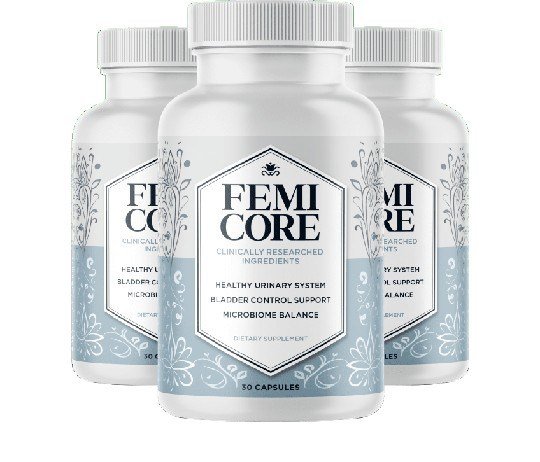
Check current FemiCore pricing here →
The 2023 Cochrane systematic review on cranberry for UTI prevention is the most comprehensive analysis available — 50 randomized controlled trials, 8,857 participants. It found cranberry products reduced UTI risk by approximately 26% overall, with stronger effects in women with recurrent UTIs (Williams G et al., Cochrane Database Syst. Rev., 2023; doi: 10.1002/14651858.CD001321.pub6). A 2024 meta-analysis in Frontiers in Nutrition found products containing at least 36 mg of PACs daily showed the most consistent preventive effects (Li Y et al., Front. Nutr., 2024; doi: 10.3389/fnut.2024.1346894). The mechanism: PACs prevent uropathogenic E. coli from adhering to urinary-tract walls — no adhesion, no infection. The five Lactobacillus strains (L. crispatus, L. acidophilus, L. plantarum, L. gasseri, L. casei) target the urinary microbiome directly. A 2023 review in Microorganisms confirmed that L. crispatus and L. gasseri are the strains with the most documented evidence for urogenital microbiome protection (Reid G et al., Microorganisms, 2023; doi: 10.3390/microorganisms11020316). The idea: a Lactobacillus-dominant urinary environment makes it harder for pathogens to establish. Berberine has documented antimicrobial and anti-inflammatory properties with activity against UTI-associated bacteria in lab settings, but human clinical trial data for UTI prevention specifically is limited. Vitamin C supports urinary acidification, making the environment less hospitable to pathogens. The key honest point: these ingredients are credible individually, but this exact combined formula has not been independently studied as a whole, so treat the blend as reasonable rather than clinically proven.The 2023 Cochrane systematic review on cranberry for UTI prevention is the most comprehensive analysis available — 50 randomized controlled trials, 8,857 participants. It found cranberry products reduced UTI risk by approximately 26% overall, with stronger effects in women with recurrent UTIs (Williams G et al., Cochrane Database Syst. Rev., 2023; doi: 10.1002/14651858.CD001321.pub6). A 2024 meta-analysis in Frontiers in Nutrition found products containing at least 36 mg of PACs daily showed the most consistent preventive effects (Li Y et al., Front. Nutr., 2024; doi: 10.3389/fnut.2024.1346894). The mechanism: PACs prevent uropathogenic E. coli from adhering to urinary-tract walls — no adhesion, no infection. The five Lactobacillus strains (L. crispatus, L. acidophilus, L. plantarum, L. gasseri, L. casei) target the urinary microbiome directly. A 2023 review in Microorganisms confirmed that L. crispatus and L. gasseri are the strains with the most documented evidence for urogenital microbiome protection (Reid G et al., Microorganisms, 2023; doi: 10.3390/microorganisms11020316). The idea: a Lactobacillus-dominant urinary environment makes it harder for pathogens to establish. Berberine has documented antimicrobial and anti-inflammatory properties with activity against UTI-associated bacteria in lab settings, but human clinical trial data for UTI prevention specifically is limited. Vitamin C supports urinary acidification, making the environment less hospitable to pathogens. The key honest point: these ingredients are credible individually, but this exact combined formula has not been independently studied as a whole, so treat the blend as reasonable rather than clinically proven.The 2023 Cochrane systematic review on cranberry for UTI prevention is the most comprehensive analysis available — 50 randomized controlled trials, 8,857 participants. It found cranberry products reduced UTI risk by approximately 26% overall, with stronger effects in women with recurrent UTIs (Williams G et al., Cochrane Database Syst. Rev., 2023; doi: 10.1002/14651858.CD001321.pub6). A 2024 meta-analysis in Frontiers in Nutrition found products containing at least 36 mg of PACs daily showed the most consistent preventive effects (Li Y et al., Front. Nutr., 2024; doi: 10.3389/fnut.2024.1346894). The mechanism: PACs prevent uropathogenic E. coli from adhering to urinary-tract walls — no adhesion, no infection. The five Lactobacillus strains (L. crispatus, L. acidophilus, L. plantarum, L. gasseri, L. casei) target the urinary microbiome directly. A 2023 review in Microorganisms confirmed that L. crispatus and L. gasseri are the strains with the most documented evidence for urogenital microbiome protection (Reid G et al., Microorganisms, 2023; doi: 10.3390/microorganisms11020316). The idea: a Lactobacillus-dominant urinary environment makes it harder for pathogens to establish. Berberine has documented antimicrobial and anti-inflammatory properties with activity against UTI-associated bacteria in lab settings, but human clinical trial data for UTI prevention specifically is limited. Vitamin C supports urinary acidification, making the environment less hospitable to pathogens. The key honest point: these ingredients are credible individually, but this exact combined formula has not been independently studied as a whole, so treat the blend as reasonable rather than clinically proven.The 2023 Cochrane systematic review on cranberry for UTI prevention is the most comprehensive analysis available — 50 randomized controlled trials, 8,857 participants. It found cranberry products reduced UTI risk by approximately 26% overall, with stronger effects in women with recurrent UTIs (Williams G et al., Cochrane Database Syst. Rev., 2023; doi: 10.1002/14651858.CD001321.pub6). A 2024 meta-analysis in Frontiers in Nutrition found products containing at least 36 mg of PACs daily showed the most consistent preventive effects (Li Y et al., Front. Nutr., 2024; doi: 10.3389/fnut.2024.1346894). The mechanism: PACs prevent uropathogenic E. coli from adhering to urinary-tract walls — no adhesion, no infection. The five Lactobacillus strains (L. crispatus, L. acidophilus, L. plantarum, L. gasseri, L. casei) target the urinary microbiome directly. A 2023 review in Microorganisms confirmed that L. crispatus and L. gasseri are the strains with the most documented evidence for urogenital microbiome protection (Reid G et al., Microorganisms, 2023; doi: 10.3390/microorganisms11020316). The idea: a Lactobacillus-dominant urinary environment makes it harder for pathogens to establish. Berberine has documented antimicrobial and anti-inflammatory properties with activity against UTI-associated bacteria in lab settings, but human clinical trial data for UTI prevention specifically is limited. Vitamin C supports urinary acidification, making the environment less hospitable to pathogens. The key honest point: these ingredients are credible individually, but this exact combined formula has not been independently studied as a whole, so treat the blend as reasonable rather than clinically proven.FemiCore vs. Other Bladder Products
The 2023 Cochrane systematic review on cranberry for UTI prevention is the most comprehensive analysis available — 50 randomized controlled trials, 8,857 participants. It found cranberry products reduced UTI risk by approximately 26% overall, with stronger effects in women with recurrent UTIs (Williams G et al., Cochrane Database Syst. Rev., 2023; doi: 10.1002/14651858.CD001321.pub6). A 2024 meta-analysis in Frontiers in Nutrition found products containing at least 36 mg of PACs daily showed the most consistent preventive effects (Li Y et al., Front. Nutr., 2024; doi: 10.3389/fnut.2024.1346894). The mechanism: PACs prevent uropathogenic E. coli from adhering to urinary-tract walls — no adhesion, no infection. The five Lactobacillus strains (L. crispatus, L. acidophilus, L. plantarum, L. gasseri, L. casei) target the urinary microbiome directly. A 2023 review in Microorganisms confirmed that L. crispatus and L. gasseri are the strains with the most documented evidence for urogenital microbiome protection (Reid G et al., Microorganisms, 2023; doi: 10.3390/microorganisms11020316). The idea: a Lactobacillus-dominant urinary environment makes it harder for pathogens to establish. Berberine has documented antimicrobial and anti-inflammatory properties with activity against UTI-associated bacteria in lab settings, but human clinical trial data for UTI prevention specifically is limited. Vitamin C supports urinary acidification, making the environment less hospitable to pathogens. The key honest point: these ingredients are credible individually, but this exact combined formula has not been independently studied as a whole, so treat the blend as reasonable rather than clinically proven.The 2023 Cochrane systematic review on cranberry for UTI prevention is the most comprehensive analysis available — 50 randomized controlled trials, 8,857 participants. It found cranberry products reduced UTI risk by approximately 26% overall, with stronger effects in women with recurrent UTIs (Williams G et al., Cochrane Database Syst. Rev., 2023; doi: 10.1002/14651858.CD001321.pub6). A 2024 meta-analysis in Frontiers in Nutrition found products containing at least 36 mg of PACs daily showed the most consistent preventive effects (Li Y et al., Front. Nutr., 2024; doi: 10.3389/fnut.2024.1346894). The mechanism: PACs prevent uropathogenic E. coli from adhering to urinary-tract walls — no adhesion, no infection. The five Lactobacillus strains (L. crispatus, L. acidophilus, L. plantarum, L. gasseri, L. casei) target the urinary microbiome directly. A 2023 review in Microorganisms confirmed that L. crispatus and L. gasseri are the strains with the most documented evidence for urogenital microbiome protection (Reid G et al., Microorganisms, 2023; doi: 10.3390/microorganisms11020316). The idea: a Lactobacillus-dominant urinary environment makes it harder for pathogens to establish. Berberine has documented antimicrobial and anti-inflammatory properties with activity against UTI-associated bacteria in lab settings, but human clinical trial data for UTI prevention specifically is limited. Vitamin C supports urinary acidification, making the environment less hospitable to pathogens. The key honest point: these ingredients are credible individually, but this exact combined formula has not been independently studied as a whole, so treat the blend as reasonable rather than clinically proven.The 2023 Cochrane systematic review on cranberry for UTI prevention is the most comprehensive analysis available — 50 randomized controlled trials, 8,857 participants. It found cranberry products reduced UTI risk by approximately 26% overall, with stronger effects in women with recurrent UTIs (Williams G et al., Cochrane Database Syst. Rev., 2023; doi: 10.1002/14651858.CD001321.pub6). A 2024 meta-analysis in Frontiers in Nutrition found products containing at least 36 mg of PACs daily showed the most consistent preventive effects (Li Y et al., Front. Nutr., 2024; doi: 10.3389/fnut.2024.1346894). The mechanism: PACs prevent uropathogenic E. coli from adhering to urinary-tract walls — no adhesion, no infection. The five Lactobacillus strains (L. crispatus, L. acidophilus, L. plantarum, L. gasseri, L. casei) target the urinary microbiome directly. A 2023 review in Microorganisms confirmed that L. crispatus and L. gasseri are the strains with the most documented evidence for urogenital microbiome protection (Reid G et al., Microorganisms, 2023; doi: 10.3390/microorganisms11020316). The idea: a Lactobacillus-dominant urinary environment makes it harder for pathogens to establish. Berberine has documented antimicrobial and anti-inflammatory properties with activity against UTI-associated bacteria in lab settings, but human clinical trial data for UTI prevention specifically is limited. Vitamin C supports urinary acidification, making the environment less hospitable to pathogens. The key honest point: these ingredients are credible individually, but this exact combined formula has not been independently studied as a whole, so treat the blend as reasonable rather than clinically proven.The 2023 Cochrane systematic review on cranberry for UTI prevention is the most comprehensive analysis available — 50 randomized controlled trials, 8,857 participants. It found cranberry products reduced UTI risk by approximately 26% overall, with stronger effects in women with recurrent UTIs (Williams G et al., Cochrane Database Syst. Rev., 2023; doi: 10.1002/14651858.CD001321.pub6). A 2024 meta-analysis in Frontiers in Nutrition found products containing at least 36 mg of PACs daily showed the most consistent preventive effects (Li Y et al., Front. Nutr., 2024; doi: 10.3389/fnut.2024.1346894). The mechanism: PACs prevent uropathogenic E. coli from adhering to urinary-tract walls — no adhesion, no infection. The five Lactobacillus strains (L. crispatus, L. acidophilus, L. plantarum, L. gasseri, L. casei) target the urinary microbiome directly. A 2023 review in Microorganisms confirmed that L. crispatus and L. gasseri are the strains with the most documented evidence for urogenital microbiome protection (Reid G et al., Microorganisms, 2023; doi: 10.3390/microorganisms11020316). The idea: a Lactobacillus-dominant urinary environment makes it harder for pathogens to establish. Berberine has documented antimicrobial and anti-inflammatory properties with activity against UTI-associated bacteria in lab settings, but human clinical trial data for UTI prevention specifically is limited. Vitamin C supports urinary acidification, making the environment less hospitable to pathogens. The key honest point: these ingredients are credible individually, but this exact combined formula has not been independently studied as a whole, so treat the blend as reasonable rather than clinically proven.In a market full of single-ingredient cranberry capsules and vague “proprietary blends,” FemiCore’s angle is its combination of botanicals and multiple probiotic strains plus transparent one-off pricing. Many alternatives either lean on one familiar ingredient or refuse to name what is inside, which makes them hard to trust or verify. FemiCore names its formula and backs it with a 60-day guarantee — two things that put it above the average bladder product when judged on transparency and risk alone. That is not a claim it works “better,” only that it is easier to evaluate honestly and safer to trial.
The 2023 Cochrane systematic review on cranberry for UTI prevention is the most comprehensive analysis available — 50 randomized controlled trials, 8,857 participants. It found cranberry products reduced UTI risk by approximately 26% overall, with stronger effects in women with recurrent UTIs (Williams G et al., Cochrane Database Syst. Rev., 2023; doi: 10.1002/14651858.CD001321.pub6). A 2024 meta-analysis in Frontiers in Nutrition found products containing at least 36 mg of PACs daily showed the most consistent preventive effects (Li Y et al., Front. Nutr., 2024; doi: 10.3389/fnut.2024.1346894). The mechanism: PACs prevent uropathogenic E. coli from adhering to urinary-tract walls — no adhesion, no infection. The five Lactobacillus strains (L. crispatus, L. acidophilus, L. plantarum, L. gasseri, L. casei) target the urinary microbiome directly. A 2023 review in Microorganisms confirmed that L. crispatus and L. gasseri are the strains with the most documented evidence for urogenital microbiome protection (Reid G et al., Microorganisms, 2023; doi: 10.3390/microorganisms11020316). The idea: a Lactobacillus-dominant urinary environment makes it harder for pathogens to establish. Berberine has documented antimicrobial and anti-inflammatory properties with activity against UTI-associated bacteria in lab settings, but human clinical trial data for UTI prevention specifically is limited. Vitamin C supports urinary acidification, making the environment less hospitable to pathogens. The key honest point: these ingredients are credible individually, but this exact combined formula has not been independently studied as a whole, so treat the blend as reasonable rather than clinically proven.The 2023 Cochrane systematic review on cranberry for UTI prevention is the most comprehensive analysis available — 50 randomized controlled trials, 8,857 participants. It found cranberry products reduced UTI risk by approximately 26% overall, with stronger effects in women with recurrent UTIs (Williams G et al., Cochrane Database Syst. Rev., 2023; doi: 10.1002/14651858.CD001321.pub6). A 2024 meta-analysis in Frontiers in Nutrition found products containing at least 36 mg of PACs daily showed the most consistent preventive effects (Li Y et al., Front. Nutr., 2024; doi: 10.3389/fnut.2024.1346894). The mechanism: PACs prevent uropathogenic E. coli from adhering to urinary-tract walls — no adhesion, no infection. The five Lactobacillus strains (L. crispatus, L. acidophilus, L. plantarum, L. gasseri, L. casei) target the urinary microbiome directly. A 2023 review in Microorganisms confirmed that L. crispatus and L. gasseri are the strains with the most documented evidence for urogenital microbiome protection (Reid G et al., Microorganisms, 2023; doi: 10.3390/microorganisms11020316). The idea: a Lactobacillus-dominant urinary environment makes it harder for pathogens to establish. Berberine has documented antimicrobial and anti-inflammatory properties with activity against UTI-associated bacteria in lab settings, but human clinical trial data for UTI prevention specifically is limited. Vitamin C supports urinary acidification, making the environment less hospitable to pathogens. The key honest point: these ingredients are credible individually, but this exact combined formula has not been independently studied as a whole, so treat the blend as reasonable rather than clinically proven.The 2023 Cochrane systematic review on cranberry for UTI prevention is the most comprehensive analysis available — 50 randomized controlled trials, 8,857 participants. It found cranberry products reduced UTI risk by approximately 26% overall, with stronger effects in women with recurrent UTIs (Williams G et al., Cochrane Database Syst. Rev., 2023; doi: 10.1002/14651858.CD001321.pub6). A 2024 meta-analysis in Frontiers in Nutrition found products containing at least 36 mg of PACs daily showed the most consistent preventive effects (Li Y et al., Front. Nutr., 2024; doi: 10.3389/fnut.2024.1346894). The mechanism: PACs prevent uropathogenic E. coli from adhering to urinary-tract walls — no adhesion, no infection. The five Lactobacillus strains (L. crispatus, L. acidophilus, L. plantarum, L. gasseri, L. casei) target the urinary microbiome directly. A 2023 review in Microorganisms confirmed that L. crispatus and L. gasseri are the strains with the most documented evidence for urogenital microbiome protection (Reid G et al., Microorganisms, 2023; doi: 10.3390/microorganisms11020316). The idea: a Lactobacillus-dominant urinary environment makes it harder for pathogens to establish. Berberine has documented antimicrobial and anti-inflammatory properties with activity against UTI-associated bacteria in lab settings, but human clinical trial data for UTI prevention specifically is limited. Vitamin C supports urinary acidification, making the environment less hospitable to pathogens. The key honest point: these ingredients are credible individually, but this exact combined formula has not been independently studied as a whole, so treat the blend as reasonable rather than clinically proven.The 2023 Cochrane systematic review on cranberry for UTI prevention is the most comprehensive analysis available — 50 randomized controlled trials, 8,857 participants. It found cranberry products reduced UTI risk by approximately 26% overall, with stronger effects in women with recurrent UTIs (Williams G et al., Cochrane Database Syst. Rev., 2023; doi: 10.1002/14651858.CD001321.pub6). A 2024 meta-analysis in Frontiers in Nutrition found products containing at least 36 mg of PACs daily showed the most consistent preventive effects (Li Y et al., Front. Nutr., 2024; doi: 10.3389/fnut.2024.1346894). The mechanism: PACs prevent uropathogenic E. coli from adhering to urinary-tract walls — no adhesion, no infection. The five Lactobacillus strains (L. crispatus, L. acidophilus, L. plantarum, L. gasseri, L. casei) target the urinary microbiome directly. A 2023 review in Microorganisms confirmed that L. crispatus and L. gasseri are the strains with the most documented evidence for urogenital microbiome protection (Reid G et al., Microorganisms, 2023; doi: 10.3390/microorganisms11020316). The idea: a Lactobacillus-dominant urinary environment makes it harder for pathogens to establish. Berberine has documented antimicrobial and anti-inflammatory properties with activity against UTI-associated bacteria in lab settings, but human clinical trial data for UTI prevention specifically is limited. Vitamin C supports urinary acidification, making the environment less hospitable to pathogens. The key honest point: these ingredients are credible individually, but this exact combined formula has not been independently studied as a whole, so treat the blend as reasonable rather than clinically proven.How to Get the Most Out of FemiCore
The 2023 Cochrane systematic review on cranberry for UTI prevention is the most comprehensive analysis available — 50 randomized controlled trials, 8,857 participants. It found cranberry products reduced UTI risk by approximately 26% overall, with stronger effects in women with recurrent UTIs (Williams G et al., Cochrane Database Syst. Rev., 2023; doi: 10.1002/14651858.CD001321.pub6). A 2024 meta-analysis in Frontiers in Nutrition found products containing at least 36 mg of PACs daily showed the most consistent preventive effects (Li Y et al., Front. Nutr., 2024; doi: 10.3389/fnut.2024.1346894). The mechanism: PACs prevent uropathogenic E. coli from adhering to urinary-tract walls — no adhesion, no infection. The five Lactobacillus strains (L. crispatus, L. acidophilus, L. plantarum, L. gasseri, L. casei) target the urinary microbiome directly. A 2023 review in Microorganisms confirmed that L. crispatus and L. gasseri are the strains with the most documented evidence for urogenital microbiome protection (Reid G et al., Microorganisms, 2023; doi: 10.3390/microorganisms11020316). The idea: a Lactobacillus-dominant urinary environment makes it harder for pathogens to establish. Berberine has documented antimicrobial and anti-inflammatory properties with activity against UTI-associated bacteria in lab settings, but human clinical trial data for UTI prevention specifically is limited. Vitamin C supports urinary acidification, making the environment less hospitable to pathogens. The key honest point: these ingredients are credible individually, but this exact combined formula has not been independently studied as a whole, so treat the blend as reasonable rather than clinically proven.The 2023 Cochrane systematic review on cranberry for UTI prevention is the most comprehensive analysis available — 50 randomized controlled trials, 8,857 participants. It found cranberry products reduced UTI risk by approximately 26% overall, with stronger effects in women with recurrent UTIs (Williams G et al., Cochrane Database Syst. Rev., 2023; doi: 10.1002/14651858.CD001321.pub6). A 2024 meta-analysis in Frontiers in Nutrition found products containing at least 36 mg of PACs daily showed the most consistent preventive effects (Li Y et al., Front. Nutr., 2024; doi: 10.3389/fnut.2024.1346894). The mechanism: PACs prevent uropathogenic E. coli from adhering to urinary-tract walls — no adhesion, no infection. The five Lactobacillus strains (L. crispatus, L. acidophilus, L. plantarum, L. gasseri, L. casei) target the urinary microbiome directly. A 2023 review in Microorganisms confirmed that L. crispatus and L. gasseri are the strains with the most documented evidence for urogenital microbiome protection (Reid G et al., Microorganisms, 2023; doi: 10.3390/microorganisms11020316). The idea: a Lactobacillus-dominant urinary environment makes it harder for pathogens to establish. Berberine has documented antimicrobial and anti-inflammatory properties with activity against UTI-associated bacteria in lab settings, but human clinical trial data for UTI prevention specifically is limited. Vitamin C supports urinary acidification, making the environment less hospitable to pathogens. The key honest point: these ingredients are credible individually, but this exact combined formula has not been independently studied as a whole, so treat the blend as reasonable rather than clinically proven.The 2023 Cochrane systematic review on cranberry for UTI prevention is the most comprehensive analysis available — 50 randomized controlled trials, 8,857 participants. It found cranberry products reduced UTI risk by approximately 26% overall, with stronger effects in women with recurrent UTIs (Williams G et al., Cochrane Database Syst. Rev., 2023; doi: 10.1002/14651858.CD001321.pub6). A 2024 meta-analysis in Frontiers in Nutrition found products containing at least 36 mg of PACs daily showed the most consistent preventive effects (Li Y et al., Front. Nutr., 2024; doi: 10.3389/fnut.2024.1346894). The mechanism: PACs prevent uropathogenic E. coli from adhering to urinary-tract walls — no adhesion, no infection. The five Lactobacillus strains (L. crispatus, L. acidophilus, L. plantarum, L. gasseri, L. casei) target the urinary microbiome directly. A 2023 review in Microorganisms confirmed that L. crispatus and L. gasseri are the strains with the most documented evidence for urogenital microbiome protection (Reid G et al., Microorganisms, 2023; doi: 10.3390/microorganisms11020316). The idea: a Lactobacillus-dominant urinary environment makes it harder for pathogens to establish. Berberine has documented antimicrobial and anti-inflammatory properties with activity against UTI-associated bacteria in lab settings, but human clinical trial data for UTI prevention specifically is limited. Vitamin C supports urinary acidification, making the environment less hospitable to pathogens. The key honest point: these ingredients are credible individually, but this exact combined formula has not been independently studied as a whole, so treat the blend as reasonable rather than clinically proven.The 2023 Cochrane systematic review on cranberry for UTI prevention is the most comprehensive analysis available — 50 randomized controlled trials, 8,857 participants. It found cranberry products reduced UTI risk by approximately 26% overall, with stronger effects in women with recurrent UTIs (Williams G et al., Cochrane Database Syst. Rev., 2023; doi: 10.1002/14651858.CD001321.pub6). A 2024 meta-analysis in Frontiers in Nutrition found products containing at least 36 mg of PACs daily showed the most consistent preventive effects (Li Y et al., Front. Nutr., 2024; doi: 10.3389/fnut.2024.1346894). The mechanism: PACs prevent uropathogenic E. coli from adhering to urinary-tract walls — no adhesion, no infection. The five Lactobacillus strains (L. crispatus, L. acidophilus, L. plantarum, L. gasseri, L. casei) target the urinary microbiome directly. A 2023 review in Microorganisms confirmed that L. crispatus and L. gasseri are the strains with the most documented evidence for urogenital microbiome protection (Reid G et al., Microorganisms, 2023; doi: 10.3390/microorganisms11020316). The idea: a Lactobacillus-dominant urinary environment makes it harder for pathogens to establish. Berberine has documented antimicrobial and anti-inflammatory properties with activity against UTI-associated bacteria in lab settings, but human clinical trial data for UTI prevention specifically is limited. Vitamin C supports urinary acidification, making the environment less hospitable to pathogens. The key honest point: these ingredients are credible individually, but this exact combined formula has not been independently studied as a whole, so treat the blend as reasonable rather than clinically proven.- The 2023 Cochrane systematic review on cranberry for UTI prevention is the most comprehensive analysis available — 50 randomized controlled trials, 8,857 participants. It found cranberry products reduced UTI risk by approximately 26% overall, with stronger effects in women with recurrent UTIs (Williams G et al., Cochrane Database Syst. Rev., 2023; doi: 10.1002/14651858.CD001321.pub6). A 2024 meta-analysis in Frontiers in Nutrition found products containing at least 36 mg of PACs daily showed the most consistent preventive effects (Li Y et al., Front. Nutr., 2024; doi: 10.3389/fnut.2024.1346894). The mechanism: PACs prevent uropathogenic E. coli from adhering to urinary-tract walls — no adhesion, no infection.
The five Lactobacillus strains (L. crispatus, L. acidophilus, L. plantarum, L. gasseri, L. casei) target the urinary microbiome directly. A 2023 review in Microorganisms confirmed that L. crispatus and L. gasseri are the strains with the most documented evidence for urogenital microbiome protection (Reid G et al., Microorganisms, 2023; doi: 10.3390/microorganisms11020316). The idea: a Lactobacillus-dominant urinary environment makes it harder for pathogens to establish.
Berberine has documented antimicrobial and anti-inflammatory properties with activity against UTI-associated bacteria in lab settings, but human clinical trial data for UTI prevention specifically is limited. Vitamin C supports urinary acidification, making the environment less hospitable to pathogens.
The key honest point: these ingredients are credible individually, but this exact combined formula has not been independently studied as a whole, so treat the blend as reasonable rather than clinically proven.
- Take one capsule every morning with water, consistently — consistency beats perfect timing. The 2023 Cochrane systematic review on cranberry for UTI prevention is the most comprehensive analysis available — 50 randomized controlled trials, 8,857 participants. It found cranberry products reduced UTI risk by approximately 26% overall, with stronger effects in women with recurrent UTIs (Williams G et al., Cochrane Database Syst. Rev., 2023; doi: 10.1002/14651858.CD001321.pub6). A 2024 meta-analysis in Frontiers in Nutrition found products containing at least 36 mg of PACs daily showed the most consistent preventive effects (Li Y et al., Front. Nutr., 2024; doi: 10.3389/fnut.2024.1346894). The mechanism: PACs prevent uropathogenic E. coli from adhering to urinary-tract walls — no adhesion, no infection. The five Lactobacillus strains (L. crispatus, L. acidophilus, L. plantarum, L. gasseri, L. casei) target the urinary microbiome directly. A 2023 review in Microorganisms confirmed that L. crispatus and L. gasseri are the strains with the most documented evidence for urogenital microbiome protection (Reid G et al., Microorganisms, 2023; doi: 10.3390/microorganisms11020316). The idea: a Lactobacillus-dominant urinary environment makes it harder for pathogens to establish. Berberine has documented antimicrobial and anti-inflammatory properties with activity against UTI-associated bacteria in lab settings, but human clinical trial data for UTI prevention specifically is limited. Vitamin C supports urinary acidification, making the environment less hospitable to pathogens. The key honest point: these ingredients are credible individually, but this exact combined formula has not been independently studied as a whole, so treat the blend as reasonable rather than clinically proven.
- Pair it with pelvic-floor (Kegel) exercises and good hydration, the doctor-recommended foundations. The 2023 Cochrane systematic review on cranberry for UTI prevention is the most comprehensive analysis available — 50 randomized controlled trials, 8,857 participants. It found cranberry products reduced UTI risk by approximately 26% overall, with stronger effects in women with recurrent UTIs (Williams G et al., Cochrane Database Syst. Rev., 2023; doi: 10.1002/14651858.CD001321.pub6). A 2024 meta-analysis in Frontiers in Nutrition found products containing at least 36 mg of PACs daily showed the most consistent preventive effects (Li Y et al., Front. Nutr., 2024; doi: 10.3389/fnut.2024.1346894). The mechanism: PACs prevent uropathogenic E. coli from adhering to urinary-tract walls — no adhesion, no infection. The five Lactobacillus strains (L. crispatus, L. acidophilus, L. plantarum, L. gasseri, L. casei) target the urinary microbiome directly. A 2023 review in Microorganisms confirmed that L. crispatus and L. gasseri are the strains with the most documented evidence for urogenital microbiome protection (Reid G et al., Microorganisms, 2023; doi: 10.3390/microorganisms11020316). The idea: a Lactobacillus-dominant urinary environment makes it harder for pathogens to establish. Berberine has documented antimicrobial and anti-inflammatory properties with activity against UTI-associated bacteria in lab settings, but human clinical trial data for UTI prevention specifically is limited. Vitamin C supports urinary acidification, making the environment less hospitable to pathogens. The key honest point: these ingredients are credible individually, but this exact combined formula has not been independently studied as a whole, so treat the blend as reasonable rather than clinically proven.
- Start after food if you are new to probiotics, to reduce the small chance of digestive adjustment. The 2023 Cochrane systematic review on cranberry for UTI prevention is the most comprehensive analysis available — 50 randomized controlled trials, 8,857 participants. It found cranberry products reduced UTI risk by approximately 26% overall, with stronger effects in women with recurrent UTIs (Williams G et al., Cochrane Database Syst. Rev., 2023; doi: 10.1002/14651858.CD001321.pub6). A 2024 meta-analysis in Frontiers in Nutrition found products containing at least 36 mg of PACs daily showed the most consistent preventive effects (Li Y et al., Front. Nutr., 2024; doi: 10.3389/fnut.2024.1346894). The mechanism: PACs prevent uropathogenic E. coli from adhering to urinary-tract walls — no adhesion, no infection. The five Lactobacillus strains (L. crispatus, L. acidophilus, L. plantarum, L. gasseri, L. casei) target the urinary microbiome directly. A 2023 review in Microorganisms confirmed that L. crispatus and L. gasseri are the strains with the most documented evidence for urogenital microbiome protection (Reid G et al., Microorganisms, 2023; doi: 10.3390/microorganisms11020316). The idea: a Lactobacillus-dominant urinary environment makes it harder for pathogens to establish. Berberine has documented antimicrobial and anti-inflammatory properties with activity against UTI-associated bacteria in lab settings, but human clinical trial data for UTI prevention specifically is limited. Vitamin C supports urinary acidification, making the environment less hospitable to pathogens. The key honest point: these ingredients are credible individually, but this exact combined formula has not been independently studied as a whole, so treat the blend as reasonable rather than clinically proven.
- Give it a full 4-8 weeks before judging — and use the 60-day money-back guarantee as your safety net and peace of mind. The 2023 Cochrane systematic review on cranberry for UTI prevention is the most comprehensive analysis available — 50 randomized controlled trials, 8,857 participants. It found cranberry products reduced UTI risk by approximately 26% overall, with stronger effects in women with recurrent UTIs (Williams G et al., Cochrane Database Syst. Rev., 2023; doi: 10.1002/14651858.CD001321.pub6). A 2024 meta-analysis in Frontiers in Nutrition found products containing at least 36 mg of PACs daily showed the most consistent preventive effects (Li Y et al., Front. Nutr., 2024; doi: 10.3389/fnut.2024.1346894). The mechanism: PACs prevent uropathogenic E. coli from adhering to urinary-tract walls — no adhesion, no infection. The five Lactobacillus strains (L. crispatus, L. acidophilus, L. plantarum, L. gasseri, L. casei) target the urinary microbiome directly. A 2023 review in Microorganisms confirmed that L. crispatus and L. gasseri are the strains with the most documented evidence for urogenital microbiome protection (Reid G et al., Microorganisms, 2023; doi: 10.3390/microorganisms11020316). The idea: a Lactobacillus-dominant urinary environment makes it harder for pathogens to establish. Berberine has documented antimicrobial and anti-inflammatory properties with activity against UTI-associated bacteria in lab settings, but human clinical trial data for UTI prevention specifically is limited. Vitamin C supports urinary acidification, making the environment less hospitable to pathogens. The key honest point: these ingredients are credible individually, but this exact combined formula has not been independently studied as a whole, so treat the blend as reasonable rather than clinically proven.
Realistic habits matter more than the bottle, which is exactly the honest framing a trustworthy review should give.
The 2023 Cochrane systematic review on cranberry for UTI prevention is the most comprehensive analysis available — 50 randomized controlled trials, 8,857 participants. It found cranberry products reduced UTI risk by approximately 26% overall, with stronger effects in women with recurrent UTIs (Williams G et al., Cochrane Database Syst. Rev., 2023; doi: 10.1002/14651858.CD001321.pub6). A 2024 meta-analysis in Frontiers in Nutrition found products containing at least 36 mg of PACs daily showed the most consistent preventive effects (Li Y et al., Front. Nutr., 2024; doi: 10.3389/fnut.2024.1346894). The mechanism: PACs prevent uropathogenic E. coli from adhering to urinary-tract walls — no adhesion, no infection. The five Lactobacillus strains (L. crispatus, L. acidophilus, L. plantarum, L. gasseri, L. casei) target the urinary microbiome directly. A 2023 review in Microorganisms confirmed that L. crispatus and L. gasseri are the strains with the most documented evidence for urogenital microbiome protection (Reid G et al., Microorganisms, 2023; doi: 10.3390/microorganisms11020316). The idea: a Lactobacillus-dominant urinary environment makes it harder for pathogens to establish. Berberine has documented antimicrobial and anti-inflammatory properties with activity against UTI-associated bacteria in lab settings, but human clinical trial data for UTI prevention specifically is limited. Vitamin C supports urinary acidification, making the environment less hospitable to pathogens. The key honest point: these ingredients are credible individually, but this exact combined formula has not been independently studied as a whole, so treat the blend as reasonable rather than clinically proven.The 2023 Cochrane systematic review on cranberry for UTI prevention is the most comprehensive analysis available — 50 randomized controlled trials, 8,857 participants. It found cranberry products reduced UTI risk by approximately 26% overall, with stronger effects in women with recurrent UTIs (Williams G et al., Cochrane Database Syst. Rev., 2023; doi: 10.1002/14651858.CD001321.pub6). A 2024 meta-analysis in Frontiers in Nutrition found products containing at least 36 mg of PACs daily showed the most consistent preventive effects (Li Y et al., Front. Nutr., 2024; doi: 10.3389/fnut.2024.1346894). The mechanism: PACs prevent uropathogenic E. coli from adhering to urinary-tract walls — no adhesion, no infection. The five Lactobacillus strains (L. crispatus, L. acidophilus, L. plantarum, L. gasseri, L. casei) target the urinary microbiome directly. A 2023 review in Microorganisms confirmed that L. crispatus and L. gasseri are the strains with the most documented evidence for urogenital microbiome protection (Reid G et al., Microorganisms, 2023; doi: 10.3390/microorganisms11020316). The idea: a Lactobacillus-dominant urinary environment makes it harder for pathogens to establish. Berberine has documented antimicrobial and anti-inflammatory properties with activity against UTI-associated bacteria in lab settings, but human clinical trial data for UTI prevention specifically is limited. Vitamin C supports urinary acidification, making the environment less hospitable to pathogens. The key honest point: these ingredients are credible individually, but this exact combined formula has not been independently studied as a whole, so treat the blend as reasonable rather than clinically proven.The 2023 Cochrane systematic review on cranberry for UTI prevention is the most comprehensive analysis available — 50 randomized controlled trials, 8,857 participants. It found cranberry products reduced UTI risk by approximately 26% overall, with stronger effects in women with recurrent UTIs (Williams G et al., Cochrane Database Syst. Rev., 2023; doi: 10.1002/14651858.CD001321.pub6). A 2024 meta-analysis in Frontiers in Nutrition found products containing at least 36 mg of PACs daily showed the most consistent preventive effects (Li Y et al., Front. Nutr., 2024; doi: 10.3389/fnut.2024.1346894). The mechanism: PACs prevent uropathogenic E. coli from adhering to urinary-tract walls — no adhesion, no infection. The five Lactobacillus strains (L. crispatus, L. acidophilus, L. plantarum, L. gasseri, L. casei) target the urinary microbiome directly. A 2023 review in Microorganisms confirmed that L. crispatus and L. gasseri are the strains with the most documented evidence for urogenital microbiome protection (Reid G et al., Microorganisms, 2023; doi: 10.3390/microorganisms11020316). The idea: a Lactobacillus-dominant urinary environment makes it harder for pathogens to establish. Berberine has documented antimicrobial and anti-inflammatory properties with activity against UTI-associated bacteria in lab settings, but human clinical trial data for UTI prevention specifically is limited. Vitamin C supports urinary acidification, making the environment less hospitable to pathogens. The key honest point: these ingredients are credible individually, but this exact combined formula has not been independently studied as a whole, so treat the blend as reasonable rather than clinically proven.The 2023 Cochrane systematic review on cranberry for UTI prevention is the most comprehensive analysis available — 50 randomized controlled trials, 8,857 participants. It found cranberry products reduced UTI risk by approximately 26% overall, with stronger effects in women with recurrent UTIs (Williams G et al., Cochrane Database Syst. Rev., 2023; doi: 10.1002/14651858.CD001321.pub6). A 2024 meta-analysis in Frontiers in Nutrition found products containing at least 36 mg of PACs daily showed the most consistent preventive effects (Li Y et al., Front. Nutr., 2024; doi: 10.3389/fnut.2024.1346894). The mechanism: PACs prevent uropathogenic E. coli from adhering to urinary-tract walls — no adhesion, no infection. The five Lactobacillus strains (L. crispatus, L. acidophilus, L. plantarum, L. gasseri, L. casei) target the urinary microbiome directly. A 2023 review in Microorganisms confirmed that L. crispatus and L. gasseri are the strains with the most documented evidence for urogenital microbiome protection (Reid G et al., Microorganisms, 2023; doi: 10.3390/microorganisms11020316). The idea: a Lactobacillus-dominant urinary environment makes it harder for pathogens to establish. Berberine has documented antimicrobial and anti-inflammatory properties with activity against UTI-associated bacteria in lab settings, but human clinical trial data for UTI prevention specifically is limited. Vitamin C supports urinary acidification, making the environment less hospitable to pathogens. The key honest point: these ingredients are credible individually, but this exact combined formula has not been independently studied as a whole, so treat the blend as reasonable rather than clinically proven.Frequently Asked Questions
The 2023 Cochrane systematic review on cranberry for UTI prevention is the most comprehensive analysis available — 50 randomized controlled trials, 8,857 participants. It found cranberry products reduced UTI risk by approximately 26% overall, with stronger effects in women with recurrent UTIs (Williams G et al., Cochrane Database Syst. Rev., 2023; doi: 10.1002/14651858.CD001321.pub6). A 2024 meta-analysis in Frontiers in Nutrition found products containing at least 36 mg of PACs daily showed the most consistent preventive effects (Li Y et al., Front. Nutr., 2024; doi: 10.3389/fnut.2024.1346894). The mechanism: PACs prevent uropathogenic E. coli from adhering to urinary-tract walls — no adhesion, no infection. The five Lactobacillus strains (L. crispatus, L. acidophilus, L. plantarum, L. gasseri, L. casei) target the urinary microbiome directly. A 2023 review in Microorganisms confirmed that L. crispatus and L. gasseri are the strains with the most documented evidence for urogenital microbiome protection (Reid G et al., Microorganisms, 2023; doi: 10.3390/microorganisms11020316). The idea: a Lactobacillus-dominant urinary environment makes it harder for pathogens to establish. Berberine has documented antimicrobial and anti-inflammatory properties with activity against UTI-associated bacteria in lab settings, but human clinical trial data for UTI prevention specifically is limited. Vitamin C supports urinary acidification, making the environment less hospitable to pathogens. The key honest point: these ingredients are credible individually, but this exact combined formula has not been independently studied as a whole, so treat the blend as reasonable rather than clinically proven.The 2023 Cochrane systematic review on cranberry for UTI prevention is the most comprehensive analysis available — 50 randomized controlled trials, 8,857 participants. It found cranberry products reduced UTI risk by approximately 26% overall, with stronger effects in women with recurrent UTIs (Williams G et al., Cochrane Database Syst. Rev., 2023; doi: 10.1002/14651858.CD001321.pub6). A 2024 meta-analysis in Frontiers in Nutrition found products containing at least 36 mg of PACs daily showed the most consistent preventive effects (Li Y et al., Front. Nutr., 2024; doi: 10.3389/fnut.2024.1346894). The mechanism: PACs prevent uropathogenic E. coli from adhering to urinary-tract walls — no adhesion, no infection. The five Lactobacillus strains (L. crispatus, L. acidophilus, L. plantarum, L. gasseri, L. casei) target the urinary microbiome directly. A 2023 review in Microorganisms confirmed that L. crispatus and L. gasseri are the strains with the most documented evidence for urogenital microbiome protection (Reid G et al., Microorganisms, 2023; doi: 10.3390/microorganisms11020316). The idea: a Lactobacillus-dominant urinary environment makes it harder for pathogens to establish. Berberine has documented antimicrobial and anti-inflammatory properties with activity against UTI-associated bacteria in lab settings, but human clinical trial data for UTI prevention specifically is limited. Vitamin C supports urinary acidification, making the environment less hospitable to pathogens. The key honest point: these ingredients are credible individually, but this exact combined formula has not been independently studied as a whole, so treat the blend as reasonable rather than clinically proven.The 2023 Cochrane systematic review on cranberry for UTI prevention is the most comprehensive analysis available — 50 randomized controlled trials, 8,857 participants. It found cranberry products reduced UTI risk by approximately 26% overall, with stronger effects in women with recurrent UTIs (Williams G et al., Cochrane Database Syst. Rev., 2023; doi: 10.1002/14651858.CD001321.pub6). A 2024 meta-analysis in Frontiers in Nutrition found products containing at least 36 mg of PACs daily showed the most consistent preventive effects (Li Y et al., Front. Nutr., 2024; doi: 10.3389/fnut.2024.1346894). The mechanism: PACs prevent uropathogenic E. coli from adhering to urinary-tract walls — no adhesion, no infection. The five Lactobacillus strains (L. crispatus, L. acidophilus, L. plantarum, L. gasseri, L. casei) target the urinary microbiome directly. A 2023 review in Microorganisms confirmed that L. crispatus and L. gasseri are the strains with the most documented evidence for urogenital microbiome protection (Reid G et al., Microorganisms, 2023; doi: 10.3390/microorganisms11020316). The idea: a Lactobacillus-dominant urinary environment makes it harder for pathogens to establish. Berberine has documented antimicrobial and anti-inflammatory properties with activity against UTI-associated bacteria in lab settings, but human clinical trial data for UTI prevention specifically is limited. Vitamin C supports urinary acidification, making the environment less hospitable to pathogens. The key honest point: these ingredients are credible individually, but this exact combined formula has not been independently studied as a whole, so treat the blend as reasonable rather than clinically proven.The 2023 Cochrane systematic review on cranberry for UTI prevention is the most comprehensive analysis available — 50 randomized controlled trials, 8,857 participants. It found cranberry products reduced UTI risk by approximately 26% overall, with stronger effects in women with recurrent UTIs (Williams G et al., Cochrane Database Syst. Rev., 2023; doi: 10.1002/14651858.CD001321.pub6). A 2024 meta-analysis in Frontiers in Nutrition found products containing at least 36 mg of PACs daily showed the most consistent preventive effects (Li Y et al., Front. Nutr., 2024; doi: 10.3389/fnut.2024.1346894). The mechanism: PACs prevent uropathogenic E. coli from adhering to urinary-tract walls — no adhesion, no infection. The five Lactobacillus strains (L. crispatus, L. acidophilus, L. plantarum, L. gasseri, L. casei) target the urinary microbiome directly. A 2023 review in Microorganisms confirmed that L. crispatus and L. gasseri are the strains with the most documented evidence for urogenital microbiome protection (Reid G et al., Microorganisms, 2023; doi: 10.3390/microorganisms11020316). The idea: a Lactobacillus-dominant urinary environment makes it harder for pathogens to establish. Berberine has documented antimicrobial and anti-inflammatory properties with activity against UTI-associated bacteria in lab settings, but human clinical trial data for UTI prevention specifically is limited. Vitamin C supports urinary acidification, making the environment less hospitable to pathogens. The key honest point: these ingredients are credible individually, but this exact combined formula has not been independently studied as a whole, so treat the blend as reasonable rather than clinically proven.Is FemiCore a scam?
The 2023 Cochrane systematic review on cranberry for UTI prevention is the most comprehensive analysis available — 50 randomized controlled trials, 8,857 participants. It found cranberry products reduced UTI risk by approximately 26% overall, with stronger effects in women with recurrent UTIs (Williams G et al., Cochrane Database Syst. Rev., 2023; doi: 10.1002/14651858.CD001321.pub6). A 2024 meta-analysis in Frontiers in Nutrition found products containing at least 36 mg of PACs daily showed the most consistent preventive effects (Li Y et al., Front. Nutr., 2024; doi: 10.3389/fnut.2024.1346894). The mechanism: PACs prevent uropathogenic E. coli from adhering to urinary-tract walls — no adhesion, no infection. The five Lactobacillus strains (L. crispatus, L. acidophilus, L. plantarum, L. gasseri, L. casei) target the urinary microbiome directly. A 2023 review in Microorganisms confirmed that L. crispatus and L. gasseri are the strains with the most documented evidence for urogenital microbiome protection (Reid G et al., Microorganisms, 2023; doi: 10.3390/microorganisms11020316). The idea: a Lactobacillus-dominant urinary environment makes it harder for pathogens to establish. Berberine has documented antimicrobial and anti-inflammatory properties with activity against UTI-associated bacteria in lab settings, but human clinical trial data for UTI prevention specifically is limited. Vitamin C supports urinary acidification, making the environment less hospitable to pathogens. The key honest point: these ingredients are credible individually, but this exact combined formula has not been independently studied as a whole, so treat the blend as reasonable rather than clinically proven.The 2023 Cochrane systematic review on cranberry for UTI prevention is the most comprehensive analysis available — 50 randomized controlled trials, 8,857 participants. It found cranberry products reduced UTI risk by approximately 26% overall, with stronger effects in women with recurrent UTIs (Williams G et al., Cochrane Database Syst. Rev., 2023; doi: 10.1002/14651858.CD001321.pub6). A 2024 meta-analysis in Frontiers in Nutrition found products containing at least 36 mg of PACs daily showed the most consistent preventive effects (Li Y et al., Front. Nutr., 2024; doi: 10.3389/fnut.2024.1346894). The mechanism: PACs prevent uropathogenic E. coli from adhering to urinary-tract walls — no adhesion, no infection. The five Lactobacillus strains (L. crispatus, L. acidophilus, L. plantarum, L. gasseri, L. casei) target the urinary microbiome directly. A 2023 review in Microorganisms confirmed that L. crispatus and L. gasseri are the strains with the most documented evidence for urogenital microbiome protection (Reid G et al., Microorganisms, 2023; doi: 10.3390/microorganisms11020316). The idea: a Lactobacillus-dominant urinary environment makes it harder for pathogens to establish. Berberine has documented antimicrobial and anti-inflammatory properties with activity against UTI-associated bacteria in lab settings, but human clinical trial data for UTI prevention specifically is limited. Vitamin C supports urinary acidification, making the environment less hospitable to pathogens. The key honest point: these ingredients are credible individually, but this exact combined formula has not been independently studied as a whole, so treat the blend as reasonable rather than clinically proven.The 2023 Cochrane systematic review on cranberry for UTI prevention is the most comprehensive analysis available — 50 randomized controlled trials, 8,857 participants. It found cranberry products reduced UTI risk by approximately 26% overall, with stronger effects in women with recurrent UTIs (Williams G et al., Cochrane Database Syst. Rev., 2023; doi: 10.1002/14651858.CD001321.pub6). A 2024 meta-analysis in Frontiers in Nutrition found products containing at least 36 mg of PACs daily showed the most consistent preventive effects (Li Y et al., Front. Nutr., 2024; doi: 10.3389/fnut.2024.1346894). The mechanism: PACs prevent uropathogenic E. coli from adhering to urinary-tract walls — no adhesion, no infection. The five Lactobacillus strains (L. crispatus, L. acidophilus, L. plantarum, L. gasseri, L. casei) target the urinary microbiome directly. A 2023 review in Microorganisms confirmed that L. crispatus and L. gasseri are the strains with the most documented evidence for urogenital microbiome protection (Reid G et al., Microorganisms, 2023; doi: 10.3390/microorganisms11020316). The idea: a Lactobacillus-dominant urinary environment makes it harder for pathogens to establish. Berberine has documented antimicrobial and anti-inflammatory properties with activity against UTI-associated bacteria in lab settings, but human clinical trial data for UTI prevention specifically is limited. Vitamin C supports urinary acidification, making the environment less hospitable to pathogens. The key honest point: these ingredients are credible individually, but this exact combined formula has not been independently studied as a whole, so treat the blend as reasonable rather than clinically proven.No — it is a legitimate, transparent, refund-backed supplement. It is just not a “guaranteed cure.”
The 2023 Cochrane systematic review on cranberry for UTI prevention is the most comprehensive analysis available — 50 randomized controlled trials, 8,857 participants. It found cranberry products reduced UTI risk by approximately 26% overall, with stronger effects in women with recurrent UTIs (Williams G et al., Cochrane Database Syst. Rev., 2023; doi: 10.1002/14651858.CD001321.pub6). A 2024 meta-analysis in Frontiers in Nutrition found products containing at least 36 mg of PACs daily showed the most consistent preventive effects (Li Y et al., Front. Nutr., 2024; doi: 10.3389/fnut.2024.1346894). The mechanism: PACs prevent uropathogenic E. coli from adhering to urinary-tract walls — no adhesion, no infection. The five Lactobacillus strains (L. crispatus, L. acidophilus, L. plantarum, L. gasseri, L. casei) target the urinary microbiome directly. A 2023 review in Microorganisms confirmed that L. crispatus and L. gasseri are the strains with the most documented evidence for urogenital microbiome protection (Reid G et al., Microorganisms, 2023; doi: 10.3390/microorganisms11020316). The idea: a Lactobacillus-dominant urinary environment makes it harder for pathogens to establish. Berberine has documented antimicrobial and anti-inflammatory properties with activity against UTI-associated bacteria in lab settings, but human clinical trial data for UTI prevention specifically is limited. Vitamin C supports urinary acidification, making the environment less hospitable to pathogens. The key honest point: these ingredients are credible individually, but this exact combined formula has not been independently studied as a whole, so treat the blend as reasonable rather than clinically proven.The 2023 Cochrane systematic review on cranberry for UTI prevention is the most comprehensive analysis available — 50 randomized controlled trials, 8,857 participants. It found cranberry products reduced UTI risk by approximately 26% overall, with stronger effects in women with recurrent UTIs (Williams G et al., Cochrane Database Syst. Rev., 2023; doi: 10.1002/14651858.CD001321.pub6). A 2024 meta-analysis in Frontiers in Nutrition found products containing at least 36 mg of PACs daily showed the most consistent preventive effects (Li Y et al., Front. Nutr., 2024; doi: 10.3389/fnut.2024.1346894). The mechanism: PACs prevent uropathogenic E. coli from adhering to urinary-tract walls — no adhesion, no infection. The five Lactobacillus strains (L. crispatus, L. acidophilus, L. plantarum, L. gasseri, L. casei) target the urinary microbiome directly. A 2023 review in Microorganisms confirmed that L. crispatus and L. gasseri are the strains with the most documented evidence for urogenital microbiome protection (Reid G et al., Microorganisms, 2023; doi: 10.3390/microorganisms11020316). The idea: a Lactobacillus-dominant urinary environment makes it harder for pathogens to establish. Berberine has documented antimicrobial and anti-inflammatory properties with activity against UTI-associated bacteria in lab settings, but human clinical trial data for UTI prevention specifically is limited. Vitamin C supports urinary acidification, making the environment less hospitable to pathogens. The key honest point: these ingredients are credible individually, but this exact combined formula has not been independently studied as a whole, so treat the blend as reasonable rather than clinically proven.The 2023 Cochrane systematic review on cranberry for UTI prevention is the most comprehensive analysis available — 50 randomized controlled trials, 8,857 participants. It found cranberry products reduced UTI risk by approximately 26% overall, with stronger effects in women with recurrent UTIs (Williams G et al., Cochrane Database Syst. Rev., 2023; doi: 10.1002/14651858.CD001321.pub6). A 2024 meta-analysis in Frontiers in Nutrition found products containing at least 36 mg of PACs daily showed the most consistent preventive effects (Li Y et al., Front. Nutr., 2024; doi: 10.3389/fnut.2024.1346894). The mechanism: PACs prevent uropathogenic E. coli from adhering to urinary-tract walls — no adhesion, no infection. The five Lactobacillus strains (L. crispatus, L. acidophilus, L. plantarum, L. gasseri, L. casei) target the urinary microbiome directly. A 2023 review in Microorganisms confirmed that L. crispatus and L. gasseri are the strains with the most documented evidence for urogenital microbiome protection (Reid G et al., Microorganisms, 2023; doi: 10.3390/microorganisms11020316). The idea: a Lactobacillus-dominant urinary environment makes it harder for pathogens to establish. Berberine has documented antimicrobial and anti-inflammatory properties with activity against UTI-associated bacteria in lab settings, but human clinical trial data for UTI prevention specifically is limited. Vitamin C supports urinary acidification, making the environment less hospitable to pathogens. The key honest point: these ingredients are credible individually, but this exact combined formula has not been independently studied as a whole, so treat the blend as reasonable rather than clinically proven.The 2023 Cochrane systematic review on cranberry for UTI prevention is the most comprehensive analysis available — 50 randomized controlled trials, 8,857 participants. It found cranberry products reduced UTI risk by approximately 26% overall, with stronger effects in women with recurrent UTIs (Williams G et al., Cochrane Database Syst. Rev., 2023; doi: 10.1002/14651858.CD001321.pub6). A 2024 meta-analysis in Frontiers in Nutrition found products containing at least 36 mg of PACs daily showed the most consistent preventive effects (Li Y et al., Front. Nutr., 2024; doi: 10.3389/fnut.2024.1346894). The mechanism: PACs prevent uropathogenic E. coli from adhering to urinary-tract walls — no adhesion, no infection. The five Lactobacillus strains (L. crispatus, L. acidophilus, L. plantarum, L. gasseri, L. casei) target the urinary microbiome directly. A 2023 review in Microorganisms confirmed that L. crispatus and L. gasseri are the strains with the most documented evidence for urogenital microbiome protection (Reid G et al., Microorganisms, 2023; doi: 10.3390/microorganisms11020316). The idea: a Lactobacillus-dominant urinary environment makes it harder for pathogens to establish. Berberine has documented antimicrobial and anti-inflammatory properties with activity against UTI-associated bacteria in lab settings, but human clinical trial data for UTI prevention specifically is limited. Vitamin C supports urinary acidification, making the environment less hospitable to pathogens. The key honest point: these ingredients are credible individually, but this exact combined formula has not been independently studied as a whole, so treat the blend as reasonable rather than clinically proven.How long should I try FemiCore before judging it?
The 2023 Cochrane systematic review on cranberry for UTI prevention is the most comprehensive analysis available — 50 randomized controlled trials, 8,857 participants. It found cranberry products reduced UTI risk by approximately 26% overall, with stronger effects in women with recurrent UTIs (Williams G et al., Cochrane Database Syst. Rev., 2023; doi: 10.1002/14651858.CD001321.pub6). A 2024 meta-analysis in Frontiers in Nutrition found products containing at least 36 mg of PACs daily showed the most consistent preventive effects (Li Y et al., Front. Nutr., 2024; doi: 10.3389/fnut.2024.1346894). The mechanism: PACs prevent uropathogenic E. coli from adhering to urinary-tract walls — no adhesion, no infection. The five Lactobacillus strains (L. crispatus, L. acidophilus, L. plantarum, L. gasseri, L. casei) target the urinary microbiome directly. A 2023 review in Microorganisms confirmed that L. crispatus and L. gasseri are the strains with the most documented evidence for urogenital microbiome protection (Reid G et al., Microorganisms, 2023; doi: 10.3390/microorganisms11020316). The idea: a Lactobacillus-dominant urinary environment makes it harder for pathogens to establish. Berberine has documented antimicrobial and anti-inflammatory properties with activity against UTI-associated bacteria in lab settings, but human clinical trial data for UTI prevention specifically is limited. Vitamin C supports urinary acidification, making the environment less hospitable to pathogens. The key honest point: these ingredients are credible individually, but this exact combined formula has not been independently studied as a whole, so treat the blend as reasonable rather than clinically proven.The 2023 Cochrane systematic review on cranberry for UTI prevention is the most comprehensive analysis available — 50 randomized controlled trials, 8,857 participants. It found cranberry products reduced UTI risk by approximately 26% overall, with stronger effects in women with recurrent UTIs (Williams G et al., Cochrane Database Syst. Rev., 2023; doi: 10.1002/14651858.CD001321.pub6). A 2024 meta-analysis in Frontiers in Nutrition found products containing at least 36 mg of PACs daily showed the most consistent preventive effects (Li Y et al., Front. Nutr., 2024; doi: 10.3389/fnut.2024.1346894). The mechanism: PACs prevent uropathogenic E. coli from adhering to urinary-tract walls — no adhesion, no infection. The five Lactobacillus strains (L. crispatus, L. acidophilus, L. plantarum, L. gasseri, L. casei) target the urinary microbiome directly. A 2023 review in Microorganisms confirmed that L. crispatus and L. gasseri are the strains with the most documented evidence for urogenital microbiome protection (Reid G et al., Microorganisms, 2023; doi: 10.3390/microorganisms11020316). The idea: a Lactobacillus-dominant urinary environment makes it harder for pathogens to establish. Berberine has documented antimicrobial and anti-inflammatory properties with activity against UTI-associated bacteria in lab settings, but human clinical trial data for UTI prevention specifically is limited. Vitamin C supports urinary acidification, making the environment less hospitable to pathogens. The key honest point: these ingredients are credible individually, but this exact combined formula has not been independently studied as a whole, so treat the blend as reasonable rather than clinically proven.The 2023 Cochrane systematic review on cranberry for UTI prevention is the most comprehensive analysis available — 50 randomized controlled trials, 8,857 participants. It found cranberry products reduced UTI risk by approximately 26% overall, with stronger effects in women with recurrent UTIs (Williams G et al., Cochrane Database Syst. Rev., 2023; doi: 10.1002/14651858.CD001321.pub6). A 2024 meta-analysis in Frontiers in Nutrition found products containing at least 36 mg of PACs daily showed the most consistent preventive effects (Li Y et al., Front. Nutr., 2024; doi: 10.3389/fnut.2024.1346894). The mechanism: PACs prevent uropathogenic E. coli from adhering to urinary-tract walls — no adhesion, no infection. The five Lactobacillus strains (L. crispatus, L. acidophilus, L. plantarum, L. gasseri, L. casei) target the urinary microbiome directly. A 2023 review in Microorganisms confirmed that L. crispatus and L. gasseri are the strains with the most documented evidence for urogenital microbiome protection (Reid G et al., Microorganisms, 2023; doi: 10.3390/microorganisms11020316). The idea: a Lactobacillus-dominant urinary environment makes it harder for pathogens to establish. Berberine has documented antimicrobial and anti-inflammatory properties with activity against UTI-associated bacteria in lab settings, but human clinical trial data for UTI prevention specifically is limited. Vitamin C supports urinary acidification, making the environment less hospitable to pathogens. The key honest point: these ingredients are credible individually, but this exact combined formula has not been independently studied as a whole, so treat the blend as reasonable rather than clinically proven.Give it a full 4-8 weeks of daily, consistent use before deciding. Probiotic-type formulas act gradually, so a short trial simply cannot tell you whether it suits you — and that is exactly why the 60-day guarantee exists as a safety net.
The 2023 Cochrane systematic review on cranberry for UTI prevention is the most comprehensive analysis available — 50 randomized controlled trials, 8,857 participants. It found cranberry products reduced UTI risk by approximately 26% overall, with stronger effects in women with recurrent UTIs (Williams G et al., Cochrane Database Syst. Rev., 2023; doi: 10.1002/14651858.CD001321.pub6). A 2024 meta-analysis in Frontiers in Nutrition found products containing at least 36 mg of PACs daily showed the most consistent preventive effects (Li Y et al., Front. Nutr., 2024; doi: 10.3389/fnut.2024.1346894). The mechanism: PACs prevent uropathogenic E. coli from adhering to urinary-tract walls — no adhesion, no infection. The five Lactobacillus strains (L. crispatus, L. acidophilus, L. plantarum, L. gasseri, L. casei) target the urinary microbiome directly. A 2023 review in Microorganisms confirmed that L. crispatus and L. gasseri are the strains with the most documented evidence for urogenital microbiome protection (Reid G et al., Microorganisms, 2023; doi: 10.3390/microorganisms11020316). The idea: a Lactobacillus-dominant urinary environment makes it harder for pathogens to establish. Berberine has documented antimicrobial and anti-inflammatory properties with activity against UTI-associated bacteria in lab settings, but human clinical trial data for UTI prevention specifically is limited. Vitamin C supports urinary acidification, making the environment less hospitable to pathogens. The key honest point: these ingredients are credible individually, but this exact combined formula has not been independently studied as a whole, so treat the blend as reasonable rather than clinically proven.The 2023 Cochrane systematic review on cranberry for UTI prevention is the most comprehensive analysis available — 50 randomized controlled trials, 8,857 participants. It found cranberry products reduced UTI risk by approximately 26% overall, with stronger effects in women with recurrent UTIs (Williams G et al., Cochrane Database Syst. Rev., 2023; doi: 10.1002/14651858.CD001321.pub6). A 2024 meta-analysis in Frontiers in Nutrition found products containing at least 36 mg of PACs daily showed the most consistent preventive effects (Li Y et al., Front. Nutr., 2024; doi: 10.3389/fnut.2024.1346894). The mechanism: PACs prevent uropathogenic E. coli from adhering to urinary-tract walls — no adhesion, no infection. The five Lactobacillus strains (L. crispatus, L. acidophilus, L. plantarum, L. gasseri, L. casei) target the urinary microbiome directly. A 2023 review in Microorganisms confirmed that L. crispatus and L. gasseri are the strains with the most documented evidence for urogenital microbiome protection (Reid G et al., Microorganisms, 2023; doi: 10.3390/microorganisms11020316). The idea: a Lactobacillus-dominant urinary environment makes it harder for pathogens to establish. Berberine has documented antimicrobial and anti-inflammatory properties with activity against UTI-associated bacteria in lab settings, but human clinical trial data for UTI prevention specifically is limited. Vitamin C supports urinary acidification, making the environment less hospitable to pathogens. The key honest point: these ingredients are credible individually, but this exact combined formula has not been independently studied as a whole, so treat the blend as reasonable rather than clinically proven.The 2023 Cochrane systematic review on cranberry for UTI prevention is the most comprehensive analysis available — 50 randomized controlled trials, 8,857 participants. It found cranberry products reduced UTI risk by approximately 26% overall, with stronger effects in women with recurrent UTIs (Williams G et al., Cochrane Database Syst. Rev., 2023; doi: 10.1002/14651858.CD001321.pub6). A 2024 meta-analysis in Frontiers in Nutrition found products containing at least 36 mg of PACs daily showed the most consistent preventive effects (Li Y et al., Front. Nutr., 2024; doi: 10.3389/fnut.2024.1346894). The mechanism: PACs prevent uropathogenic E. coli from adhering to urinary-tract walls — no adhesion, no infection. The five Lactobacillus strains (L. crispatus, L. acidophilus, L. plantarum, L. gasseri, L. casei) target the urinary microbiome directly. A 2023 review in Microorganisms confirmed that L. crispatus and L. gasseri are the strains with the most documented evidence for urogenital microbiome protection (Reid G et al., Microorganisms, 2023; doi: 10.3390/microorganisms11020316). The idea: a Lactobacillus-dominant urinary environment makes it harder for pathogens to establish. Berberine has documented antimicrobial and anti-inflammatory properties with activity against UTI-associated bacteria in lab settings, but human clinical trial data for UTI prevention specifically is limited. Vitamin C supports urinary acidification, making the environment less hospitable to pathogens. The key honest point: these ingredients are credible individually, but this exact combined formula has not been independently studied as a whole, so treat the blend as reasonable rather than clinically proven.The 2023 Cochrane systematic review on cranberry for UTI prevention is the most comprehensive analysis available — 50 randomized controlled trials, 8,857 participants. It found cranberry products reduced UTI risk by approximately 26% overall, with stronger effects in women with recurrent UTIs (Williams G et al., Cochrane Database Syst. Rev., 2023; doi: 10.1002/14651858.CD001321.pub6). A 2024 meta-analysis in Frontiers in Nutrition found products containing at least 36 mg of PACs daily showed the most consistent preventive effects (Li Y et al., Front. Nutr., 2024; doi: 10.3389/fnut.2024.1346894). The mechanism: PACs prevent uropathogenic E. coli from adhering to urinary-tract walls — no adhesion, no infection. The five Lactobacillus strains (L. crispatus, L. acidophilus, L. plantarum, L. gasseri, L. casei) target the urinary microbiome directly. A 2023 review in Microorganisms confirmed that L. crispatus and L. gasseri are the strains with the most documented evidence for urogenital microbiome protection (Reid G et al., Microorganisms, 2023; doi: 10.3390/microorganisms11020316). The idea: a Lactobacillus-dominant urinary environment makes it harder for pathogens to establish. Berberine has documented antimicrobial and anti-inflammatory properties with activity against UTI-associated bacteria in lab settings, but human clinical trial data for UTI prevention specifically is limited. Vitamin C supports urinary acidification, making the environment less hospitable to pathogens. The key honest point: these ingredients are credible individually, but this exact combined formula has not been independently studied as a whole, so treat the blend as reasonable rather than clinically proven.Does FemiCore have autoship?
The 2023 Cochrane systematic review on cranberry for UTI prevention is the most comprehensive analysis available — 50 randomized controlled trials, 8,857 participants. It found cranberry products reduced UTI risk by approximately 26% overall, with stronger effects in women with recurrent UTIs (Williams G et al., Cochrane Database Syst. Rev., 2023; doi: 10.1002/14651858.CD001321.pub6). A 2024 meta-analysis in Frontiers in Nutrition found products containing at least 36 mg of PACs daily showed the most consistent preventive effects (Li Y et al., Front. Nutr., 2024; doi: 10.3389/fnut.2024.1346894). The mechanism: PACs prevent uropathogenic E. coli from adhering to urinary-tract walls — no adhesion, no infection. The five Lactobacillus strains (L. crispatus, L. acidophilus, L. plantarum, L. gasseri, L. casei) target the urinary microbiome directly. A 2023 review in Microorganisms confirmed that L. crispatus and L. gasseri are the strains with the most documented evidence for urogenital microbiome protection (Reid G et al., Microorganisms, 2023; doi: 10.3390/microorganisms11020316). The idea: a Lactobacillus-dominant urinary environment makes it harder for pathogens to establish. Berberine has documented antimicrobial and anti-inflammatory properties with activity against UTI-associated bacteria in lab settings, but human clinical trial data for UTI prevention specifically is limited. Vitamin C supports urinary acidification, making the environment less hospitable to pathogens. The key honest point: these ingredients are credible individually, but this exact combined formula has not been independently studied as a whole, so treat the blend as reasonable rather than clinically proven.The 2023 Cochrane systematic review on cranberry for UTI prevention is the most comprehensive analysis available — 50 randomized controlled trials, 8,857 participants. It found cranberry products reduced UTI risk by approximately 26% overall, with stronger effects in women with recurrent UTIs (Williams G et al., Cochrane Database Syst. Rev., 2023; doi: 10.1002/14651858.CD001321.pub6). A 2024 meta-analysis in Frontiers in Nutrition found products containing at least 36 mg of PACs daily showed the most consistent preventive effects (Li Y et al., Front. Nutr., 2024; doi: 10.3389/fnut.2024.1346894). The mechanism: PACs prevent uropathogenic E. coli from adhering to urinary-tract walls — no adhesion, no infection. The five Lactobacillus strains (L. crispatus, L. acidophilus, L. plantarum, L. gasseri, L. casei) target the urinary microbiome directly. A 2023 review in Microorganisms confirmed that L. crispatus and L. gasseri are the strains with the most documented evidence for urogenital microbiome protection (Reid G et al., Microorganisms, 2023; doi: 10.3390/microorganisms11020316). The idea: a Lactobacillus-dominant urinary environment makes it harder for pathogens to establish. Berberine has documented antimicrobial and anti-inflammatory properties with activity against UTI-associated bacteria in lab settings, but human clinical trial data for UTI prevention specifically is limited. Vitamin C supports urinary acidification, making the environment less hospitable to pathogens. The key honest point: these ingredients are credible individually, but this exact combined formula has not been independently studied as a whole, so treat the blend as reasonable rather than clinically proven.The 2023 Cochrane systematic review on cranberry for UTI prevention is the most comprehensive analysis available — 50 randomized controlled trials, 8,857 participants. It found cranberry products reduced UTI risk by approximately 26% overall, with stronger effects in women with recurrent UTIs (Williams G et al., Cochrane Database Syst. Rev., 2023; doi: 10.1002/14651858.CD001321.pub6). A 2024 meta-analysis in Frontiers in Nutrition found products containing at least 36 mg of PACs daily showed the most consistent preventive effects (Li Y et al., Front. Nutr., 2024; doi: 10.3389/fnut.2024.1346894). The mechanism: PACs prevent uropathogenic E. coli from adhering to urinary-tract walls — no adhesion, no infection. The five Lactobacillus strains (L. crispatus, L. acidophilus, L. plantarum, L. gasseri, L. casei) target the urinary microbiome directly. A 2023 review in Microorganisms confirmed that L. crispatus and L. gasseri are the strains with the most documented evidence for urogenital microbiome protection (Reid G et al., Microorganisms, 2023; doi: 10.3390/microorganisms11020316). The idea: a Lactobacillus-dominant urinary environment makes it harder for pathogens to establish. Berberine has documented antimicrobial and anti-inflammatory properties with activity against UTI-associated bacteria in lab settings, but human clinical trial data for UTI prevention specifically is limited. Vitamin C supports urinary acidification, making the environment less hospitable to pathogens. The key honest point: these ingredients are credible individually, but this exact combined formula has not been independently studied as a whole, so treat the blend as reasonable rather than clinically proven.No — it is a one-off purchase with no hidden recurring charges.
The 2023 Cochrane systematic review on cranberry for UTI prevention is the most comprehensive analysis available — 50 randomized controlled trials, 8,857 participants. It found cranberry products reduced UTI risk by approximately 26% overall, with stronger effects in women with recurrent UTIs (Williams G et al., Cochrane Database Syst. Rev., 2023; doi: 10.1002/14651858.CD001321.pub6). A 2024 meta-analysis in Frontiers in Nutrition found products containing at least 36 mg of PACs daily showed the most consistent preventive effects (Li Y et al., Front. Nutr., 2024; doi: 10.3389/fnut.2024.1346894). The mechanism: PACs prevent uropathogenic E. coli from adhering to urinary-tract walls — no adhesion, no infection. The five Lactobacillus strains (L. crispatus, L. acidophilus, L. plantarum, L. gasseri, L. casei) target the urinary microbiome directly. A 2023 review in Microorganisms confirmed that L. crispatus and L. gasseri are the strains with the most documented evidence for urogenital microbiome protection (Reid G et al., Microorganisms, 2023; doi: 10.3390/microorganisms11020316). The idea: a Lactobacillus-dominant urinary environment makes it harder for pathogens to establish. Berberine has documented antimicrobial and anti-inflammatory properties with activity against UTI-associated bacteria in lab settings, but human clinical trial data for UTI prevention specifically is limited. Vitamin C supports urinary acidification, making the environment less hospitable to pathogens. The key honest point: these ingredients are credible individually, but this exact combined formula has not been independently studied as a whole, so treat the blend as reasonable rather than clinically proven.The 2023 Cochrane systematic review on cranberry for UTI prevention is the most comprehensive analysis available — 50 randomized controlled trials, 8,857 participants. It found cranberry products reduced UTI risk by approximately 26% overall, with stronger effects in women with recurrent UTIs (Williams G et al., Cochrane Database Syst. Rev., 2023; doi: 10.1002/14651858.CD001321.pub6). A 2024 meta-analysis in Frontiers in Nutrition found products containing at least 36 mg of PACs daily showed the most consistent preventive effects (Li Y et al., Front. Nutr., 2024; doi: 10.3389/fnut.2024.1346894). The mechanism: PACs prevent uropathogenic E. coli from adhering to urinary-tract walls — no adhesion, no infection. The five Lactobacillus strains (L. crispatus, L. acidophilus, L. plantarum, L. gasseri, L. casei) target the urinary microbiome directly. A 2023 review in Microorganisms confirmed that L. crispatus and L. gasseri are the strains with the most documented evidence for urogenital microbiome protection (Reid G et al., Microorganisms, 2023; doi: 10.3390/microorganisms11020316). The idea: a Lactobacillus-dominant urinary environment makes it harder for pathogens to establish. Berberine has documented antimicrobial and anti-inflammatory properties with activity against UTI-associated bacteria in lab settings, but human clinical trial data for UTI prevention specifically is limited. Vitamin C supports urinary acidification, making the environment less hospitable to pathogens. The key honest point: these ingredients are credible individually, but this exact combined formula has not been independently studied as a whole, so treat the blend as reasonable rather than clinically proven.The 2023 Cochrane systematic review on cranberry for UTI prevention is the most comprehensive analysis available — 50 randomized controlled trials, 8,857 participants. It found cranberry products reduced UTI risk by approximately 26% overall, with stronger effects in women with recurrent UTIs (Williams G et al., Cochrane Database Syst. Rev., 2023; doi: 10.1002/14651858.CD001321.pub6). A 2024 meta-analysis in Frontiers in Nutrition found products containing at least 36 mg of PACs daily showed the most consistent preventive effects (Li Y et al., Front. Nutr., 2024; doi: 10.3389/fnut.2024.1346894). The mechanism: PACs prevent uropathogenic E. coli from adhering to urinary-tract walls — no adhesion, no infection. The five Lactobacillus strains (L. crispatus, L. acidophilus, L. plantarum, L. gasseri, L. casei) target the urinary microbiome directly. A 2023 review in Microorganisms confirmed that L. crispatus and L. gasseri are the strains with the most documented evidence for urogenital microbiome protection (Reid G et al., Microorganisms, 2023; doi: 10.3390/microorganisms11020316). The idea: a Lactobacillus-dominant urinary environment makes it harder for pathogens to establish. Berberine has documented antimicrobial and anti-inflammatory properties with activity against UTI-associated bacteria in lab settings, but human clinical trial data for UTI prevention specifically is limited. Vitamin C supports urinary acidification, making the environment less hospitable to pathogens. The key honest point: these ingredients are credible individually, but this exact combined formula has not been independently studied as a whole, so treat the blend as reasonable rather than clinically proven.The 2023 Cochrane systematic review on cranberry for UTI prevention is the most comprehensive analysis available — 50 randomized controlled trials, 8,857 participants. It found cranberry products reduced UTI risk by approximately 26% overall, with stronger effects in women with recurrent UTIs (Williams G et al., Cochrane Database Syst. Rev., 2023; doi: 10.1002/14651858.CD001321.pub6). A 2024 meta-analysis in Frontiers in Nutrition found products containing at least 36 mg of PACs daily showed the most consistent preventive effects (Li Y et al., Front. Nutr., 2024; doi: 10.3389/fnut.2024.1346894). The mechanism: PACs prevent uropathogenic E. coli from adhering to urinary-tract walls — no adhesion, no infection. The five Lactobacillus strains (L. crispatus, L. acidophilus, L. plantarum, L. gasseri, L. casei) target the urinary microbiome directly. A 2023 review in Microorganisms confirmed that L. crispatus and L. gasseri are the strains with the most documented evidence for urogenital microbiome protection (Reid G et al., Microorganisms, 2023; doi: 10.3390/microorganisms11020316). The idea: a Lactobacillus-dominant urinary environment makes it harder for pathogens to establish. Berberine has documented antimicrobial and anti-inflammatory properties with activity against UTI-associated bacteria in lab settings, but human clinical trial data for UTI prevention specifically is limited. Vitamin C supports urinary acidification, making the environment less hospitable to pathogens. The key honest point: these ingredients are credible individually, but this exact combined formula has not been independently studied as a whole, so treat the blend as reasonable rather than clinically proven.Can I get a refund if it does not work?
The 2023 Cochrane systematic review on cranberry for UTI prevention is the most comprehensive analysis available — 50 randomized controlled trials, 8,857 participants. It found cranberry products reduced UTI risk by approximately 26% overall, with stronger effects in women with recurrent UTIs (Williams G et al., Cochrane Database Syst. Rev., 2023; doi: 10.1002/14651858.CD001321.pub6). A 2024 meta-analysis in Frontiers in Nutrition found products containing at least 36 mg of PACs daily showed the most consistent preventive effects (Li Y et al., Front. Nutr., 2024; doi: 10.3389/fnut.2024.1346894). The mechanism: PACs prevent uropathogenic E. coli from adhering to urinary-tract walls — no adhesion, no infection. The five Lactobacillus strains (L. crispatus, L. acidophilus, L. plantarum, L. gasseri, L. casei) target the urinary microbiome directly. A 2023 review in Microorganisms confirmed that L. crispatus and L. gasseri are the strains with the most documented evidence for urogenital microbiome protection (Reid G et al., Microorganisms, 2023; doi: 10.3390/microorganisms11020316). The idea: a Lactobacillus-dominant urinary environment makes it harder for pathogens to establish. Berberine has documented antimicrobial and anti-inflammatory properties with activity against UTI-associated bacteria in lab settings, but human clinical trial data for UTI prevention specifically is limited. Vitamin C supports urinary acidification, making the environment less hospitable to pathogens. The key honest point: these ingredients are credible individually, but this exact combined formula has not been independently studied as a whole, so treat the blend as reasonable rather than clinically proven.The 2023 Cochrane systematic review on cranberry for UTI prevention is the most comprehensive analysis available — 50 randomized controlled trials, 8,857 participants. It found cranberry products reduced UTI risk by approximately 26% overall, with stronger effects in women with recurrent UTIs (Williams G et al., Cochrane Database Syst. Rev., 2023; doi: 10.1002/14651858.CD001321.pub6). A 2024 meta-analysis in Frontiers in Nutrition found products containing at least 36 mg of PACs daily showed the most consistent preventive effects (Li Y et al., Front. Nutr., 2024; doi: 10.3389/fnut.2024.1346894). The mechanism: PACs prevent uropathogenic E. coli from adhering to urinary-tract walls — no adhesion, no infection. The five Lactobacillus strains (L. crispatus, L. acidophilus, L. plantarum, L. gasseri, L. casei) target the urinary microbiome directly. A 2023 review in Microorganisms confirmed that L. crispatus and L. gasseri are the strains with the most documented evidence for urogenital microbiome protection (Reid G et al., Microorganisms, 2023; doi: 10.3390/microorganisms11020316). The idea: a Lactobacillus-dominant urinary environment makes it harder for pathogens to establish. Berberine has documented antimicrobial and anti-inflammatory properties with activity against UTI-associated bacteria in lab settings, but human clinical trial data for UTI prevention specifically is limited. Vitamin C supports urinary acidification, making the environment less hospitable to pathogens. The key honest point: these ingredients are credible individually, but this exact combined formula has not been independently studied as a whole, so treat the blend as reasonable rather than clinically proven.The 2023 Cochrane systematic review on cranberry for UTI prevention is the most comprehensive analysis available — 50 randomized controlled trials, 8,857 participants. It found cranberry products reduced UTI risk by approximately 26% overall, with stronger effects in women with recurrent UTIs (Williams G et al., Cochrane Database Syst. Rev., 2023; doi: 10.1002/14651858.CD001321.pub6). A 2024 meta-analysis in Frontiers in Nutrition found products containing at least 36 mg of PACs daily showed the most consistent preventive effects (Li Y et al., Front. Nutr., 2024; doi: 10.3389/fnut.2024.1346894). The mechanism: PACs prevent uropathogenic E. coli from adhering to urinary-tract walls — no adhesion, no infection. The five Lactobacillus strains (L. crispatus, L. acidophilus, L. plantarum, L. gasseri, L. casei) target the urinary microbiome directly. A 2023 review in Microorganisms confirmed that L. crispatus and L. gasseri are the strains with the most documented evidence for urogenital microbiome protection (Reid G et al., Microorganisms, 2023; doi: 10.3390/microorganisms11020316). The idea: a Lactobacillus-dominant urinary environment makes it harder for pathogens to establish. Berberine has documented antimicrobial and anti-inflammatory properties with activity against UTI-associated bacteria in lab settings, but human clinical trial data for UTI prevention specifically is limited. Vitamin C supports urinary acidification, making the environment less hospitable to pathogens. The key honest point: these ingredients are credible individually, but this exact combined formula has not been independently studied as a whole, so treat the blend as reasonable rather than clinically proven.Yes — a 60-day 100% money-back guarantee covers every order from the official site.
The 2023 Cochrane systematic review on cranberry for UTI prevention is the most comprehensive analysis available — 50 randomized controlled trials, 8,857 participants. It found cranberry products reduced UTI risk by approximately 26% overall, with stronger effects in women with recurrent UTIs (Williams G et al., Cochrane Database Syst. Rev., 2023; doi: 10.1002/14651858.CD001321.pub6). A 2024 meta-analysis in Frontiers in Nutrition found products containing at least 36 mg of PACs daily showed the most consistent preventive effects (Li Y et al., Front. Nutr., 2024; doi: 10.3389/fnut.2024.1346894). The mechanism: PACs prevent uropathogenic E. coli from adhering to urinary-tract walls — no adhesion, no infection. The five Lactobacillus strains (L. crispatus, L. acidophilus, L. plantarum, L. gasseri, L. casei) target the urinary microbiome directly. A 2023 review in Microorganisms confirmed that L. crispatus and L. gasseri are the strains with the most documented evidence for urogenital microbiome protection (Reid G et al., Microorganisms, 2023; doi: 10.3390/microorganisms11020316). The idea: a Lactobacillus-dominant urinary environment makes it harder for pathogens to establish. Berberine has documented antimicrobial and anti-inflammatory properties with activity against UTI-associated bacteria in lab settings, but human clinical trial data for UTI prevention specifically is limited. Vitamin C supports urinary acidification, making the environment less hospitable to pathogens. The key honest point: these ingredients are credible individually, but this exact combined formula has not been independently studied as a whole, so treat the blend as reasonable rather than clinically proven.The 2023 Cochrane systematic review on cranberry for UTI prevention is the most comprehensive analysis available — 50 randomized controlled trials, 8,857 participants. It found cranberry products reduced UTI risk by approximately 26% overall, with stronger effects in women with recurrent UTIs (Williams G et al., Cochrane Database Syst. Rev., 2023; doi: 10.1002/14651858.CD001321.pub6). A 2024 meta-analysis in Frontiers in Nutrition found products containing at least 36 mg of PACs daily showed the most consistent preventive effects (Li Y et al., Front. Nutr., 2024; doi: 10.3389/fnut.2024.1346894). The mechanism: PACs prevent uropathogenic E. coli from adhering to urinary-tract walls — no adhesion, no infection. The five Lactobacillus strains (L. crispatus, L. acidophilus, L. plantarum, L. gasseri, L. casei) target the urinary microbiome directly. A 2023 review in Microorganisms confirmed that L. crispatus and L. gasseri are the strains with the most documented evidence for urogenital microbiome protection (Reid G et al., Microorganisms, 2023; doi: 10.3390/microorganisms11020316). The idea: a Lactobacillus-dominant urinary environment makes it harder for pathogens to establish. Berberine has documented antimicrobial and anti-inflammatory properties with activity against UTI-associated bacteria in lab settings, but human clinical trial data for UTI prevention specifically is limited. Vitamin C supports urinary acidification, making the environment less hospitable to pathogens. The key honest point: these ingredients are credible individually, but this exact combined formula has not been independently studied as a whole, so treat the blend as reasonable rather than clinically proven.The 2023 Cochrane systematic review on cranberry for UTI prevention is the most comprehensive analysis available — 50 randomized controlled trials, 8,857 participants. It found cranberry products reduced UTI risk by approximately 26% overall, with stronger effects in women with recurrent UTIs (Williams G et al., Cochrane Database Syst. Rev., 2023; doi: 10.1002/14651858.CD001321.pub6). A 2024 meta-analysis in Frontiers in Nutrition found products containing at least 36 mg of PACs daily showed the most consistent preventive effects (Li Y et al., Front. Nutr., 2024; doi: 10.3389/fnut.2024.1346894). The mechanism: PACs prevent uropathogenic E. coli from adhering to urinary-tract walls — no adhesion, no infection. The five Lactobacillus strains (L. crispatus, L. acidophilus, L. plantarum, L. gasseri, L. casei) target the urinary microbiome directly. A 2023 review in Microorganisms confirmed that L. crispatus and L. gasseri are the strains with the most documented evidence for urogenital microbiome protection (Reid G et al., Microorganisms, 2023; doi: 10.3390/microorganisms11020316). The idea: a Lactobacillus-dominant urinary environment makes it harder for pathogens to establish. Berberine has documented antimicrobial and anti-inflammatory properties with activity against UTI-associated bacteria in lab settings, but human clinical trial data for UTI prevention specifically is limited. Vitamin C supports urinary acidification, making the environment less hospitable to pathogens. The key honest point: these ingredients are credible individually, but this exact combined formula has not been independently studied as a whole, so treat the blend as reasonable rather than clinically proven.The 2023 Cochrane systematic review on cranberry for UTI prevention is the most comprehensive analysis available — 50 randomized controlled trials, 8,857 participants. It found cranberry products reduced UTI risk by approximately 26% overall, with stronger effects in women with recurrent UTIs (Williams G et al., Cochrane Database Syst. Rev., 2023; doi: 10.1002/14651858.CD001321.pub6). A 2024 meta-analysis in Frontiers in Nutrition found products containing at least 36 mg of PACs daily showed the most consistent preventive effects (Li Y et al., Front. Nutr., 2024; doi: 10.3389/fnut.2024.1346894). The mechanism: PACs prevent uropathogenic E. coli from adhering to urinary-tract walls — no adhesion, no infection. The five Lactobacillus strains (L. crispatus, L. acidophilus, L. plantarum, L. gasseri, L. casei) target the urinary microbiome directly. A 2023 review in Microorganisms confirmed that L. crispatus and L. gasseri are the strains with the most documented evidence for urogenital microbiome protection (Reid G et al., Microorganisms, 2023; doi: 10.3390/microorganisms11020316). The idea: a Lactobacillus-dominant urinary environment makes it harder for pathogens to establish. Berberine has documented antimicrobial and anti-inflammatory properties with activity against UTI-associated bacteria in lab settings, but human clinical trial data for UTI prevention specifically is limited. Vitamin C supports urinary acidification, making the environment less hospitable to pathogens. The key honest point: these ingredients are credible individually, but this exact combined formula has not been independently studied as a whole, so treat the blend as reasonable rather than clinically proven.Who should not take FemiCore?
The 2023 Cochrane systematic review on cranberry for UTI prevention is the most comprehensive analysis available — 50 randomized controlled trials, 8,857 participants. It found cranberry products reduced UTI risk by approximately 26% overall, with stronger effects in women with recurrent UTIs (Williams G et al., Cochrane Database Syst. Rev., 2023; doi: 10.1002/14651858.CD001321.pub6). A 2024 meta-analysis in Frontiers in Nutrition found products containing at least 36 mg of PACs daily showed the most consistent preventive effects (Li Y et al., Front. Nutr., 2024; doi: 10.3389/fnut.2024.1346894). The mechanism: PACs prevent uropathogenic E. coli from adhering to urinary-tract walls — no adhesion, no infection. The five Lactobacillus strains (L. crispatus, L. acidophilus, L. plantarum, L. gasseri, L. casei) target the urinary microbiome directly. A 2023 review in Microorganisms confirmed that L. crispatus and L. gasseri are the strains with the most documented evidence for urogenital microbiome protection (Reid G et al., Microorganisms, 2023; doi: 10.3390/microorganisms11020316). The idea: a Lactobacillus-dominant urinary environment makes it harder for pathogens to establish. Berberine has documented antimicrobial and anti-inflammatory properties with activity against UTI-associated bacteria in lab settings, but human clinical trial data for UTI prevention specifically is limited. Vitamin C supports urinary acidification, making the environment less hospitable to pathogens. The key honest point: these ingredients are credible individually, but this exact combined formula has not been independently studied as a whole, so treat the blend as reasonable rather than clinically proven.The 2023 Cochrane systematic review on cranberry for UTI prevention is the most comprehensive analysis available — 50 randomized controlled trials, 8,857 participants. It found cranberry products reduced UTI risk by approximately 26% overall, with stronger effects in women with recurrent UTIs (Williams G et al., Cochrane Database Syst. Rev., 2023; doi: 10.1002/14651858.CD001321.pub6). A 2024 meta-analysis in Frontiers in Nutrition found products containing at least 36 mg of PACs daily showed the most consistent preventive effects (Li Y et al., Front. Nutr., 2024; doi: 10.3389/fnut.2024.1346894). The mechanism: PACs prevent uropathogenic E. coli from adhering to urinary-tract walls — no adhesion, no infection. The five Lactobacillus strains (L. crispatus, L. acidophilus, L. plantarum, L. gasseri, L. casei) target the urinary microbiome directly. A 2023 review in Microorganisms confirmed that L. crispatus and L. gasseri are the strains with the most documented evidence for urogenital microbiome protection (Reid G et al., Microorganisms, 2023; doi: 10.3390/microorganisms11020316). The idea: a Lactobacillus-dominant urinary environment makes it harder for pathogens to establish. Berberine has documented antimicrobial and anti-inflammatory properties with activity against UTI-associated bacteria in lab settings, but human clinical trial data for UTI prevention specifically is limited. Vitamin C supports urinary acidification, making the environment less hospitable to pathogens. The key honest point: these ingredients are credible individually, but this exact combined formula has not been independently studied as a whole, so treat the blend as reasonable rather than clinically proven.The 2023 Cochrane systematic review on cranberry for UTI prevention is the most comprehensive analysis available — 50 randomized controlled trials, 8,857 participants. It found cranberry products reduced UTI risk by approximately 26% overall, with stronger effects in women with recurrent UTIs (Williams G et al., Cochrane Database Syst. Rev., 2023; doi: 10.1002/14651858.CD001321.pub6). A 2024 meta-analysis in Frontiers in Nutrition found products containing at least 36 mg of PACs daily showed the most consistent preventive effects (Li Y et al., Front. Nutr., 2024; doi: 10.3389/fnut.2024.1346894). The mechanism: PACs prevent uropathogenic E. coli from adhering to urinary-tract walls — no adhesion, no infection. The five Lactobacillus strains (L. crispatus, L. acidophilus, L. plantarum, L. gasseri, L. casei) target the urinary microbiome directly. A 2023 review in Microorganisms confirmed that L. crispatus and L. gasseri are the strains with the most documented evidence for urogenital microbiome protection (Reid G et al., Microorganisms, 2023; doi: 10.3390/microorganisms11020316). The idea: a Lactobacillus-dominant urinary environment makes it harder for pathogens to establish. Berberine has documented antimicrobial and anti-inflammatory properties with activity against UTI-associated bacteria in lab settings, but human clinical trial data for UTI prevention specifically is limited. Vitamin C supports urinary acidification, making the environment less hospitable to pathogens. The key honest point: these ingredients are credible individually, but this exact combined formula has not been independently studied as a whole, so treat the blend as reasonable rather than clinically proven.Children, pregnant/breastfeeding women, and anyone on medication or managing a urinary/pelvic condition should check with a doctor first.
The 2023 Cochrane systematic review on cranberry for UTI prevention is the most comprehensive analysis available — 50 randomized controlled trials, 8,857 participants. It found cranberry products reduced UTI risk by approximately 26% overall, with stronger effects in women with recurrent UTIs (Williams G et al., Cochrane Database Syst. Rev., 2023; doi: 10.1002/14651858.CD001321.pub6). A 2024 meta-analysis in Frontiers in Nutrition found products containing at least 36 mg of PACs daily showed the most consistent preventive effects (Li Y et al., Front. Nutr., 2024; doi: 10.3389/fnut.2024.1346894). The mechanism: PACs prevent uropathogenic E. coli from adhering to urinary-tract walls — no adhesion, no infection. The five Lactobacillus strains (L. crispatus, L. acidophilus, L. plantarum, L. gasseri, L. casei) target the urinary microbiome directly. A 2023 review in Microorganisms confirmed that L. crispatus and L. gasseri are the strains with the most documented evidence for urogenital microbiome protection (Reid G et al., Microorganisms, 2023; doi: 10.3390/microorganisms11020316). The idea: a Lactobacillus-dominant urinary environment makes it harder for pathogens to establish. Berberine has documented antimicrobial and anti-inflammatory properties with activity against UTI-associated bacteria in lab settings, but human clinical trial data for UTI prevention specifically is limited. Vitamin C supports urinary acidification, making the environment less hospitable to pathogens. The key honest point: these ingredients are credible individually, but this exact combined formula has not been independently studied as a whole, so treat the blend as reasonable rather than clinically proven.The 2023 Cochrane systematic review on cranberry for UTI prevention is the most comprehensive analysis available — 50 randomized controlled trials, 8,857 participants. It found cranberry products reduced UTI risk by approximately 26% overall, with stronger effects in women with recurrent UTIs (Williams G et al., Cochrane Database Syst. Rev., 2023; doi: 10.1002/14651858.CD001321.pub6). A 2024 meta-analysis in Frontiers in Nutrition found products containing at least 36 mg of PACs daily showed the most consistent preventive effects (Li Y et al., Front. Nutr., 2024; doi: 10.3389/fnut.2024.1346894). The mechanism: PACs prevent uropathogenic E. coli from adhering to urinary-tract walls — no adhesion, no infection. The five Lactobacillus strains (L. crispatus, L. acidophilus, L. plantarum, L. gasseri, L. casei) target the urinary microbiome directly. A 2023 review in Microorganisms confirmed that L. crispatus and L. gasseri are the strains with the most documented evidence for urogenital microbiome protection (Reid G et al., Microorganisms, 2023; doi: 10.3390/microorganisms11020316). The idea: a Lactobacillus-dominant urinary environment makes it harder for pathogens to establish. Berberine has documented antimicrobial and anti-inflammatory properties with activity against UTI-associated bacteria in lab settings, but human clinical trial data for UTI prevention specifically is limited. Vitamin C supports urinary acidification, making the environment less hospitable to pathogens. The key honest point: these ingredients are credible individually, but this exact combined formula has not been independently studied as a whole, so treat the blend as reasonable rather than clinically proven.The 2023 Cochrane systematic review on cranberry for UTI prevention is the most comprehensive analysis available — 50 randomized controlled trials, 8,857 participants. It found cranberry products reduced UTI risk by approximately 26% overall, with stronger effects in women with recurrent UTIs (Williams G et al., Cochrane Database Syst. Rev., 2023; doi: 10.1002/14651858.CD001321.pub6). A 2024 meta-analysis in Frontiers in Nutrition found products containing at least 36 mg of PACs daily showed the most consistent preventive effects (Li Y et al., Front. Nutr., 2024; doi: 10.3389/fnut.2024.1346894). The mechanism: PACs prevent uropathogenic E. coli from adhering to urinary-tract walls — no adhesion, no infection. The five Lactobacillus strains (L. crispatus, L. acidophilus, L. plantarum, L. gasseri, L. casei) target the urinary microbiome directly. A 2023 review in Microorganisms confirmed that L. crispatus and L. gasseri are the strains with the most documented evidence for urogenital microbiome protection (Reid G et al., Microorganisms, 2023; doi: 10.3390/microorganisms11020316). The idea: a Lactobacillus-dominant urinary environment makes it harder for pathogens to establish. Berberine has documented antimicrobial and anti-inflammatory properties with activity against UTI-associated bacteria in lab settings, but human clinical trial data for UTI prevention specifically is limited. Vitamin C supports urinary acidification, making the environment less hospitable to pathogens. The key honest point: these ingredients are credible individually, but this exact combined formula has not been independently studied as a whole, so treat the blend as reasonable rather than clinically proven.The 2023 Cochrane systematic review on cranberry for UTI prevention is the most comprehensive analysis available — 50 randomized controlled trials, 8,857 participants. It found cranberry products reduced UTI risk by approximately 26% overall, with stronger effects in women with recurrent UTIs (Williams G et al., Cochrane Database Syst. Rev., 2023; doi: 10.1002/14651858.CD001321.pub6). A 2024 meta-analysis in Frontiers in Nutrition found products containing at least 36 mg of PACs daily showed the most consistent preventive effects (Li Y et al., Front. Nutr., 2024; doi: 10.3389/fnut.2024.1346894). The mechanism: PACs prevent uropathogenic E. coli from adhering to urinary-tract walls — no adhesion, no infection. The five Lactobacillus strains (L. crispatus, L. acidophilus, L. plantarum, L. gasseri, L. casei) target the urinary microbiome directly. A 2023 review in Microorganisms confirmed that L. crispatus and L. gasseri are the strains with the most documented evidence for urogenital microbiome protection (Reid G et al., Microorganisms, 2023; doi: 10.3390/microorganisms11020316). The idea: a Lactobacillus-dominant urinary environment makes it harder for pathogens to establish. Berberine has documented antimicrobial and anti-inflammatory properties with activity against UTI-associated bacteria in lab settings, but human clinical trial data for UTI prevention specifically is limited. Vitamin C supports urinary acidification, making the environment less hospitable to pathogens. The key honest point: these ingredients are credible individually, but this exact combined formula has not been independently studied as a whole, so treat the blend as reasonable rather than clinically proven.Does FemiCore contain caffeine or stimulants?
The 2023 Cochrane systematic review on cranberry for UTI prevention is the most comprehensive analysis available — 50 randomized controlled trials, 8,857 participants. It found cranberry products reduced UTI risk by approximately 26% overall, with stronger effects in women with recurrent UTIs (Williams G et al., Cochrane Database Syst. Rev., 2023; doi: 10.1002/14651858.CD001321.pub6). A 2024 meta-analysis in Frontiers in Nutrition found products containing at least 36 mg of PACs daily showed the most consistent preventive effects (Li Y et al., Front. Nutr., 2024; doi: 10.3389/fnut.2024.1346894). The mechanism: PACs prevent uropathogenic E. coli from adhering to urinary-tract walls — no adhesion, no infection. The five Lactobacillus strains (L. crispatus, L. acidophilus, L. plantarum, L. gasseri, L. casei) target the urinary microbiome directly. A 2023 review in Microorganisms confirmed that L. crispatus and L. gasseri are the strains with the most documented evidence for urogenital microbiome protection (Reid G et al., Microorganisms, 2023; doi: 10.3390/microorganisms11020316). The idea: a Lactobacillus-dominant urinary environment makes it harder for pathogens to establish. Berberine has documented antimicrobial and anti-inflammatory properties with activity against UTI-associated bacteria in lab settings, but human clinical trial data for UTI prevention specifically is limited. Vitamin C supports urinary acidification, making the environment less hospitable to pathogens. The key honest point: these ingredients are credible individually, but this exact combined formula has not been independently studied as a whole, so treat the blend as reasonable rather than clinically proven.The 2023 Cochrane systematic review on cranberry for UTI prevention is the most comprehensive analysis available — 50 randomized controlled trials, 8,857 participants. It found cranberry products reduced UTI risk by approximately 26% overall, with stronger effects in women with recurrent UTIs (Williams G et al., Cochrane Database Syst. Rev., 2023; doi: 10.1002/14651858.CD001321.pub6). A 2024 meta-analysis in Frontiers in Nutrition found products containing at least 36 mg of PACs daily showed the most consistent preventive effects (Li Y et al., Front. Nutr., 2024; doi: 10.3389/fnut.2024.1346894). The mechanism: PACs prevent uropathogenic E. coli from adhering to urinary-tract walls — no adhesion, no infection. The five Lactobacillus strains (L. crispatus, L. acidophilus, L. plantarum, L. gasseri, L. casei) target the urinary microbiome directly. A 2023 review in Microorganisms confirmed that L. crispatus and L. gasseri are the strains with the most documented evidence for urogenital microbiome protection (Reid G et al., Microorganisms, 2023; doi: 10.3390/microorganisms11020316). The idea: a Lactobacillus-dominant urinary environment makes it harder for pathogens to establish. Berberine has documented antimicrobial and anti-inflammatory properties with activity against UTI-associated bacteria in lab settings, but human clinical trial data for UTI prevention specifically is limited. Vitamin C supports urinary acidification, making the environment less hospitable to pathogens. The key honest point: these ingredients are credible individually, but this exact combined formula has not been independently studied as a whole, so treat the blend as reasonable rather than clinically proven.The 2023 Cochrane systematic review on cranberry for UTI prevention is the most comprehensive analysis available — 50 randomized controlled trials, 8,857 participants. It found cranberry products reduced UTI risk by approximately 26% overall, with stronger effects in women with recurrent UTIs (Williams G et al., Cochrane Database Syst. Rev., 2023; doi: 10.1002/14651858.CD001321.pub6). A 2024 meta-analysis in Frontiers in Nutrition found products containing at least 36 mg of PACs daily showed the most consistent preventive effects (Li Y et al., Front. Nutr., 2024; doi: 10.3389/fnut.2024.1346894). The mechanism: PACs prevent uropathogenic E. coli from adhering to urinary-tract walls — no adhesion, no infection. The five Lactobacillus strains (L. crispatus, L. acidophilus, L. plantarum, L. gasseri, L. casei) target the urinary microbiome directly. A 2023 review in Microorganisms confirmed that L. crispatus and L. gasseri are the strains with the most documented evidence for urogenital microbiome protection (Reid G et al., Microorganisms, 2023; doi: 10.3390/microorganisms11020316). The idea: a Lactobacillus-dominant urinary environment makes it harder for pathogens to establish. Berberine has documented antimicrobial and anti-inflammatory properties with activity against UTI-associated bacteria in lab settings, but human clinical trial data for UTI prevention specifically is limited. Vitamin C supports urinary acidification, making the environment less hospitable to pathogens. The key honest point: these ingredients are credible individually, but this exact combined formula has not been independently studied as a whole, so treat the blend as reasonable rather than clinically proven.No hormones, caffeine, or stimulants are disclosed in the standard formula; it is a herbal-plus-probiotic blend designed for gentle, daily support rather than a quick energy effect.
The 2023 Cochrane systematic review on cranberry for UTI prevention is the most comprehensive analysis available — 50 randomized controlled trials, 8,857 participants. It found cranberry products reduced UTI risk by approximately 26% overall, with stronger effects in women with recurrent UTIs (Williams G et al., Cochrane Database Syst. Rev., 2023; doi: 10.1002/14651858.CD001321.pub6). A 2024 meta-analysis in Frontiers in Nutrition found products containing at least 36 mg of PACs daily showed the most consistent preventive effects (Li Y et al., Front. Nutr., 2024; doi: 10.3389/fnut.2024.1346894). The mechanism: PACs prevent uropathogenic E. coli from adhering to urinary-tract walls — no adhesion, no infection. The five Lactobacillus strains (L. crispatus, L. acidophilus, L. plantarum, L. gasseri, L. casei) target the urinary microbiome directly. A 2023 review in Microorganisms confirmed that L. crispatus and L. gasseri are the strains with the most documented evidence for urogenital microbiome protection (Reid G et al., Microorganisms, 2023; doi: 10.3390/microorganisms11020316). The idea: a Lactobacillus-dominant urinary environment makes it harder for pathogens to establish. Berberine has documented antimicrobial and anti-inflammatory properties with activity against UTI-associated bacteria in lab settings, but human clinical trial data for UTI prevention specifically is limited. Vitamin C supports urinary acidification, making the environment less hospitable to pathogens. The key honest point: these ingredients are credible individually, but this exact combined formula has not been independently studied as a whole, so treat the blend as reasonable rather than clinically proven.The 2023 Cochrane systematic review on cranberry for UTI prevention is the most comprehensive analysis available — 50 randomized controlled trials, 8,857 participants. It found cranberry products reduced UTI risk by approximately 26% overall, with stronger effects in women with recurrent UTIs (Williams G et al., Cochrane Database Syst. Rev., 2023; doi: 10.1002/14651858.CD001321.pub6). A 2024 meta-analysis in Frontiers in Nutrition found products containing at least 36 mg of PACs daily showed the most consistent preventive effects (Li Y et al., Front. Nutr., 2024; doi: 10.3389/fnut.2024.1346894). The mechanism: PACs prevent uropathogenic E. coli from adhering to urinary-tract walls — no adhesion, no infection. The five Lactobacillus strains (L. crispatus, L. acidophilus, L. plantarum, L. gasseri, L. casei) target the urinary microbiome directly. A 2023 review in Microorganisms confirmed that L. crispatus and L. gasseri are the strains with the most documented evidence for urogenital microbiome protection (Reid G et al., Microorganisms, 2023; doi: 10.3390/microorganisms11020316). The idea: a Lactobacillus-dominant urinary environment makes it harder for pathogens to establish. Berberine has documented antimicrobial and anti-inflammatory properties with activity against UTI-associated bacteria in lab settings, but human clinical trial data for UTI prevention specifically is limited. Vitamin C supports urinary acidification, making the environment less hospitable to pathogens. The key honest point: these ingredients are credible individually, but this exact combined formula has not been independently studied as a whole, so treat the blend as reasonable rather than clinically proven.The 2023 Cochrane systematic review on cranberry for UTI prevention is the most comprehensive analysis available — 50 randomized controlled trials, 8,857 participants. It found cranberry products reduced UTI risk by approximately 26% overall, with stronger effects in women with recurrent UTIs (Williams G et al., Cochrane Database Syst. Rev., 2023; doi: 10.1002/14651858.CD001321.pub6). A 2024 meta-analysis in Frontiers in Nutrition found products containing at least 36 mg of PACs daily showed the most consistent preventive effects (Li Y et al., Front. Nutr., 2024; doi: 10.3389/fnut.2024.1346894). The mechanism: PACs prevent uropathogenic E. coli from adhering to urinary-tract walls — no adhesion, no infection. The five Lactobacillus strains (L. crispatus, L. acidophilus, L. plantarum, L. gasseri, L. casei) target the urinary microbiome directly. A 2023 review in Microorganisms confirmed that L. crispatus and L. gasseri are the strains with the most documented evidence for urogenital microbiome protection (Reid G et al., Microorganisms, 2023; doi: 10.3390/microorganisms11020316). The idea: a Lactobacillus-dominant urinary environment makes it harder for pathogens to establish. Berberine has documented antimicrobial and anti-inflammatory properties with activity against UTI-associated bacteria in lab settings, but human clinical trial data for UTI prevention specifically is limited. Vitamin C supports urinary acidification, making the environment less hospitable to pathogens. The key honest point: these ingredients are credible individually, but this exact combined formula has not been independently studied as a whole, so treat the blend as reasonable rather than clinically proven.The 2023 Cochrane systematic review on cranberry for UTI prevention is the most comprehensive analysis available — 50 randomized controlled trials, 8,857 participants. It found cranberry products reduced UTI risk by approximately 26% overall, with stronger effects in women with recurrent UTIs (Williams G et al., Cochrane Database Syst. Rev., 2023; doi: 10.1002/14651858.CD001321.pub6). A 2024 meta-analysis in Frontiers in Nutrition found products containing at least 36 mg of PACs daily showed the most consistent preventive effects (Li Y et al., Front. Nutr., 2024; doi: 10.3389/fnut.2024.1346894). The mechanism: PACs prevent uropathogenic E. coli from adhering to urinary-tract walls — no adhesion, no infection. The five Lactobacillus strains (L. crispatus, L. acidophilus, L. plantarum, L. gasseri, L. casei) target the urinary microbiome directly. A 2023 review in Microorganisms confirmed that L. crispatus and L. gasseri are the strains with the most documented evidence for urogenital microbiome protection (Reid G et al., Microorganisms, 2023; doi: 10.3390/microorganisms11020316). The idea: a Lactobacillus-dominant urinary environment makes it harder for pathogens to establish. Berberine has documented antimicrobial and anti-inflammatory properties with activity against UTI-associated bacteria in lab settings, but human clinical trial data for UTI prevention specifically is limited. Vitamin C supports urinary acidification, making the environment less hospitable to pathogens. The key honest point: these ingredients are credible individually, but this exact combined formula has not been independently studied as a whole, so treat the blend as reasonable rather than clinically proven.Is FemiCore safe with other supplements?
The 2023 Cochrane systematic review on cranberry for UTI prevention is the most comprehensive analysis available — 50 randomized controlled trials, 8,857 participants. It found cranberry products reduced UTI risk by approximately 26% overall, with stronger effects in women with recurrent UTIs (Williams G et al., Cochrane Database Syst. Rev., 2023; doi: 10.1002/14651858.CD001321.pub6). A 2024 meta-analysis in Frontiers in Nutrition found products containing at least 36 mg of PACs daily showed the most consistent preventive effects (Li Y et al., Front. Nutr., 2024; doi: 10.3389/fnut.2024.1346894). The mechanism: PACs prevent uropathogenic E. coli from adhering to urinary-tract walls — no adhesion, no infection. The five Lactobacillus strains (L. crispatus, L. acidophilus, L. plantarum, L. gasseri, L. casei) target the urinary microbiome directly. A 2023 review in Microorganisms confirmed that L. crispatus and L. gasseri are the strains with the most documented evidence for urogenital microbiome protection (Reid G et al., Microorganisms, 2023; doi: 10.3390/microorganisms11020316). The idea: a Lactobacillus-dominant urinary environment makes it harder for pathogens to establish. Berberine has documented antimicrobial and anti-inflammatory properties with activity against UTI-associated bacteria in lab settings, but human clinical trial data for UTI prevention specifically is limited. Vitamin C supports urinary acidification, making the environment less hospitable to pathogens. The key honest point: these ingredients are credible individually, but this exact combined formula has not been independently studied as a whole, so treat the blend as reasonable rather than clinically proven.The 2023 Cochrane systematic review on cranberry for UTI prevention is the most comprehensive analysis available — 50 randomized controlled trials, 8,857 participants. It found cranberry products reduced UTI risk by approximately 26% overall, with stronger effects in women with recurrent UTIs (Williams G et al., Cochrane Database Syst. Rev., 2023; doi: 10.1002/14651858.CD001321.pub6). A 2024 meta-analysis in Frontiers in Nutrition found products containing at least 36 mg of PACs daily showed the most consistent preventive effects (Li Y et al., Front. Nutr., 2024; doi: 10.3389/fnut.2024.1346894). The mechanism: PACs prevent uropathogenic E. coli from adhering to urinary-tract walls — no adhesion, no infection. The five Lactobacillus strains (L. crispatus, L. acidophilus, L. plantarum, L. gasseri, L. casei) target the urinary microbiome directly. A 2023 review in Microorganisms confirmed that L. crispatus and L. gasseri are the strains with the most documented evidence for urogenital microbiome protection (Reid G et al., Microorganisms, 2023; doi: 10.3390/microorganisms11020316). The idea: a Lactobacillus-dominant urinary environment makes it harder for pathogens to establish. Berberine has documented antimicrobial and anti-inflammatory properties with activity against UTI-associated bacteria in lab settings, but human clinical trial data for UTI prevention specifically is limited. Vitamin C supports urinary acidification, making the environment less hospitable to pathogens. The key honest point: these ingredients are credible individually, but this exact combined formula has not been independently studied as a whole, so treat the blend as reasonable rather than clinically proven.The 2023 Cochrane systematic review on cranberry for UTI prevention is the most comprehensive analysis available — 50 randomized controlled trials, 8,857 participants. It found cranberry products reduced UTI risk by approximately 26% overall, with stronger effects in women with recurrent UTIs (Williams G et al., Cochrane Database Syst. Rev., 2023; doi: 10.1002/14651858.CD001321.pub6). A 2024 meta-analysis in Frontiers in Nutrition found products containing at least 36 mg of PACs daily showed the most consistent preventive effects (Li Y et al., Front. Nutr., 2024; doi: 10.3389/fnut.2024.1346894). The mechanism: PACs prevent uropathogenic E. coli from adhering to urinary-tract walls — no adhesion, no infection. The five Lactobacillus strains (L. crispatus, L. acidophilus, L. plantarum, L. gasseri, L. casei) target the urinary microbiome directly. A 2023 review in Microorganisms confirmed that L. crispatus and L. gasseri are the strains with the most documented evidence for urogenital microbiome protection (Reid G et al., Microorganisms, 2023; doi: 10.3390/microorganisms11020316). The idea: a Lactobacillus-dominant urinary environment makes it harder for pathogens to establish. Berberine has documented antimicrobial and anti-inflammatory properties with activity against UTI-associated bacteria in lab settings, but human clinical trial data for UTI prevention specifically is limited. Vitamin C supports urinary acidification, making the environment less hospitable to pathogens. The key honest point: these ingredients are credible individually, but this exact combined formula has not been independently studied as a whole, so treat the blend as reasonable rather than clinically proven.Generally for healthy adults, but berberine can interact with some medications — confirm with a doctor if you take prescription drugs.
The 2023 Cochrane systematic review on cranberry for UTI prevention is the most comprehensive analysis available — 50 randomized controlled trials, 8,857 participants. It found cranberry products reduced UTI risk by approximately 26% overall, with stronger effects in women with recurrent UTIs (Williams G et al., Cochrane Database Syst. Rev., 2023; doi: 10.1002/14651858.CD001321.pub6). A 2024 meta-analysis in Frontiers in Nutrition found products containing at least 36 mg of PACs daily showed the most consistent preventive effects (Li Y et al., Front. Nutr., 2024; doi: 10.3389/fnut.2024.1346894). The mechanism: PACs prevent uropathogenic E. coli from adhering to urinary-tract walls — no adhesion, no infection. The five Lactobacillus strains (L. crispatus, L. acidophilus, L. plantarum, L. gasseri, L. casei) target the urinary microbiome directly. A 2023 review in Microorganisms confirmed that L. crispatus and L. gasseri are the strains with the most documented evidence for urogenital microbiome protection (Reid G et al., Microorganisms, 2023; doi: 10.3390/microorganisms11020316). The idea: a Lactobacillus-dominant urinary environment makes it harder for pathogens to establish. Berberine has documented antimicrobial and anti-inflammatory properties with activity against UTI-associated bacteria in lab settings, but human clinical trial data for UTI prevention specifically is limited. Vitamin C supports urinary acidification, making the environment less hospitable to pathogens. The key honest point: these ingredients are credible individually, but this exact combined formula has not been independently studied as a whole, so treat the blend as reasonable rather than clinically proven.The 2023 Cochrane systematic review on cranberry for UTI prevention is the most comprehensive analysis available — 50 randomized controlled trials, 8,857 participants. It found cranberry products reduced UTI risk by approximately 26% overall, with stronger effects in women with recurrent UTIs (Williams G et al., Cochrane Database Syst. Rev., 2023; doi: 10.1002/14651858.CD001321.pub6). A 2024 meta-analysis in Frontiers in Nutrition found products containing at least 36 mg of PACs daily showed the most consistent preventive effects (Li Y et al., Front. Nutr., 2024; doi: 10.3389/fnut.2024.1346894). The mechanism: PACs prevent uropathogenic E. coli from adhering to urinary-tract walls — no adhesion, no infection. The five Lactobacillus strains (L. crispatus, L. acidophilus, L. plantarum, L. gasseri, L. casei) target the urinary microbiome directly. A 2023 review in Microorganisms confirmed that L. crispatus and L. gasseri are the strains with the most documented evidence for urogenital microbiome protection (Reid G et al., Microorganisms, 2023; doi: 10.3390/microorganisms11020316). The idea: a Lactobacillus-dominant urinary environment makes it harder for pathogens to establish. Berberine has documented antimicrobial and anti-inflammatory properties with activity against UTI-associated bacteria in lab settings, but human clinical trial data for UTI prevention specifically is limited. Vitamin C supports urinary acidification, making the environment less hospitable to pathogens. The key honest point: these ingredients are credible individually, but this exact combined formula has not been independently studied as a whole, so treat the blend as reasonable rather than clinically proven.The 2023 Cochrane systematic review on cranberry for UTI prevention is the most comprehensive analysis available — 50 randomized controlled trials, 8,857 participants. It found cranberry products reduced UTI risk by approximately 26% overall, with stronger effects in women with recurrent UTIs (Williams G et al., Cochrane Database Syst. Rev., 2023; doi: 10.1002/14651858.CD001321.pub6). A 2024 meta-analysis in Frontiers in Nutrition found products containing at least 36 mg of PACs daily showed the most consistent preventive effects (Li Y et al., Front. Nutr., 2024; doi: 10.3389/fnut.2024.1346894). The mechanism: PACs prevent uropathogenic E. coli from adhering to urinary-tract walls — no adhesion, no infection. The five Lactobacillus strains (L. crispatus, L. acidophilus, L. plantarum, L. gasseri, L. casei) target the urinary microbiome directly. A 2023 review in Microorganisms confirmed that L. crispatus and L. gasseri are the strains with the most documented evidence for urogenital microbiome protection (Reid G et al., Microorganisms, 2023; doi: 10.3390/microorganisms11020316). The idea: a Lactobacillus-dominant urinary environment makes it harder for pathogens to establish. Berberine has documented antimicrobial and anti-inflammatory properties with activity against UTI-associated bacteria in lab settings, but human clinical trial data for UTI prevention specifically is limited. Vitamin C supports urinary acidification, making the environment less hospitable to pathogens. The key honest point: these ingredients are credible individually, but this exact combined formula has not been independently studied as a whole, so treat the blend as reasonable rather than clinically proven.The 2023 Cochrane systematic review on cranberry for UTI prevention is the most comprehensive analysis available — 50 randomized controlled trials, 8,857 participants. It found cranberry products reduced UTI risk by approximately 26% overall, with stronger effects in women with recurrent UTIs (Williams G et al., Cochrane Database Syst. Rev., 2023; doi: 10.1002/14651858.CD001321.pub6). A 2024 meta-analysis in Frontiers in Nutrition found products containing at least 36 mg of PACs daily showed the most consistent preventive effects (Li Y et al., Front. Nutr., 2024; doi: 10.3389/fnut.2024.1346894). The mechanism: PACs prevent uropathogenic E. coli from adhering to urinary-tract walls — no adhesion, no infection. The five Lactobacillus strains (L. crispatus, L. acidophilus, L. plantarum, L. gasseri, L. casei) target the urinary microbiome directly. A 2023 review in Microorganisms confirmed that L. crispatus and L. gasseri are the strains with the most documented evidence for urogenital microbiome protection (Reid G et al., Microorganisms, 2023; doi: 10.3390/microorganisms11020316). The idea: a Lactobacillus-dominant urinary environment makes it harder for pathogens to establish. Berberine has documented antimicrobial and anti-inflammatory properties with activity against UTI-associated bacteria in lab settings, but human clinical trial data for UTI prevention specifically is limited. Vitamin C supports urinary acidification, making the environment less hospitable to pathogens. The key honest point: these ingredients are credible individually, but this exact combined formula has not been independently studied as a whole, so treat the blend as reasonable rather than clinically proven.Sources & References
The 2023 Cochrane systematic review on cranberry for UTI prevention is the most comprehensive analysis available — 50 randomized controlled trials, 8,857 participants. It found cranberry products reduced UTI risk by approximately 26% overall, with stronger effects in women with recurrent UTIs (Williams G et al., Cochrane Database Syst. Rev., 2023; doi: 10.1002/14651858.CD001321.pub6). A 2024 meta-analysis in Frontiers in Nutrition found products containing at least 36 mg of PACs daily showed the most consistent preventive effects (Li Y et al., Front. Nutr., 2024; doi: 10.3389/fnut.2024.1346894). The mechanism: PACs prevent uropathogenic E. coli from adhering to urinary-tract walls — no adhesion, no infection. The five Lactobacillus strains (L. crispatus, L. acidophilus, L. plantarum, L. gasseri, L. casei) target the urinary microbiome directly. A 2023 review in Microorganisms confirmed that L. crispatus and L. gasseri are the strains with the most documented evidence for urogenital microbiome protection (Reid G et al., Microorganisms, 2023; doi: 10.3390/microorganisms11020316). The idea: a Lactobacillus-dominant urinary environment makes it harder for pathogens to establish. Berberine has documented antimicrobial and anti-inflammatory properties with activity against UTI-associated bacteria in lab settings, but human clinical trial data for UTI prevention specifically is limited. Vitamin C supports urinary acidification, making the environment less hospitable to pathogens. The key honest point: these ingredients are credible individually, but this exact combined formula has not been independently studied as a whole, so treat the blend as reasonable rather than clinically proven.The 2023 Cochrane systematic review on cranberry for UTI prevention is the most comprehensive analysis available — 50 randomized controlled trials, 8,857 participants. It found cranberry products reduced UTI risk by approximately 26% overall, with stronger effects in women with recurrent UTIs (Williams G et al., Cochrane Database Syst. Rev., 2023; doi: 10.1002/14651858.CD001321.pub6). A 2024 meta-analysis in Frontiers in Nutrition found products containing at least 36 mg of PACs daily showed the most consistent preventive effects (Li Y et al., Front. Nutr., 2024; doi: 10.3389/fnut.2024.1346894). The mechanism: PACs prevent uropathogenic E. coli from adhering to urinary-tract walls — no adhesion, no infection. The five Lactobacillus strains (L. crispatus, L. acidophilus, L. plantarum, L. gasseri, L. casei) target the urinary microbiome directly. A 2023 review in Microorganisms confirmed that L. crispatus and L. gasseri are the strains with the most documented evidence for urogenital microbiome protection (Reid G et al., Microorganisms, 2023; doi: 10.3390/microorganisms11020316). The idea: a Lactobacillus-dominant urinary environment makes it harder for pathogens to establish. Berberine has documented antimicrobial and anti-inflammatory properties with activity against UTI-associated bacteria in lab settings, but human clinical trial data for UTI prevention specifically is limited. Vitamin C supports urinary acidification, making the environment less hospitable to pathogens. The key honest point: these ingredients are credible individually, but this exact combined formula has not been independently studied as a whole, so treat the blend as reasonable rather than clinically proven.The 2023 Cochrane systematic review on cranberry for UTI prevention is the most comprehensive analysis available — 50 randomized controlled trials, 8,857 participants. It found cranberry products reduced UTI risk by approximately 26% overall, with stronger effects in women with recurrent UTIs (Williams G et al., Cochrane Database Syst. Rev., 2023; doi: 10.1002/14651858.CD001321.pub6). A 2024 meta-analysis in Frontiers in Nutrition found products containing at least 36 mg of PACs daily showed the most consistent preventive effects (Li Y et al., Front. Nutr., 2024; doi: 10.3389/fnut.2024.1346894). The mechanism: PACs prevent uropathogenic E. coli from adhering to urinary-tract walls — no adhesion, no infection. The five Lactobacillus strains (L. crispatus, L. acidophilus, L. plantarum, L. gasseri, L. casei) target the urinary microbiome directly. A 2023 review in Microorganisms confirmed that L. crispatus and L. gasseri are the strains with the most documented evidence for urogenital microbiome protection (Reid G et al., Microorganisms, 2023; doi: 10.3390/microorganisms11020316). The idea: a Lactobacillus-dominant urinary environment makes it harder for pathogens to establish. Berberine has documented antimicrobial and anti-inflammatory properties with activity against UTI-associated bacteria in lab settings, but human clinical trial data for UTI prevention specifically is limited. Vitamin C supports urinary acidification, making the environment less hospitable to pathogens. The key honest point: these ingredients are credible individually, but this exact combined formula has not been independently studied as a whole, so treat the blend as reasonable rather than clinically proven.- Williams G et al. (2023). Cranberry for preventing UTIs: Cochrane review of 50 RCTs. Cochrane Database Syst. Rev. doi: 10.1002/14651858.CD001321.pub6
- Li Y et al. (2024). Cranberry PAC dosing and UTI prevention meta-analysis. Front. Nutr. doi: 10.3389/fnut.2024.1346894
- Harding C et al. (2024). D-Mannose and UTI recurrence: RCT. JAMA Intern. Med. doi: 10.1001/jamainternmed.2024.0264
- Reid G et al. (2023). Lactobacillus and urogenital microbiome. Microorganisms. doi: 10.3390/microorganisms11020316
- NIDDK. Urinary Tract Infections in Adults: niddk.nih.gov
- NIH NCCIH: Probiotics Usefulness & Safety
- FDA: Dietary Supplements
Reviewed September 2026. Contains affiliate links.
The 2023 Cochrane systematic review on cranberry for UTI prevention is the most comprehensive analysis available — 50 randomized controlled trials, 8,857 participants. It found cranberry products reduced UTI risk by approximately 26% overall, with stronger effects in women with recurrent UTIs (Williams G et al., Cochrane Database Syst. Rev., 2023; doi: 10.1002/14651858.CD001321.pub6). A 2024 meta-analysis in Frontiers in Nutrition found products containing at least 36 mg of PACs daily showed the most consistent preventive effects (Li Y et al., Front. Nutr., 2024; doi: 10.3389/fnut.2024.1346894). The mechanism: PACs prevent uropathogenic E. coli from adhering to urinary-tract walls — no adhesion, no infection. The five Lactobacillus strains (L. crispatus, L. acidophilus, L. plantarum, L. gasseri, L. casei) target the urinary microbiome directly. A 2023 review in Microorganisms confirmed that L. crispatus and L. gasseri are the strains with the most documented evidence for urogenital microbiome protection (Reid G et al., Microorganisms, 2023; doi: 10.3390/microorganisms11020316). The idea: a Lactobacillus-dominant urinary environment makes it harder for pathogens to establish. Berberine has documented antimicrobial and anti-inflammatory properties with activity against UTI-associated bacteria in lab settings, but human clinical trial data for UTI prevention specifically is limited. Vitamin C supports urinary acidification, making the environment less hospitable to pathogens. The key honest point: these ingredients are credible individually, but this exact combined formula has not been independently studied as a whole, so treat the blend as reasonable rather than clinically proven.The 2023 Cochrane systematic review on cranberry for UTI prevention is the most comprehensive analysis available — 50 randomized controlled trials, 8,857 participants. It found cranberry products reduced UTI risk by approximately 26% overall, with stronger effects in women with recurrent UTIs (Williams G et al., Cochrane Database Syst. Rev., 2023; doi: 10.1002/14651858.CD001321.pub6). A 2024 meta-analysis in Frontiers in Nutrition found products containing at least 36 mg of PACs daily showed the most consistent preventive effects (Li Y et al., Front. Nutr., 2024; doi: 10.3389/fnut.2024.1346894). The mechanism: PACs prevent uropathogenic E. coli from adhering to urinary-tract walls — no adhesion, no infection. The five Lactobacillus strains (L. crispatus, L. acidophilus, L. plantarum, L. gasseri, L. casei) target the urinary microbiome directly. A 2023 review in Microorganisms confirmed that L. crispatus and L. gasseri are the strains with the most documented evidence for urogenital microbiome protection (Reid G et al., Microorganisms, 2023; doi: 10.3390/microorganisms11020316). The idea: a Lactobacillus-dominant urinary environment makes it harder for pathogens to establish. Berberine has documented antimicrobial and anti-inflammatory properties with activity against UTI-associated bacteria in lab settings, but human clinical trial data for UTI prevention specifically is limited. Vitamin C supports urinary acidification, making the environment less hospitable to pathogens. The key honest point: these ingredients are credible individually, but this exact combined formula has not been independently studied as a whole, so treat the blend as reasonable rather than clinically proven.The 2023 Cochrane systematic review on cranberry for UTI prevention is the most comprehensive analysis available — 50 randomized controlled trials, 8,857 participants. It found cranberry products reduced UTI risk by approximately 26% overall, with stronger effects in women with recurrent UTIs (Williams G et al., Cochrane Database Syst. Rev., 2023; doi: 10.1002/14651858.CD001321.pub6). A 2024 meta-analysis in Frontiers in Nutrition found products containing at least 36 mg of PACs daily showed the most consistent preventive effects (Li Y et al., Front. Nutr., 2024; doi: 10.3389/fnut.2024.1346894). The mechanism: PACs prevent uropathogenic E. coli from adhering to urinary-tract walls — no adhesion, no infection. The five Lactobacillus strains (L. crispatus, L. acidophilus, L. plantarum, L. gasseri, L. casei) target the urinary microbiome directly. A 2023 review in Microorganisms confirmed that L. crispatus and L. gasseri are the strains with the most documented evidence for urogenital microbiome protection (Reid G et al., Microorganisms, 2023; doi: 10.3390/microorganisms11020316). The idea: a Lactobacillus-dominant urinary environment makes it harder for pathogens to establish. Berberine has documented antimicrobial and anti-inflammatory properties with activity against UTI-associated bacteria in lab settings, but human clinical trial data for UTI prevention specifically is limited. Vitamin C supports urinary acidification, making the environment less hospitable to pathogens. The key honest point: these ingredients are credible individually, but this exact combined formula has not been independently studied as a whole, so treat the blend as reasonable rather than clinically proven.The 2023 Cochrane systematic review on cranberry for UTI prevention is the most comprehensive analysis available — 50 randomized controlled trials, 8,857 participants. It found cranberry products reduced UTI risk by approximately 26% overall, with stronger effects in women with recurrent UTIs (Williams G et al., Cochrane Database Syst. Rev., 2023; doi: 10.1002/14651858.CD001321.pub6). A 2024 meta-analysis in Frontiers in Nutrition found products containing at least 36 mg of PACs daily showed the most consistent preventive effects (Li Y et al., Front. Nutr., 2024; doi: 10.3389/fnut.2024.1346894). The mechanism: PACs prevent uropathogenic E. coli from adhering to urinary-tract walls — no adhesion, no infection. The five Lactobacillus strains (L. crispatus, L. acidophilus, L. plantarum, L. gasseri, L. casei) target the urinary microbiome directly. A 2023 review in Microorganisms confirmed that L. crispatus and L. gasseri are the strains with the most documented evidence for urogenital microbiome protection (Reid G et al., Microorganisms, 2023; doi: 10.3390/microorganisms11020316). The idea: a Lactobacillus-dominant urinary environment makes it harder for pathogens to establish. Berberine has documented antimicrobial and anti-inflammatory properties with activity against UTI-associated bacteria in lab settings, but human clinical trial data for UTI prevention specifically is limited. Vitamin C supports urinary acidification, making the environment less hospitable to pathogens. The key honest point: these ingredients are credible individually, but this exact combined formula has not been independently studied as a whole, so treat the blend as reasonable rather than clinically proven.The 2023 Cochrane systematic review on cranberry for UTI prevention is the most comprehensive analysis available — 50 randomized controlled trials, 8,857 participants. It found cranberry products reduced UTI risk by approximately 26% overall, with stronger effects in women with recurrent UTIs (Williams G et al., Cochrane Database Syst. Rev., 2023; doi: 10.1002/14651858.CD001321.pub6). A 2024 meta-analysis in Frontiers in Nutrition found products containing at least 36 mg of PACs daily showed the most consistent preventive effects (Li Y et al., Front. Nutr., 2024; doi: 10.3389/fnut.2024.1346894). The mechanism: PACs prevent uropathogenic E. coli from adhering to urinary-tract walls — no adhesion, no infection. The five Lactobacillus strains (L. crispatus, L. acidophilus, L. plantarum, L. gasseri, L. casei) target the urinary microbiome directly. A 2023 review in Microorganisms confirmed that L. crispatus and L. gasseri are the strains with the most documented evidence for urogenital microbiome protection (Reid G et al., Microorganisms, 2023; doi: 10.3390/microorganisms11020316). The idea: a Lactobacillus-dominant urinary environment makes it harder for pathogens to establish. Berberine has documented antimicrobial and anti-inflammatory properties with activity against UTI-associated bacteria in lab settings, but human clinical trial data for UTI prevention specifically is limited. Vitamin C supports urinary acidification, making the environment less hospitable to pathogens. The key honest point: these ingredients are credible individually, but this exact combined formula has not been independently studied as a whole, so treat the blend as reasonable rather than clinically proven.The 2023 Cochrane systematic review on cranberry for UTI prevention is the most comprehensive analysis available — 50 randomized controlled trials, 8,857 participants. It found cranberry products reduced UTI risk by approximately 26% overall, with stronger effects in women with recurrent UTIs (Williams G et al., Cochrane Database Syst. Rev., 2023; doi: 10.1002/14651858.CD001321.pub6). A 2024 meta-analysis in Frontiers in Nutrition found products containing at least 36 mg of PACs daily showed the most consistent preventive effects (Li Y et al., Front. Nutr., 2024; doi: 10.3389/fnut.2024.1346894). The mechanism: PACs prevent uropathogenic E. coli from adhering to urinary-tract walls — no adhesion, no infection. The five Lactobacillus strains (L. crispatus, L. acidophilus, L. plantarum, L. gasseri, L. casei) target the urinary microbiome directly. A 2023 review in Microorganisms confirmed that L. crispatus and L. gasseri are the strains with the most documented evidence for urogenital microbiome protection (Reid G et al., Microorganisms, 2023; doi: 10.3390/microorganisms11020316). The idea: a Lactobacillus-dominant urinary environment makes it harder for pathogens to establish. Berberine has documented antimicrobial and anti-inflammatory properties with activity against UTI-associated bacteria in lab settings, but human clinical trial data for UTI prevention specifically is limited. Vitamin C supports urinary acidification, making the environment less hospitable to pathogens. The key honest point: these ingredients are credible individually, but this exact combined formula has not been independently studied as a whole, so treat the blend as reasonable rather than clinically proven.
2 Comments
Comments are closed.