Non-Addictive Sleep Supplement: Is YU Sleep Safe for Nightly Use?
Disclaimer: Informational only, not medical advice. Sleep problems should be discussed with a doctor. Also contains affiliate links.
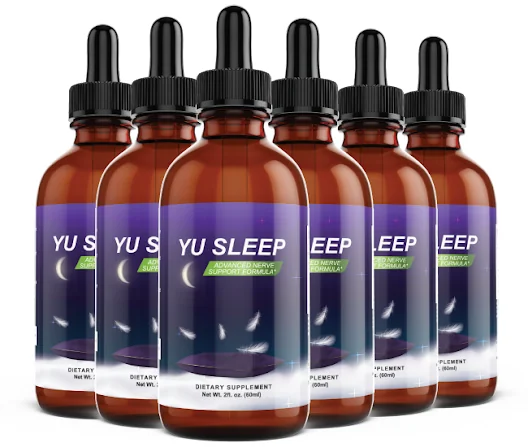
Label transparency note (verified, 2026): the current supplement facts panel lists only 0.9 mg melatonin plus vitamin B2 and B6 (0.5 mg each) with exact amounts. The other seven active ingredients — tart cherry, magnesium glycinate, apigenin, lemon balm, 5-HTP, L-theanine, and GABA — are part of a 637 mg proprietary blend with individual amounts not disclosed. Dosage: 2 droppers (2 mL) sublingual, ~30 min before bed. ~30 servings per bottle ($69 front-end). 60-day money-back guarantee. See our full YU Sleep review and ingredients guide for details.
Is YU Sleep a Non-Addictive Sleep Supplement?
YU Sleep is a liquid sleep formula built around low-dose melatonin (0.9 mg) and seven botanicals and amino acids — none of which are prescription sedatives or controlled substances. It does not contain barbiturates, benzodiazepines, or any drug known to cause physical dependence. However, “non-addictive” is not the same as “habit-free”: you can develop a psychological reliance on any sleep aid, natural or not, if you use it every night long-term without addressing the root cause of poor sleep. This guide looks at what the ingredients actually do, what real users on Reddit and Quora say about dependency concerns, and whether YU Sleep is safe for regular use.
What Makes a Sleep Supplement “Non-Addictive”?
People use “non-addictive sleep supplement” to mean a product that will not cause physical withdrawal or tolerance — the kind of dependence you see with prescription sleep medications like zolpidem (Ambien) or benzodiazepines. The NCCIH notes that melatonin, the primary active ingredient in YU Sleep, does not cause withdrawal symptoms or dependence when used at appropriate doses. The NIH similarly reports that melatonin supplementation at physiological doses (under 1 mg) has not been linked to tolerance buildup in most studies.
That said, “non-addictive” is not a regulated medical term. A supplement can be physically non-addictive and still create a psychological habit — the feeling that you cannot sleep without it. The difference matters, and we will be honest about both sides.
YU Sleep’s Ingredients: Addictive or Not?
YU Sleep contains eight active compounds. Here is each one, what it does, and whether it carries any dependency risk:
- Melatonin (0.9 mg): a hormone your brain already produces. Low doses under 1 mg are not linked to physical dependence. The NIH melatonin fact sheet notes no withdrawal syndrome in clinical studies, though long-term safety data beyond 6 months is limited.
- L-theanine: an amino acid from green tea. Promotes calm without sedation. No known dependence risk.
- Magnesium glycinate: supports relaxation and muscle function. The NIH lists no addiction concern for magnesium from food or supplements at normal doses.
- Tart cherry: a natural melatonin source. No dependency risk.
- Apigenin: a flavonoid found in chamomile. Gently promotes calm. Not associated with dependence.
- Lemon balm: a traditional herb for stress-related sleep issues. No known addictive potential.
- 5-HTP: supports serotonin production (a melatonin precursor). This is the one ingredient to be cautious about — see the safety note below.
- GABA: an inhibitory neurotransmitter that quiets brain activity. Not linked to physical addiction, though oral GABA’s ability to cross the blood-brain barrier is debated in research.
Safety note: 5-HTP can interact with antidepressants (SSRIs, SNRIs, MAOIs) and triptans. Because YU Sleep does not disclose the 5-HTP dose, anyone on serotonergic medications should consult their prescriber before use. Melatonin may also interact with blood thinners and anti-seizure medication. See our YU Sleep side effects guide for full details.
What Real Users Say About Dependency (Reddit & Quora)
We surveyed Reddit threads on r/sleep, r/Supplements, and r/Nootropics, along with Quora questions about melatonin dependence, to see what real users actually report when using low-dose melatonin formulas like YU Sleep. Here is the honest picture — not cherry-picked:
The “I can’t sleep without it” concern
On Reddit, the most common worry is not physical withdrawal but psychological dependence. Users on r/sleep repeatedly share that after taking melatonin nightly for weeks, they feel anxious on nights they skip it — even though physiologically they are not addicted. One r/Supplements user wrote: “I know melatonin is not addictive, but I’ve convinced myself I need it, and that’s its own problem.” This is the most honest feedback: the molecule is not the issue, the habit is.
“Low dose is better than high dose”
Multiple Quora answers and Reddit comments agree that lower melatonin doses (under 1 mg) are less likely to cause grogginess or a “rebound” effect than the 3–10 mg gummies commonly sold. YU Sleep’s 0.9 mg dose sits in this low range. A user on r/Nootropics noted: “0.3–1 mg is the sweet spot. Anything above that and I wake up foggy.” This aligns with what sleep researchers report — less is often more with melatonin.
The 5-HTP question
On Quora, several users ask whether 5-HTP is safe for nightly use. The general consensus from both users and cited medical sources: 5-HTP at reasonable doses is generally safe short-term, but daily long-term use is not well-studied, and combining it with antidepressants can cause serotonin syndrome. Since YU Sleep does not disclose the 5-HTP amount, this is a legitimate concern that several Reddit commenters raise about proprietary blends generally.
Common Concerns & Skepticism (Answered)
Here are the questions people raise most often on forums, with straight answers:
“Is melatonin really non-addictive or is that just marketing?”
It is not just marketing. The NIH and NCCIH both confirm melatonin does not cause physical dependence. But “non-addictive” on a label does not mean “use it forever” — it means it will not cause withdrawal when you stop.
“Will I build a tolerance and need more over time?”
With melatonin at low doses (under 1 mg), tolerance is not typically reported. At high doses (3 mg+), some users say it stops working as well. YU Sleep’s 0.9 mg is in the low-dose range where tolerance is least likely.
“What about the proprietary blend — how do I know the doses are safe?”
You do not. This is a real transparency issue we have flagged. YU Sleep’s 637 mg blend lists ingredients but not individual amounts. If you are sensitive to 5-HTP or GABA, you cannot verify the dose from the label alone.
“Can I take it every night forever?”
There is no strong evidence that low-dose melatonin is harmful long-term, but there is also not enough long-term data to call it risk-free. Most sleep experts recommend cycling — using it for a few weeks, then taking a break to see if you can sleep without it. If you find you genuinely cannot sleep without YU Sleep after several weeks, that is worth discussing with a doctor, not buying more.
Pros and Cons: The Honest Table
We are not going to hide the downsides. Here is what is genuinely good and genuinely not:
| Pros | Cons |
|---|---|
| Low melatonin dose (0.9 mg) — less grogginess, less tolerance risk | Proprietary blend hides individual ingredient doses |
| No prescription sedatives or controlled substances | 5-HTP dose undisclosed — risk for people on antidepressants |
| Liquid sublingual format absorbs faster than pills | No long-term safety studies on the full formula |
| 60-day money-back guarantee | Label transparency issue: ingredients page vs. facts panel differ |
| Ingredients backed by independent research (NIH/NCCIH) | $69 per bottle — not cheap for a 30-day supply |
Who Should Take YU Sleep — and Who Should Not
It may suit you if: you wake in the middle of the night and cannot fall back asleep (sleep maintenance), you prefer low-dose melatonin over high-dose gummies, and you want a liquid formula rather than pills. The sublingual format is genuinely useful for people who have trouble swallowing capsules.
You should avoid it or consult a doctor first if: you are on antidepressants (SSRIs/SNRIs/MAOIs) due to 5-HTP, you take blood thinners or anti-seizure medication, you are pregnant or breastfeeding, or you have not had a conversation with a doctor about why you are sleeping poorly in the first place. As the CDC emphasizes, chronic sleep problems often have underlying causes that a supplement alone will not fix.
How to Use It Without Building a Habit
If you decide to try YU Sleep, here is how to use it responsibly:
- Start with the lowest effective dose. Try 1 dropper (1 mL) instead of the full 2 droppers. If it works, stay there.
- Use it situationally, not automatically. Take it on nights when you know you will struggle — not every night as a default.
- Take breaks. After 2–3 weeks of nightly use, stop for 3–4 nights and see how you sleep without it. This prevents psychological dependence from sneaking up.
- Fix the root cause. If 3 a.m. wake-ups are constant, look at caffeine timing, screen use before bed, room temperature, and stress — not just the supplement.
- Talk to a doctor if it becomes “I can’t sleep without it.” That is your signal that the habit, not the supplement, is the issue.
For more on how it compares to plain melatonin, see our YU Sleep vs Melatonin guide. If you want to know whether it is legit, read our fact-check article. And if you are deciding if it is worth the money, see our honest worth-it guide.
FAQ: Non-Addictive Sleep Supplements & YU Sleep
Is YU Sleep addictive?
No. YU Sleep does not contain any physically addictive substances. Its ingredients — melatonin, L-theanine, magnesium, tart cherry, apigenin, lemon balm, 5-HTP, and GABA — are not controlled drugs and are not linked to physical dependence. However, you can develop a psychological habit of relying on any sleep aid, so cycling and breaks are recommended.
Can you become dependent on melatonin supplements?
Melatonin does not cause physical withdrawal or tolerance at low doses (under 1 mg), according to the NIH and NCCIH. However, some users report a psychological reliance — the feeling that they cannot sleep without it. This is a habit, not an addiction, and can be managed by taking breaks.
Is it safe to take YU Sleep every night long-term?
Low-dose melatonin (under 1 mg) has not been linked to harm in long-term use, but there is limited research beyond 6 months. Most sleep experts recommend cycling — using it for a few weeks, then taking a break. If you cannot sleep without it after several weeks, talk to a doctor about underlying causes.
Does 5-HTP in YU Sleep cause serotonin syndrome?
5-HTP can increase serotonin levels and may interact with antidepressants (SSRIs, SNRIs, MAOIs) and triptans. Because YU Sleep does not disclose the 5-HTP dose in its proprietary blend, anyone on these medications should consult their prescriber before use.
What is the best non-addictive sleep supplement?
The most studied non-addictive sleep supplements are low-dose melatonin (under 1 mg), magnesium glycinate, L-theanine, and glycine. YU Sleep combines several of these in one formula, but its proprietary blend means you cannot verify individual doses. See our best natural sleep supplements guide for alternatives.
Will I build a tolerance to YU Sleep and need more over time?
At 0.9 mg melatonin, tolerance is unlikely — most reports of melatonin tolerance involve higher doses (3 mg or more). However, if you feel it stops working, take a 3–4 day break rather than increasing the dose.
What do Reddit users say about melatonin dependence?
Reddit users on r/sleep and r/Supplements generally agree melatonin is not physically addictive but warn about psychological reliance. Most recommend low doses (under 1 mg), cycling, and addressing root causes like caffeine, stress, and screen time rather than relying on any supplement long-term.
Bottom Line: Honest Verdict
YU Sleep is genuinely non-addictive in the physical sense — none of its ingredients are controlled substances or known to cause withdrawal. The 0.9 mg melatonin dose is well within the range that researchers consider safe and unlikely to cause tolerance. For people who struggle with sleep maintenance (waking at 3 a.m.), the liquid format and low-dose approach make sense.
But “non-addictive” does not mean “use it forever without thinking.” The proprietary blend hides the 5-HTP dose, which is a real concern if you take antidepressants. The label transparency issue (ingredients page vs. facts panel mismatch) is not ideal. And no supplement replaces the basics: consistent sleep schedule, dark room, no caffeine after 2 p.m., and a conversation with your doctor if sleep problems persist.
If you want to try it, the 60-day money-back guarantee means you can test it without financial risk. Use it for 2–3 weeks, then take a break. If you sleep fine without it, you have your answer. If you cannot sleep without it, that is a conversation for your doctor — not a reason to buy another bottle.
2 Comments